The Bullettino meteorologico del Reale Osservatorio Astronomico di Napoli was
officially
established in January 1875 as
a periodical dedicated to the meteorological observations of the Neapolitan observatory.
Comprising four tables of
observations - later reduced to two from 1880 to 1882 - it represented the natural
continuation
of the series entitled
Osservazioni meteorologiche fatte dall’astron. Assist. F. Brioschi nella R. Specola
di
Napoli, published from December
1867 to December 1874 within the Rendiconto dell’Accademia delle scienze fisiche e
matematiche of the Royal Society of
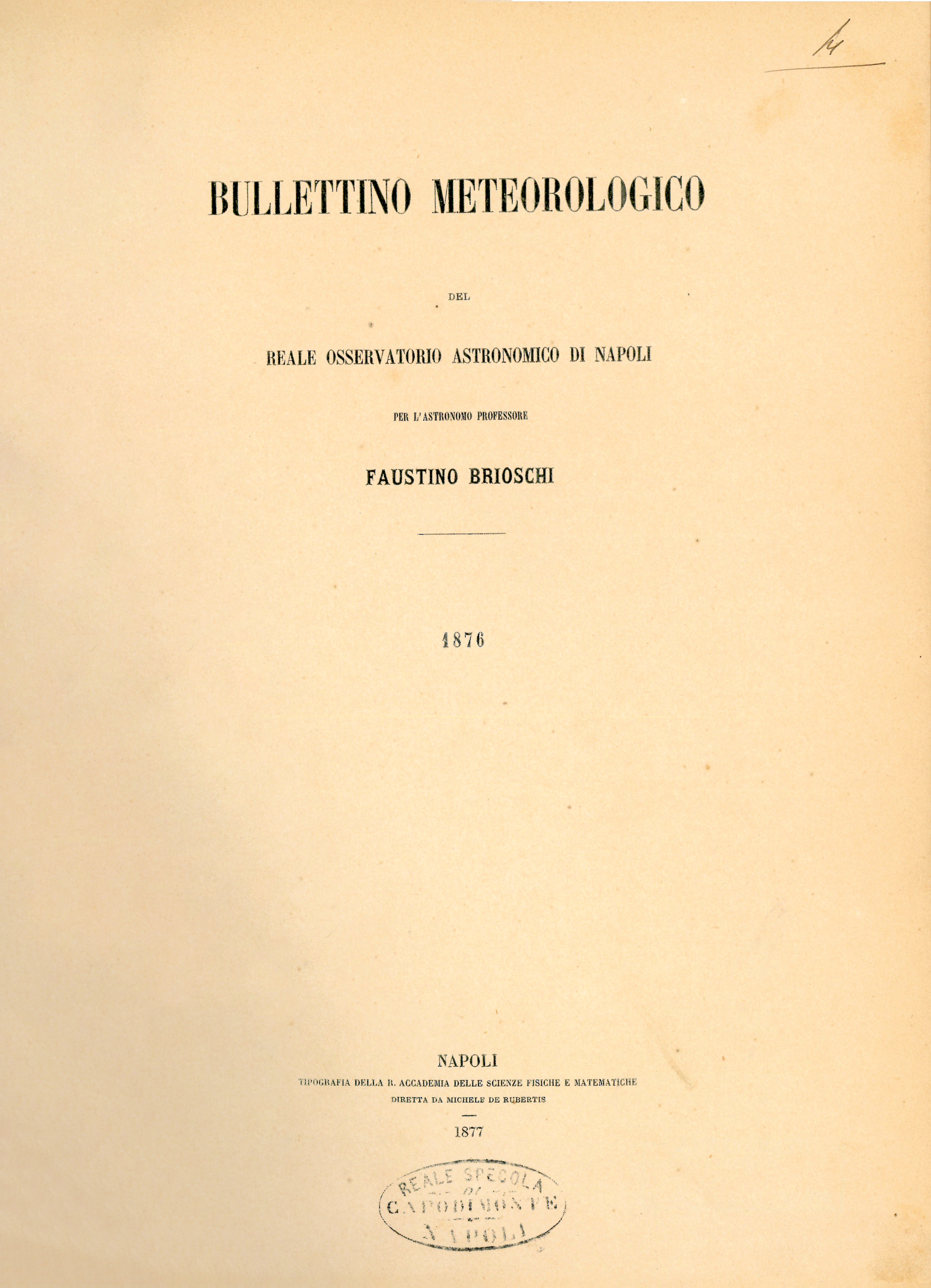
Naples. However, the earliest Bullettino, preserved in the library of the Capodimonte
Observatory, with a printed title
page, dates to 1876 and includes the Avvertimenti alle osservazioni meteoriche,
with
references also to the instruments
used to measure temperature and humidity, in addition to the monthly tables.
The founding of the Bullettino is part of a long-standing tradition of
meteorological
observations and publications
initiated by Carlo Brioschi. As Vincenzo Canino notes in Il clima di Napoli,
Brioschi
published monthly extracts of his
observations in the Calendari della R. Specola di Napoli until 1832. With
the
launch of the Annali civili del
regno delle Due Sicilie in 1833, the first regular publications of daily data
began,
organized in monthly tables
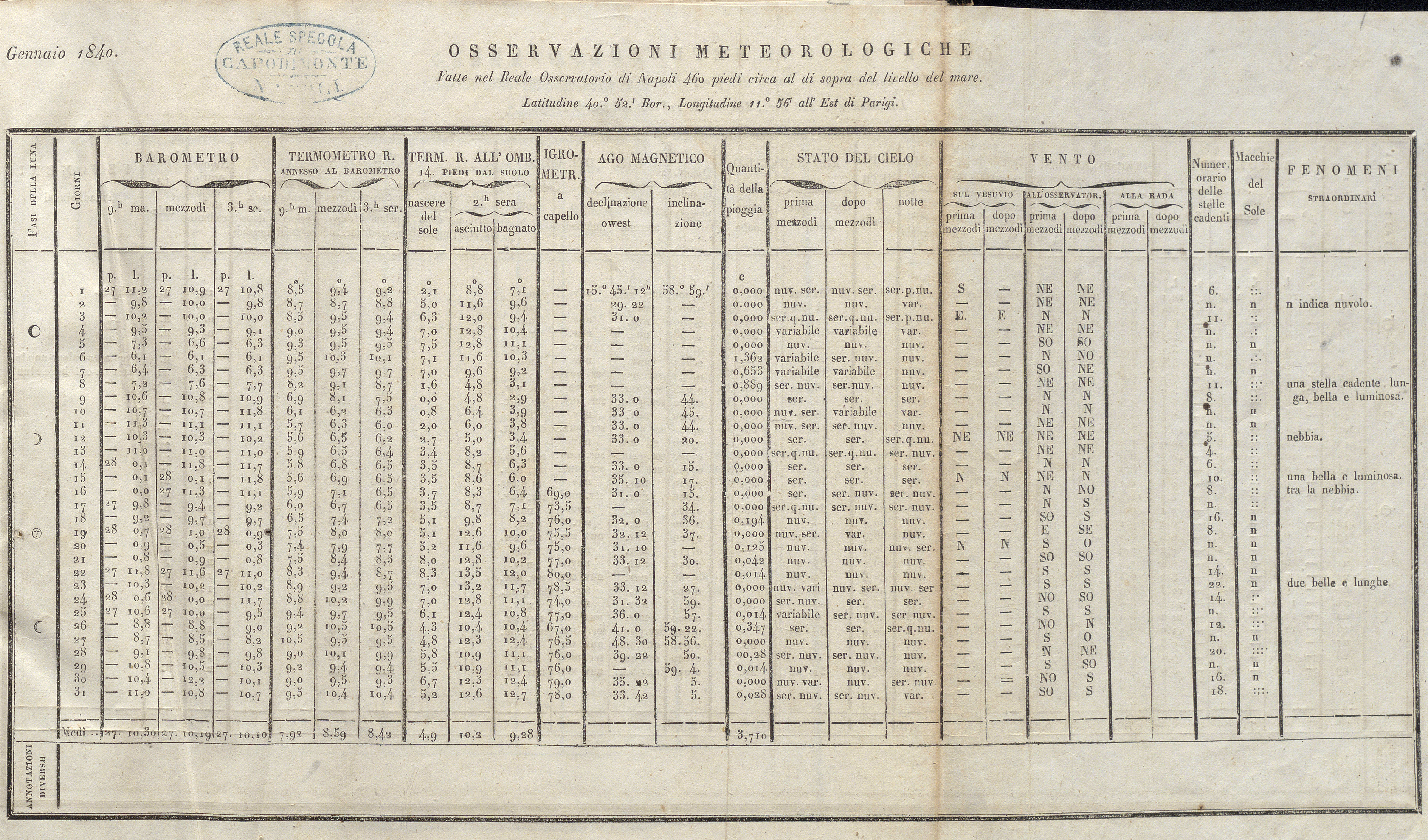
entitled "Meteorological Observations Made at the Royal Observatory of Naples". From
1840 until
February 1860, these
tables were also published independently. During this period, the observations were
curated and
analyzed by leading
figures in Neapolitan astronomy, including Antonio Nobile (1794-1863), Leopoldo del Re
(1768-1832), Ernesto Capocci
(1798-1864), and Annibale de Gasparis (1819-1892). Capocci reorganized the
meteorological
tables, incorporating
information on sky conditions, prevailing winds, and monthly rainfall, as well as
columns
dedicated to magnetic and
anemometric observations, shooting stars, and sunspots.
In 1860, the publication of
the
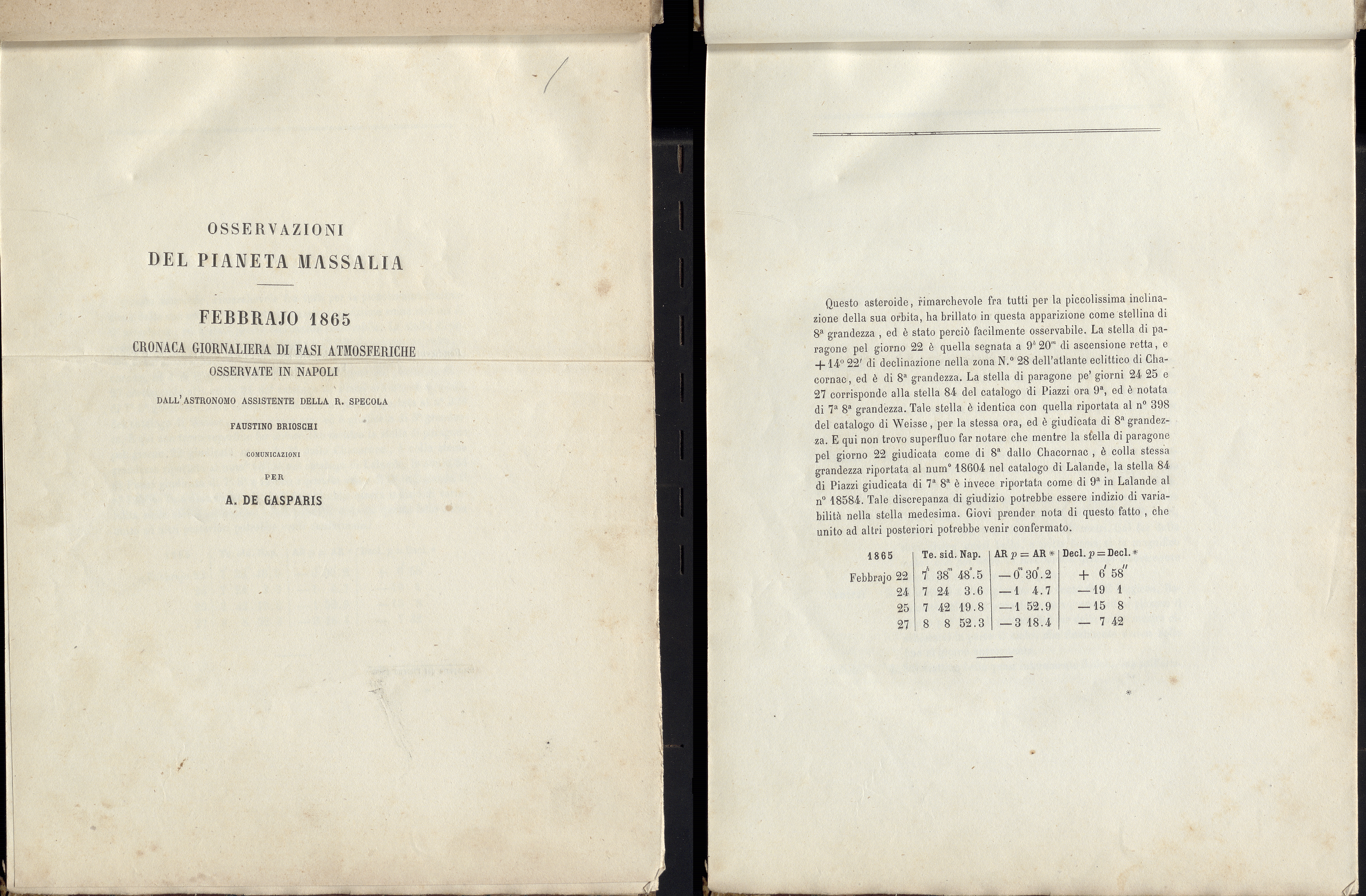
Annali ceased, as did the meteorological tables. Faustino Brioschi (1828–190?) resumed their publication in
1865 in
the form of the “Cronaca
giornaliera di fasi atmosferiche osservate in Napoli” (“Daily Chronicle of Atmospheric
Phases
Observed in Naples”),
included in the Rendiconto dell’Accademia delle scienze fisiche e matematiche.
Some
issues of the chronicles were
supplemented with brief reports on the newly discovered minor planets, written by
Annibale de
Gasparis, who had become
director of the Observatory in 1864. From December 1867, the publication returned to the
monthly
tables only, entitled
Osservazioni meteorologiche fatte dall’astron. Assist. F. Brioschi nella R. Specola
di
Napoli, with notes on temperature
and rainfall. Between 1871 and 1874, two additional tables were added, dedicated to the
Osservazioni barografiche orarie
and Osservazioni termografiche orarie.
The second Congress of Meteorologists,
held in
Naples from September 25 to
October 1, 1882, marked the formal establishment of the Italian Meteorological Society
and
confirmed the scientific
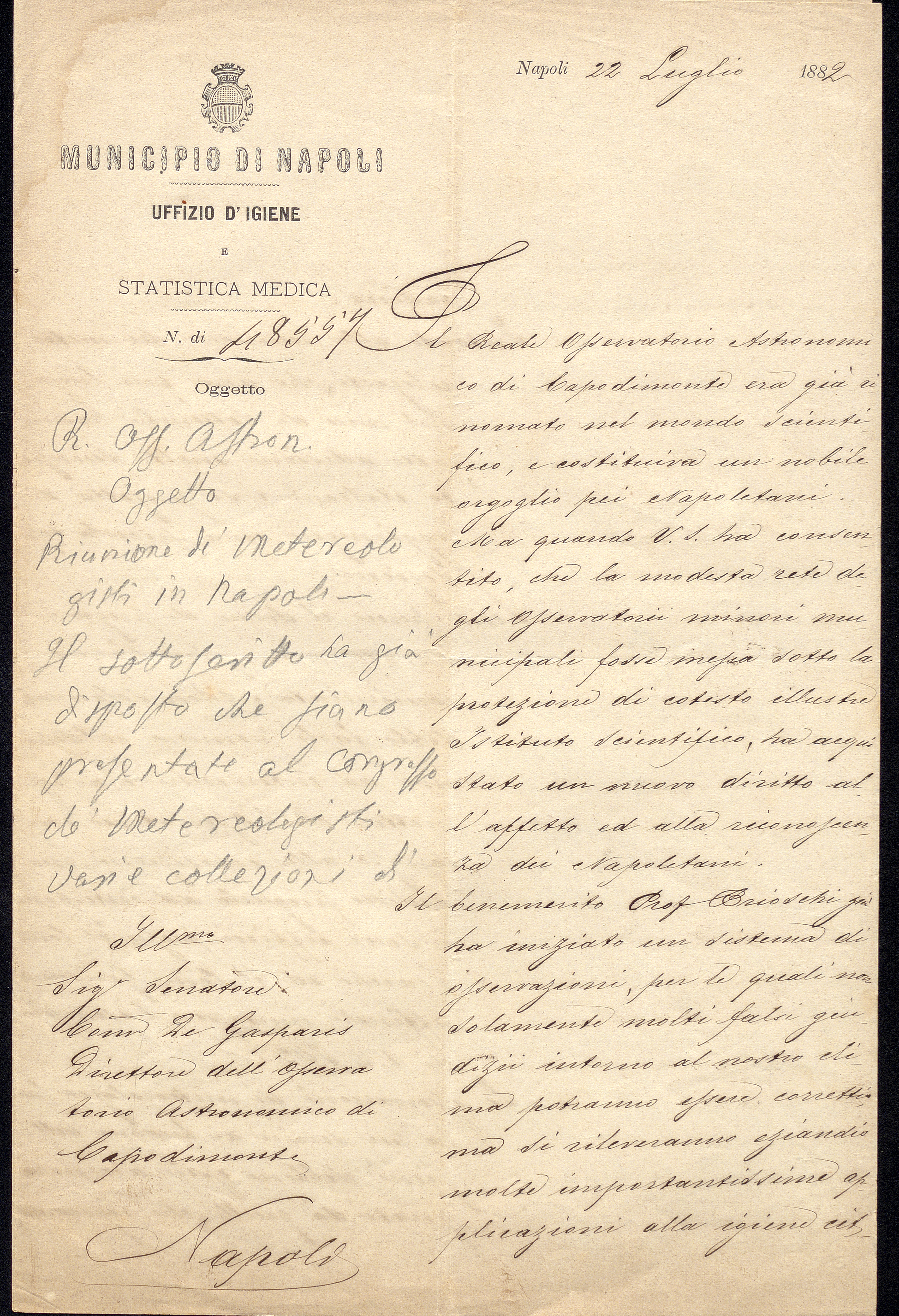
prestige of the Observatory’s activities in meteorology. The mayor, Girolamo Giusso,
invited the
director, Annibale de
Gasparis, “to participate and to allow the Observatory to contribute to the exhibition”
of
studies and instruments. De
Gasparis gladly accepted the invitation, noting that he had already arranged to present
the
“works carried out on
meteorological subjects at this Royal Astronomical Observatory since 1823”, and invited
participants to visit the
Meteorological Cabinet and the magnetic stations, where “the esteemed Prof. Brioschi
will
describe the collection of
instruments housed there”.
The Bullettino, which between September 1881 and December 1882 changed its title to
Bullettino meteorologico e magnetico
del Reale Osservatorio astronomico di Napoli, experienced a brief interruption
in
1883-1884 to make way for the
Osservazioni meteoriche fatte nel R. Osservatorio di Capodimonte, considered a
supplement
to the Rendiconto. The
Bullettino then continued publication until 1888. From the following year, the
Osservazioni
meteoriche resumed,
consisting of a single table and also circulated within the Rendiconto. The
series
concluded definitively in 1912, but
the monthly observation tables continued to be published until 1918 in the periodical
Contributi meteorologici del R.
Osservatorio di Capodimonte, marking the end of a long and complex editorial
tradition.
___Emilia Olostro Cirella
References
Canino, V. (1889). Il clima di Napoli. (Da osservazioni
meteorologiche fatte nel R. Osservatorio astronomico di
Capodimonte). 1821-1887, Roma: Stabilimento Bontempelli.
Nicolini, T. (1956). Il clima di Napoli-Capodimonte.
1866-1950.
Riassunti
elaborati per intervalli quinquennali dai
successivi risultati e dalla collaborazione di V. Alberti, S. Aurino, E.
Guerrieri, G.
Esposito, [Napoli].
Olostro Cirella, E., Gargano, M. & Sasso, C. (2025). “Le
osservazioni
meteorologiche dell’Osservatorio Astronomico di
Capodimonte. Analisi storico-bibliografica delle serie periodiche pubblicate nel XIX
secolo”, in Magazù, S. & Caccamo,
M.T. (eds.), Rischio Sud: dalla raccolta dati agli interventi di monitoraggio e
prevenzione
dei rischi. Una storia del
Sud. Messina: Accademia Peloritana dei Pericolanti (accepted).
___
___