Among the most representative instruments of the meteorological station at the Capodimonte
Astronomical Observatory,
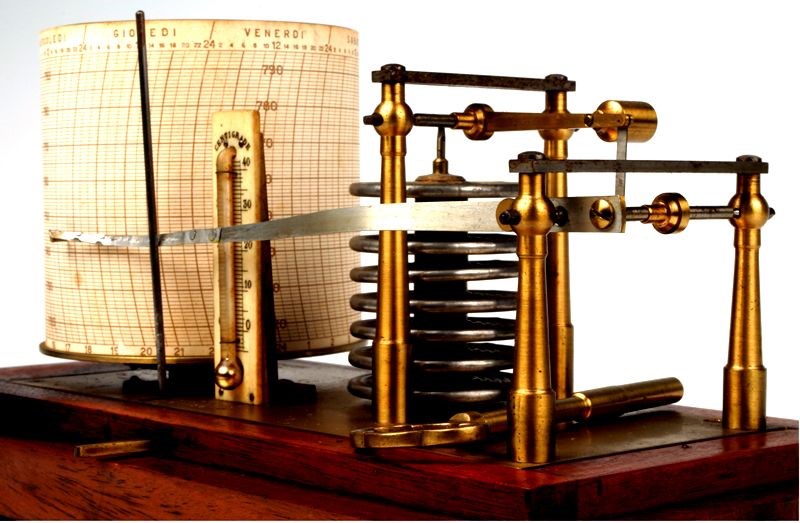
still preserved in its historical collections, is the Richard recording barometer, a refined
French device from the late
nineteenth century. Equipped with eight aneroid capsules, the instrument amplifies atmospheric
pressure variations and
records them on a paper strip wrapped around a rotating drum. Capable of producing a continuous
and legible trace of
barometric oscillations, it stands as one of the earliest examples of automatic recording in
meteorology.
Designed by Jules Richard and patented in 1880 together with his brother Félix, the barograph
featured an innovative
system that inscribed data onto smoked paper. The Richard firm, founded in 1845 in Paris by
their father Félix and
specialized in Bourdon-type metallic barometers with compensated tubes, was among the first in
Europe to manufacture
meteorological instruments with automatic recording, playing a key role in the modernization of
atmospheric observation.
The barograph was supplied to the Naples Observatory by the Central Meteorological Office, which
distributed
standardized instruments to Italian stations for consistent data collection.
Starting in 1877, the meteorological station was housed in an isolated room in the northern wing
of the Villa della
Riccia, specifically designated for atmospheric observations. In this controlled environment,
shielded and ventilated,
fundamental data were collected for decades, contributing to national climatology and
meteorology.
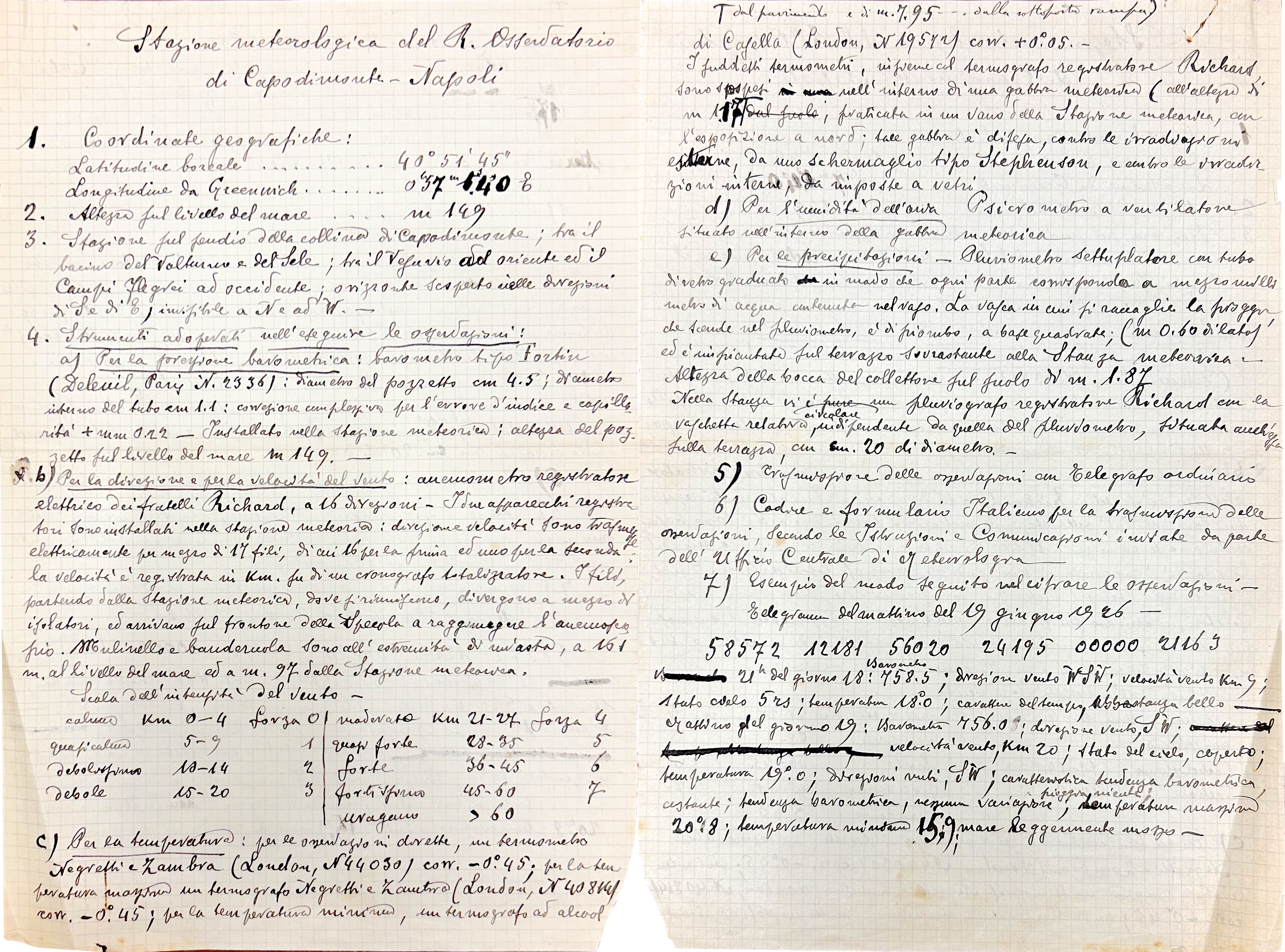
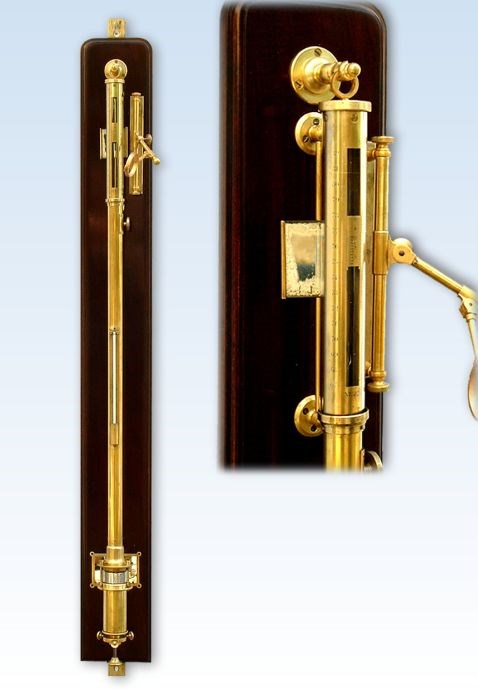
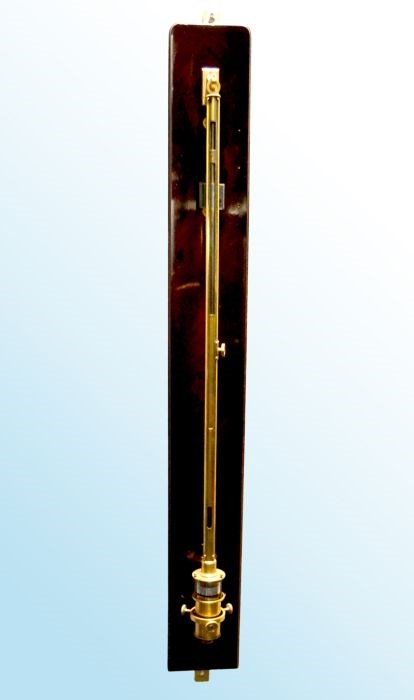
In addition to the barograph, the station was equipped with various mercury barometers,
including the Deleuil cistern
barometer, the Casella barometer (fitted with a mercury thermometer showing both Celsius and
Fahrenheit scales at the
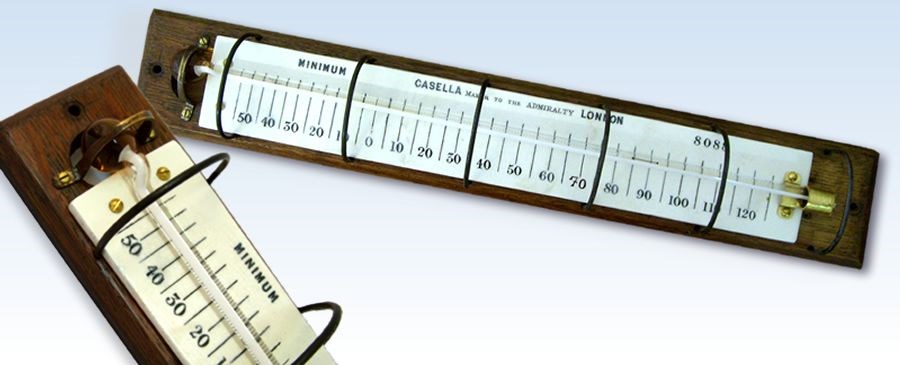
base of its brass tube), and the Bunten siphon barometer. The collection also included mercury
and alcohol thermometers,
such as Casella’s, and the Richard thermograph, used to record maximum, minimum, and temperature
variations.
Other instruments, no longer preserved, included an August psychrometer with Cantoni ventilator
for measuring relative
humidity; a sevenfold rain gauge with lead basin and graduated tube; an atmometer for
evaporation measurement; and a
Brassart anemograph for recording wind direction and intensity.
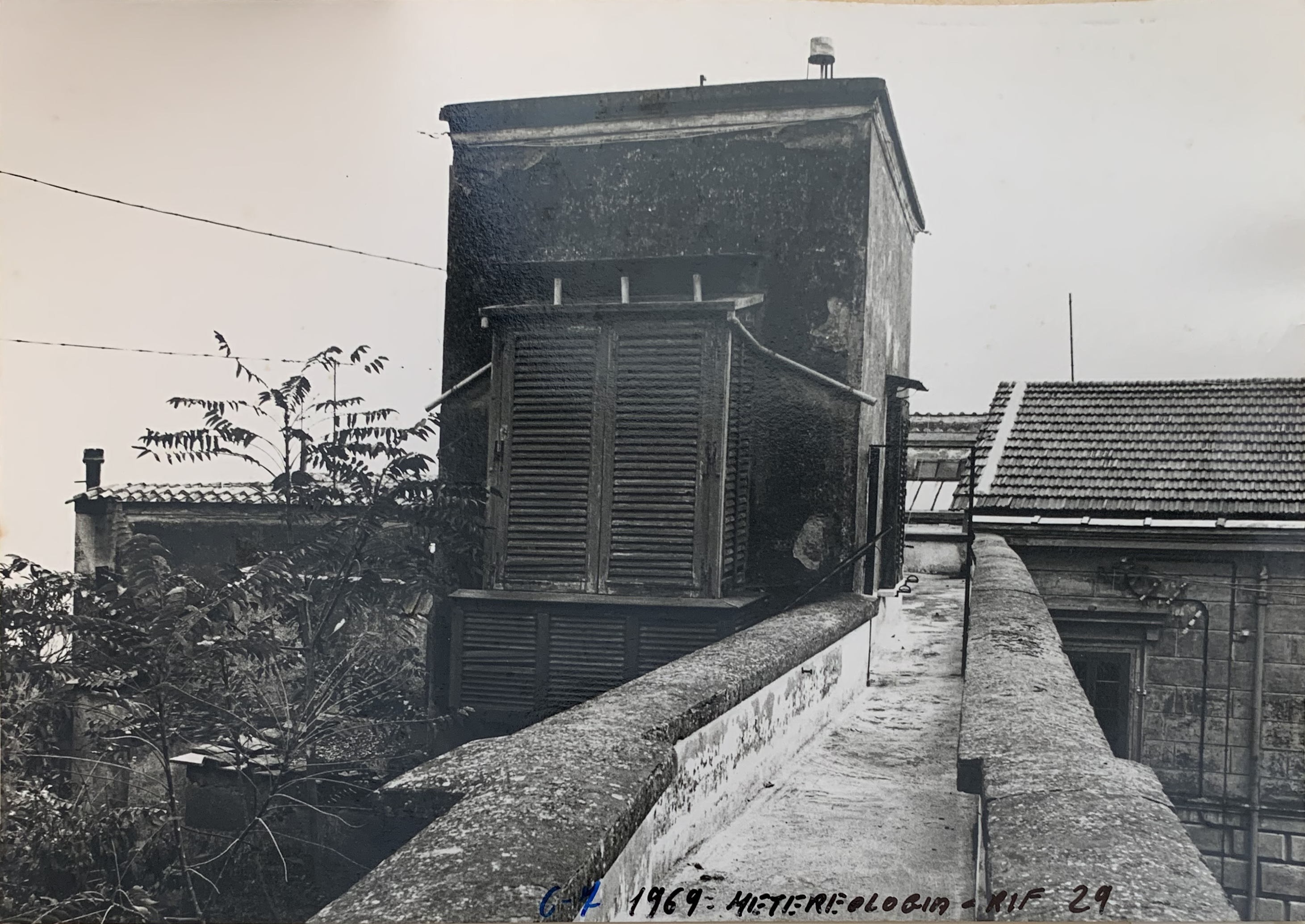
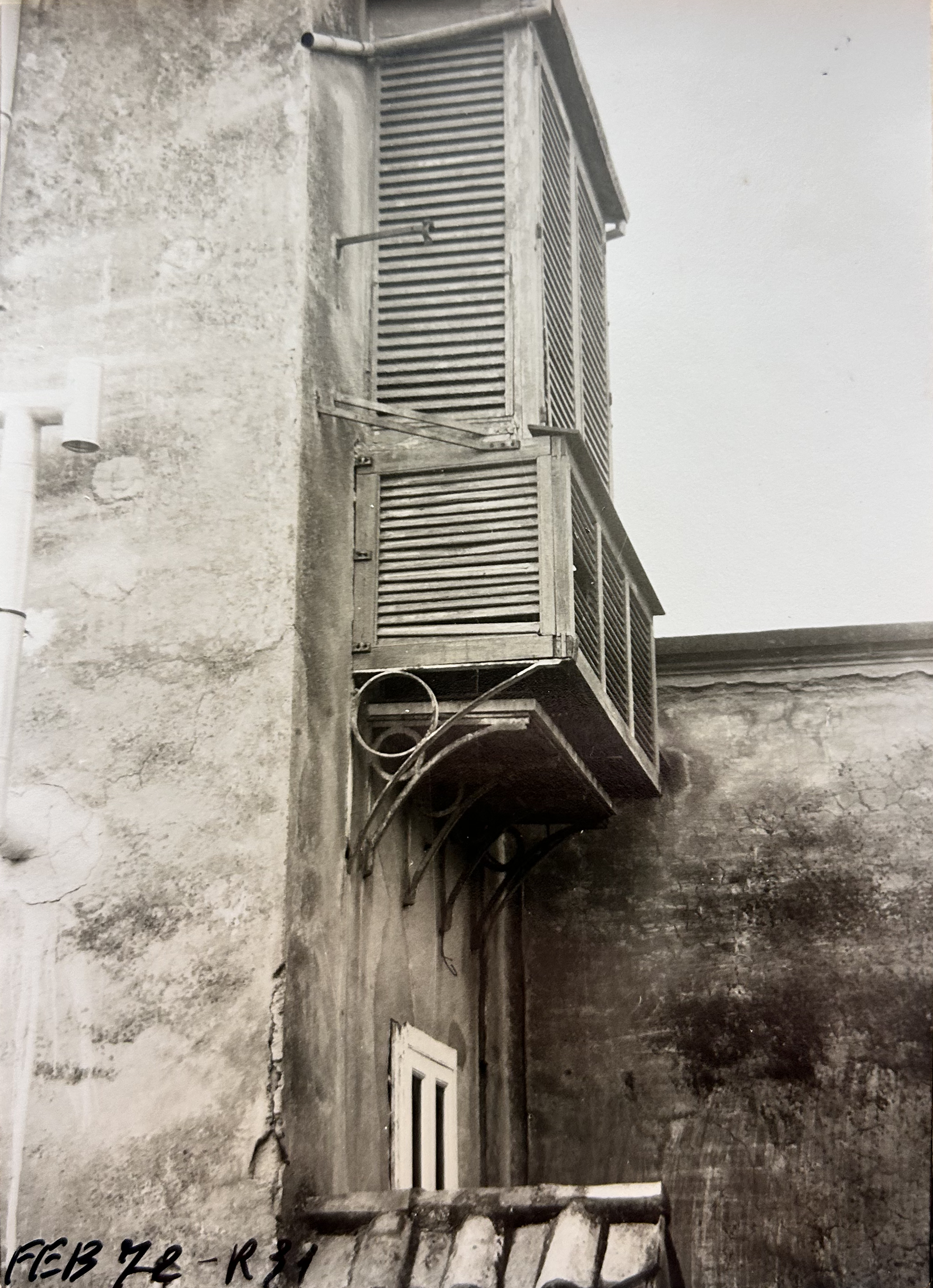
In 1900, on the proposal of astronomer Francesco Contarino, the so-called “meteorological
window”, which housed the rain
gauge, thermograph, and atmometer, was transformed into a meteorological balcony. The
instruments were suspended outside
the new opening, shielded from solar radiation by a Stephenson-type screen. To protect them from
internal heat sources,
glass shutters were installed, which, like the wooden blinds, remained permanently closed.
___Mauro Gargano
References
Alberti, V. (1902). Riassunto delle osservazioni meteorologiche fatte
nella R. Specola di Capodimonte nell'anno 1901.
Napoli: Tipografia della Reale Accademia delle scienze fis. e mat.
Canino, V. (1889). Il clima di Napoli (da osservazioni meteorologiche
fatte nel R. Osservatorio astronomico di
Capodimonte): 1821-1887. Roma: Stabilimento Bontempelli.
De Gasparis, A. (1886). Riassunti decadici e mensili delle osservazioni
meteoriche fatte nel R. Osservatorio di
Capodimonte nell'anno 1884. Napoli: Tipografia della Reale Accademia delle scienze
fis. e mat.
___
___