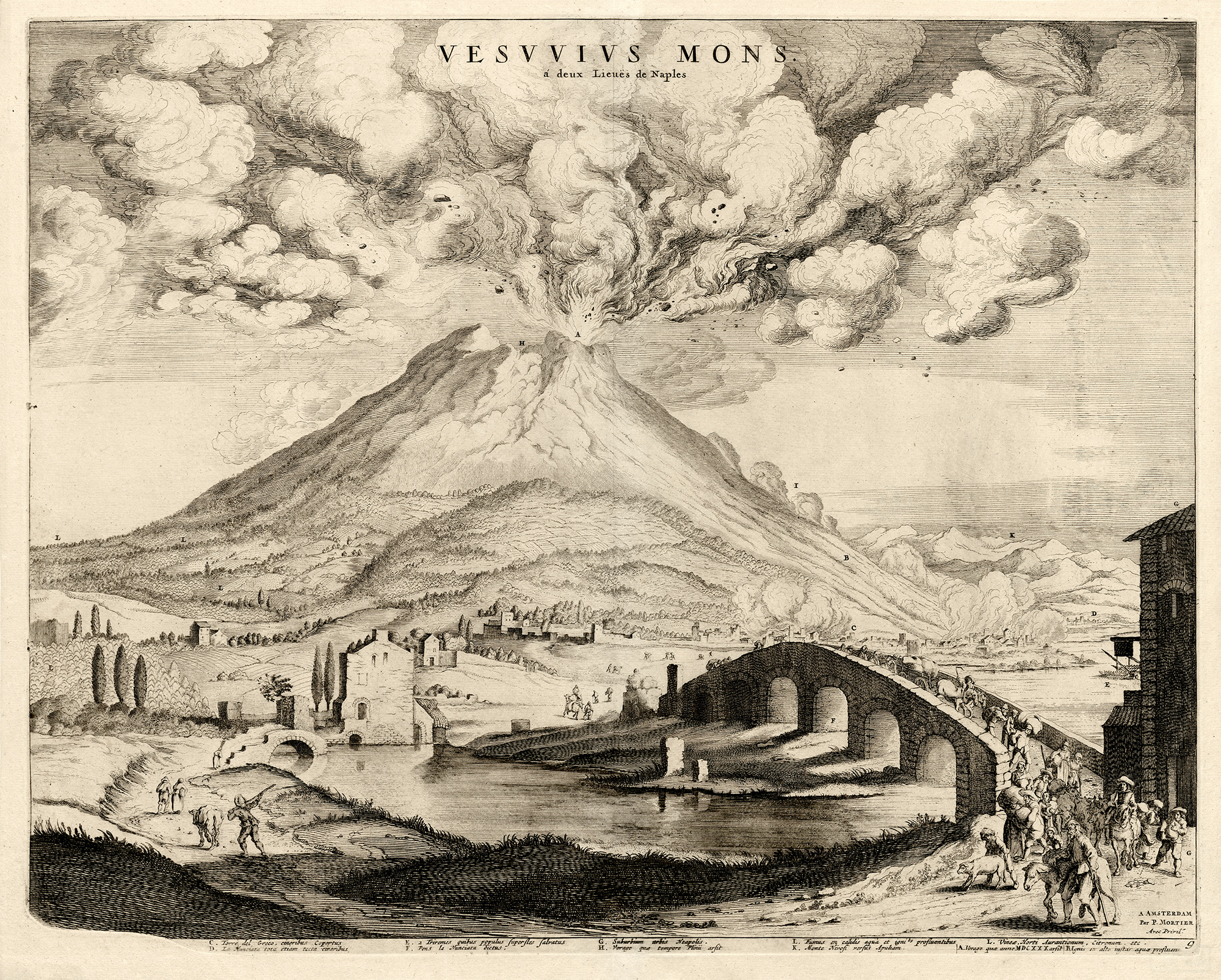
The print fixes Vesuvius as both a topographic presence and a portent, suspended between
landscape and threat.Created
only a few decades after the devastating eruption of 16 December 1631, the image conveys the
tension between beauty and
danger that has long characterized Naples’ relationship with its volcano. According to
tradition, that eruption, the
first after nearly three centuries of inactivity: subsided only after the statue of Saint
Januarius was carried before
the crater, a ritual gesture marking the beginning of the modern history of volcanic risk.
At the heart of the scientific South, the Astronomical Observatory of Capodimonte also became a
place of volcanological
investigation. Among its protagonists were Leopoldo del Re, who conducted magnetic observations
during the eruption of
Etna in 1842 in collaboration with geologist Wolfgang Sartorius von Waltershausen and Danish
astronomer Christian
Peters; and Ernesto Capocci, who devoted part of his work to the study of Vesuvius, proposing
innovative methods to
probe its internal structure and less conspicuous behaviors.
In his essays Investigazioni delle interne masse vulcaniche dai loro effetti sulla gravità and
Relazione del fenomeno
delle corone di fumo e di cenere presentato dal Vesuvio nella eruzione del dicembre del 1846 e
nei mesi seguenti,
Capocci recounts: “We placed ourselves in our Royal Observatory to observe the phases of the
eruption with telescopes
steadily directed at the mouth of the small active cone”. He suggested detecting underground
magmatic masses through
variations in the gravitational field, and documenting even “silent” eruptions, without tremors
or noise, recognizable
only by sudden emissions of gas and dust.
The episode of 29 October 1855, which he recorded, is emblematic: a cloud rose from the crater
without any seismic
signal, revealing a complex and little-known internal dynamic.
Complementing and preceding these investigations, Teodoro Monticelli’s Storia de’ fenomeni del
Vesuvio avvenuti negli
anni 1821, 1822 e parte del 1823 offers a systematic narrative of eruptions, enriched by direct
observations and
physico-chemical experiments. Monticelli, naturalist and volcanologist, was among the first to
combine phenomenological
description with experimental method, helping to establish a Neapolitan tradition in the study
of volcanic risk.
Another astronomer, Remigio Del Grosso, celebrated the power and mystery of the “fiery mountain”
in a poem that fused
scientific sensibility with lyrical imagination.
In dialogue with these studies, a selection of views of Vesuvius produced between the eighteenth
and nineteenth
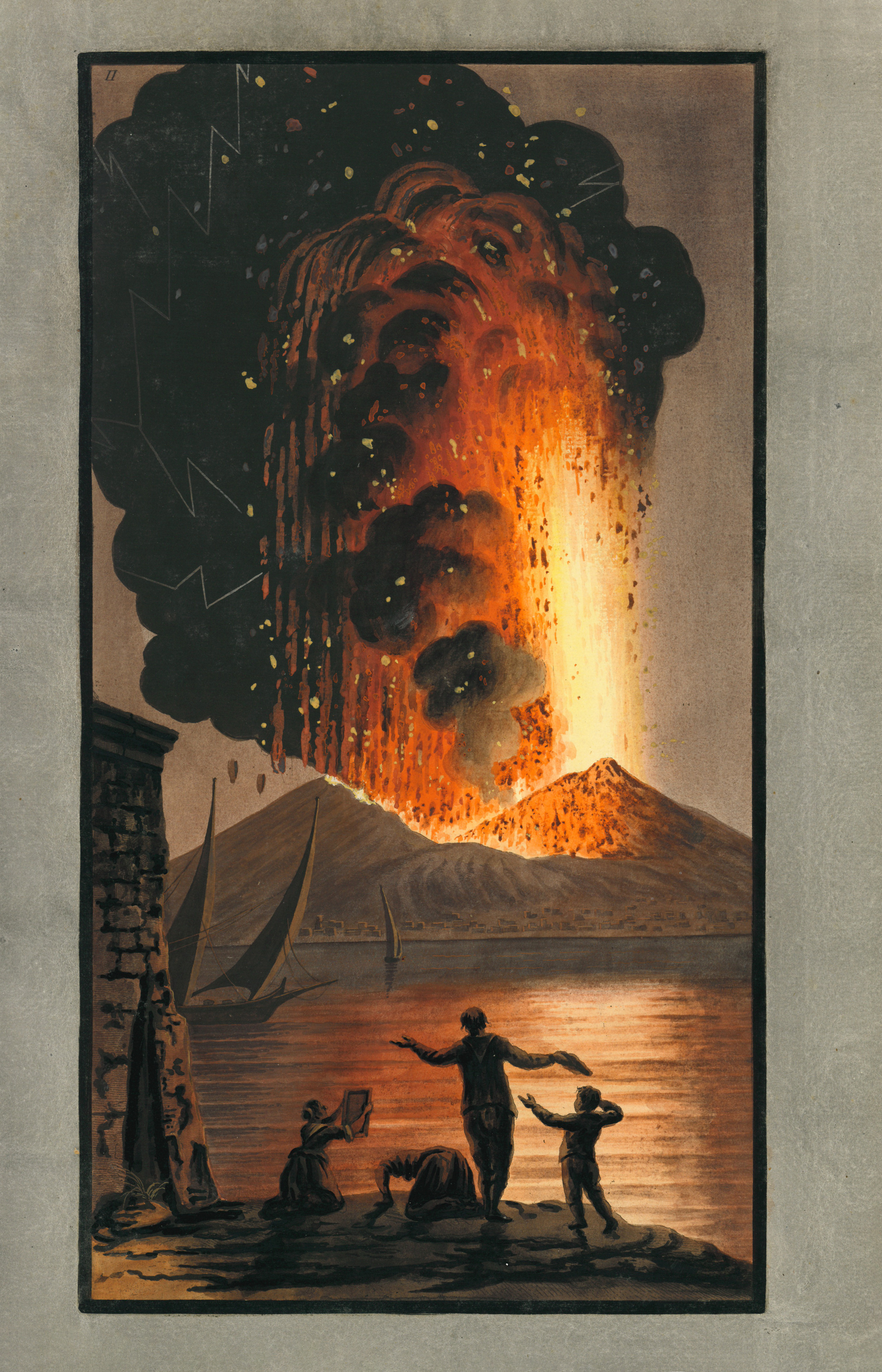
centuries reflects the variety of perspectives on the volcano: from the spectacular plates of
William Hamilton’s
Supplement to the Campi Phlegraei (1779), painted “by the marvelous brush of Pietro Fabris,”
which combine scientific
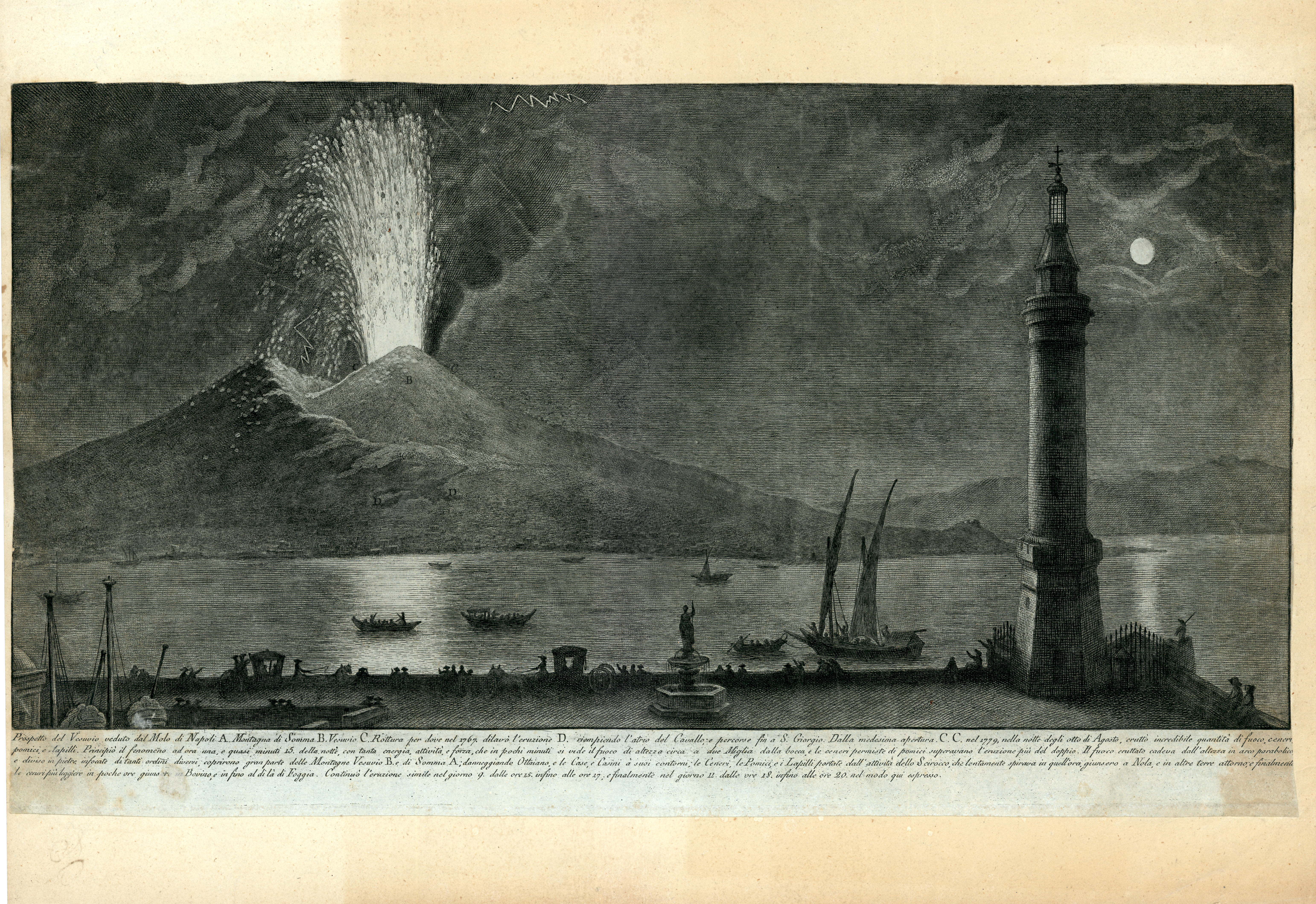
observation with visual theatricality, to Filippo Morghen’s engraving from the Naples pier,
where Vesuvius dominates the
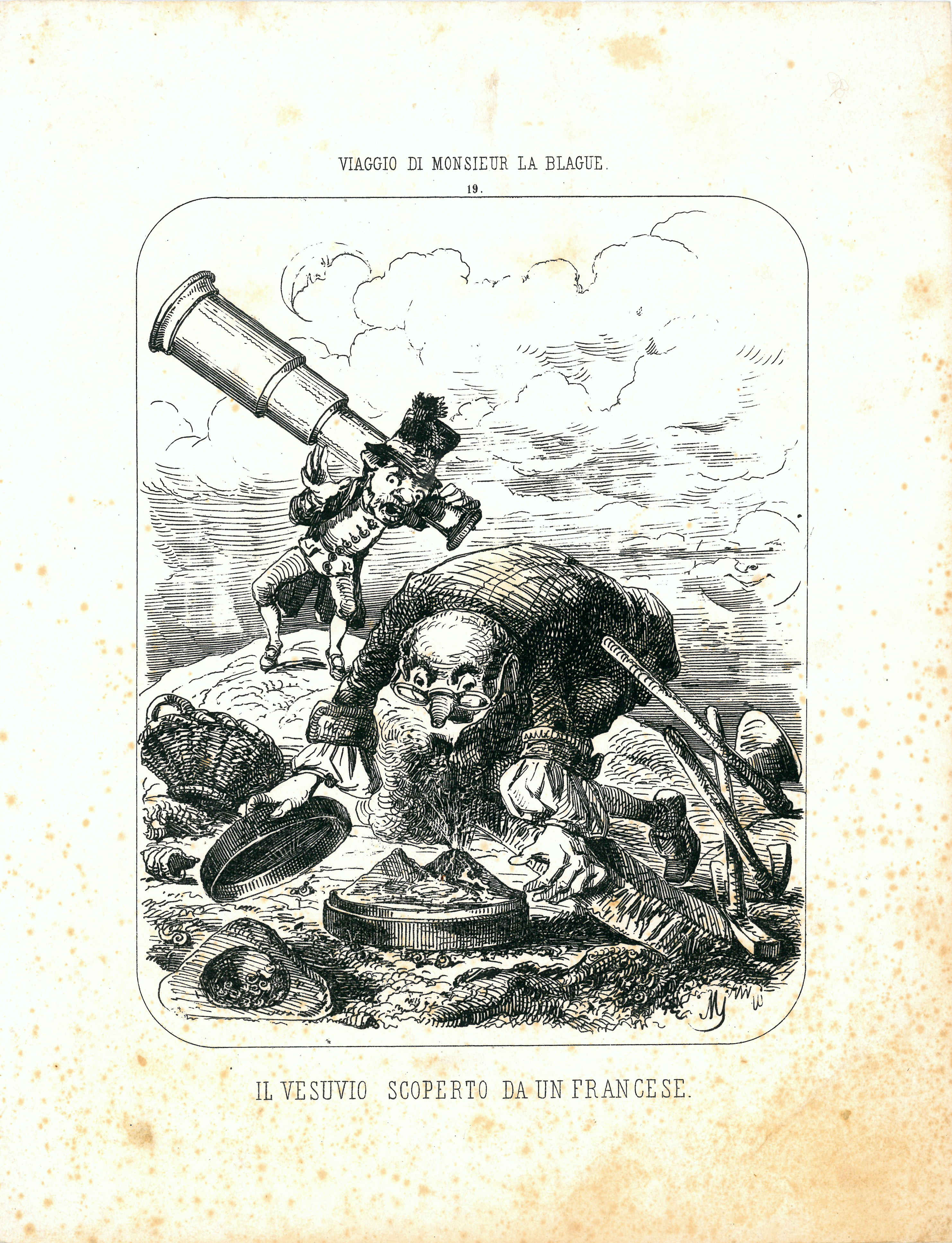
urban landscape. Alongside these, a satirical print from Viaggio di Monsieur La Blague mocks the
imagery of the Grand
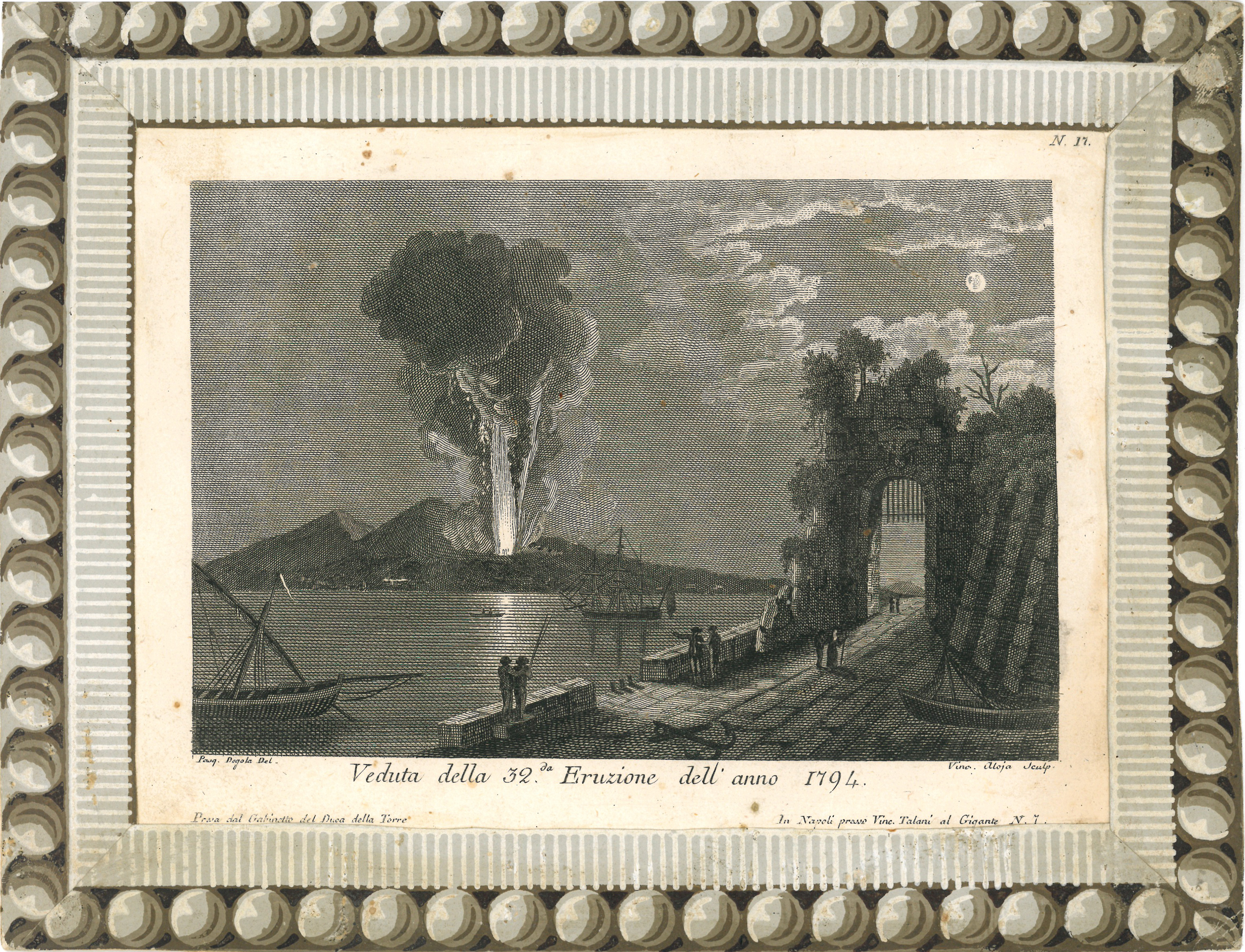
Tour, while the view of the 1794 eruption, painted by Pasquale Degola and engraved by Vincenzo
Aloja, comes from Ascanio
Filomarino’s Gabinetto Vesuviano del Duca della Torre (1796), documenting the event with
precision. The scenes generally
depict a serene atmosphere, with figures animated by amused curiosity, quasi-scientific
interest, or at times complete
indifference to the natural phenomenon unfolding.
If Mortier fixed its uneasy distance, Hamilton illustrated its visual power, and Capocci
revealed its invisible and
silent dimension. Together, images, studies, and verses compose a layered narrative of Vesuvius,
between observation,
memory, and scientific culture, within the fragile and profound landscape of the South.
___Mauro Gargano
References
Capocci, E. (1846). “Relazione del fenomeno delle corone di fumo e di
cenere presentato dal Vesuvio nella eruzione del
dicembre del 1846 e nei mesi seguenti” Rendiconto delle adunanze e de' lavori
dell'Accademia delle scienze, 5, pp.
20-23.
Monticelli, T. & Covelli, N. (1823). Storia de’ fenomeni del Vesuvio
avvenuti negli anni 1821, 1822 e parte del 1823.
Napoli: Dai Torchi del Gabinetto Bibliografico e Tipografico.
Toscano, M. (2015). “Il nume in festa”, Zeusi, 1(1), pp. 20-29.
___
___