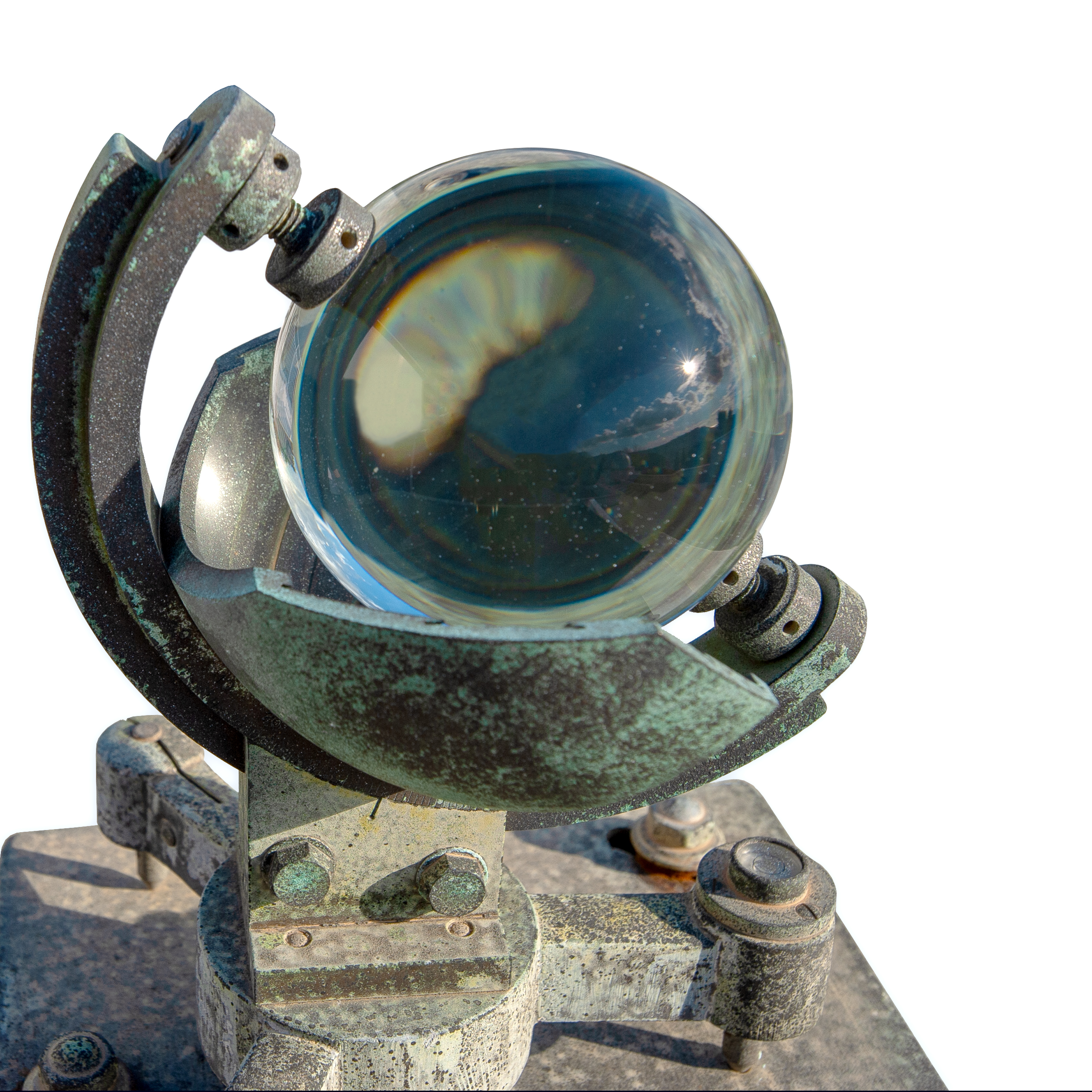
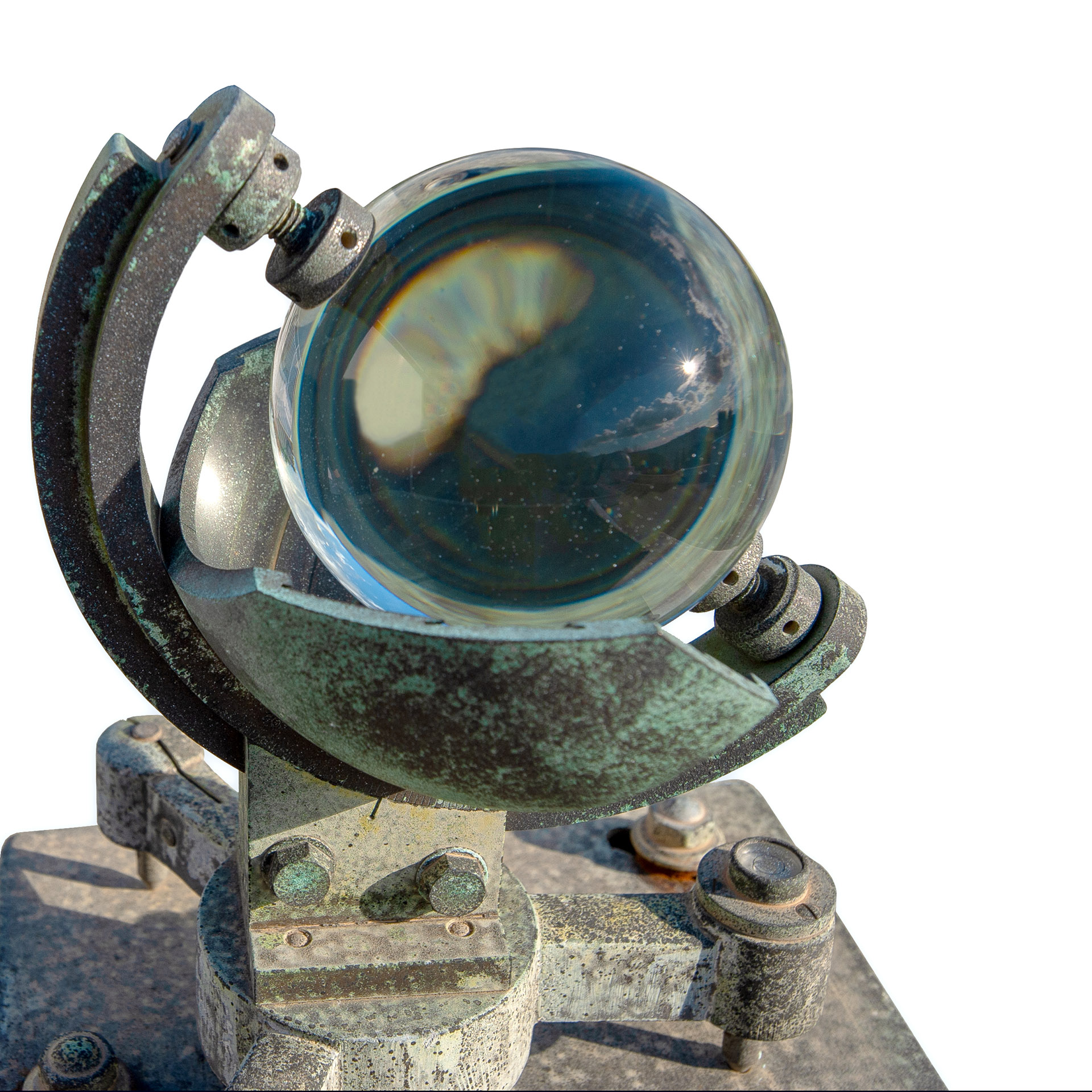
This instrument, produced by the Società Italiana Apparecchi di Precisione (SIAP), is
based on
the system developed in
1853 by Irish meteorologist John Francis Campbell and perfected in 1879 by Sir George
Gabriel
Stokes. The
Campbell–Stokes model became the international standard for measuring the duration of
sunshine.
This heliophanometer was
purchased to replace an older model, supplied by the Central Bureau of Meteorology in
the late
19th century.
Its operation is simple and ingenious: a glass sphere acts as a converging lens,
focusing the
sun's rays onto a strip of
photosensitive cardboard or paper. When the intensity of the radiation exceeds a minimum
threshold the paper blackens or
burns, leaving a visible trace. The length of this trace corresponds to the time the Sun
was
actually visible,
unobstructed by clouds.
Used worldwide for its ability to record solar energy reaching the Earth's surface, the
heliophanometer has allowed for
the construction of long time series of data, which is fundamental to climatology. These
measurements are essential for
studying regional and long-term variations in insolation, crucial for understanding the
Earth's
energy balance, heat
distribution, and the influence of cloud cover on contemporary climate patterns. Data
collected
with instruments like
this still contribute to global climate models, such as those used for reports by the
Intergovernmental Panel on Climate
Change.
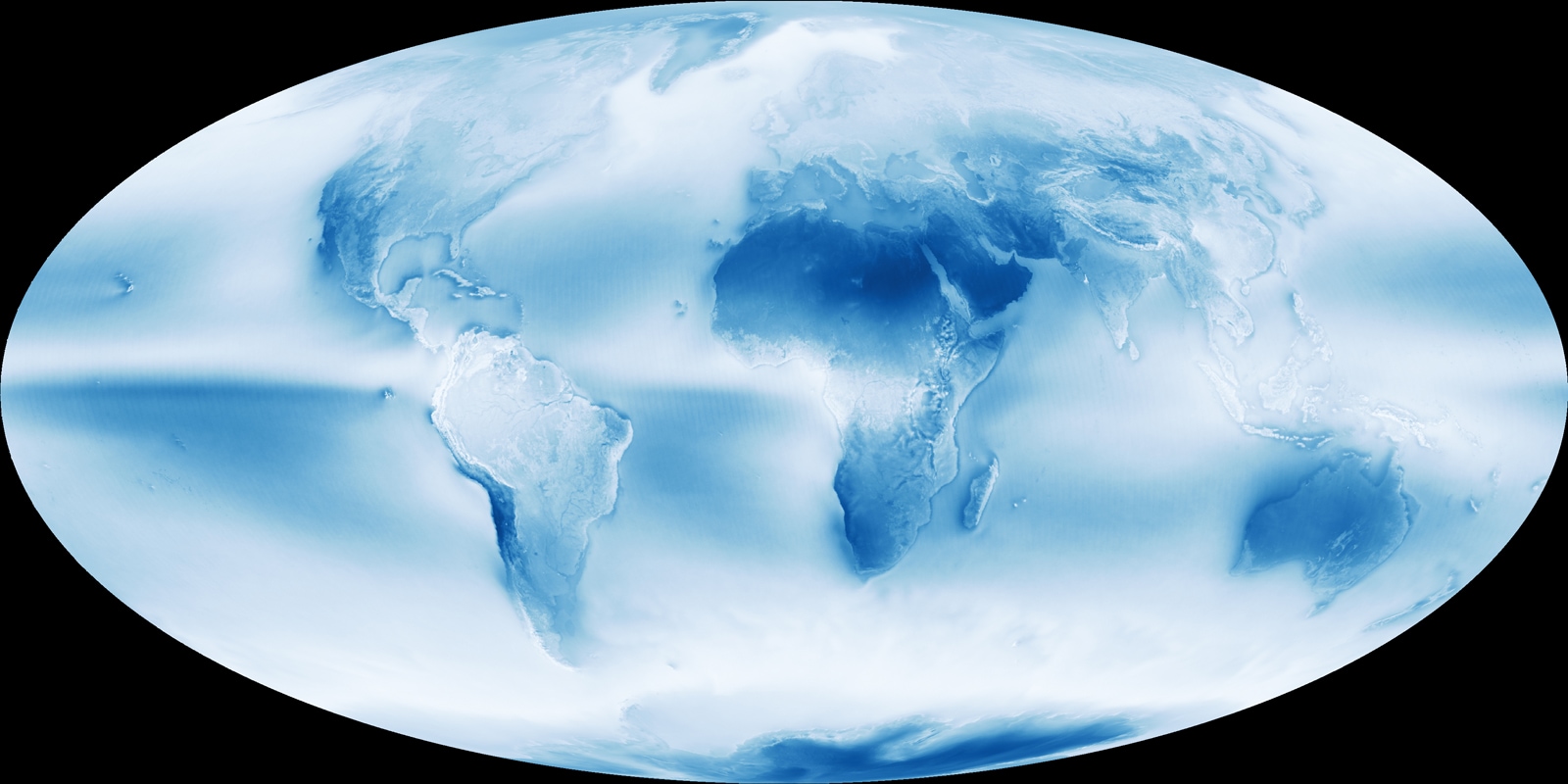
Empirical records of cloud cover obtained by historical sunshine recorders offer
valuable
insights into one of the most
debated mechanisms of interaction between the cosmos and climate: the influence of
galactic
cosmic rays (GCRs) on cloud
formation. The GCR flux, modulated by solar activity, increases during solar minima and
decreases during solar maxima.
According to one of the most widely accepted hypotheses, GCRs ionize the air in the
lower
atmosphere, promoting the
creation of condensation nuclei and thus low clouds, which reflect solar radiation with
a
cooling effect. In this
context, historical sunshine series recorded by heliophanometers become a fundamental
resource
for verifying and
backdating these theories on the link between the solar cycle, cosmic rays, and Earth's
climate.
But the study of the Sun is not limited to climatology alone. Variations in irradiance
are
closely linked to solar
magnetic activity, responsible for so-called space weather, which investigates the
effects of
extreme solar variations,
such as flares and coronal mass ejections, on the space environment and on planet
Earth.
In this
context, the heliograph
represents a historical starting point: a tool which inaugurated the long tradition of
measuring
solar energy, now at
the center of research that unites climatology, solar physics, and planetary security.
___Clementina Sasso
References
Aurino, S. (1934). Eliofania e nebulosità a Napoli nel
1931.
Napoli: Tipografia Arturo Nappa.
Dorman, L.I. (2012). “Cosmic rays and space weather: effects on
global
climate change”, Annales Geophysicae, 30, pp.
9-19.
Marsh, N.D. & Svensmark, H. (2000). “
Cosmic rays, clouds, and climate”,
Space Science Reviews, 94(1-2), p. 215-230.
___
___