Introduction
The section Bellebbuono: improvvisamente il meteo a Napoli, curated by the
Astronomical Observatory of Capodimonte for the exhibition South Rish and developed
within the research
activities of the PRIN-PNRR project, offers a journey through three centuries of
observations, images, and instruments
that have intertwined the history of the city with atmospheric and natural
phenomena.
The exhibition highlights the role of Capodimonte’s astronomers, who were protagonists
not only in the study of the sky
but also in broader meteorological research: from auroras to volcanic eruptions, from
climate chronicles to the first
automatic measurements. It thus reveals the layering of scientific, artistic, and social
perspectives that transformed
“sudden weather” into shared knowledge and cultural heritage.
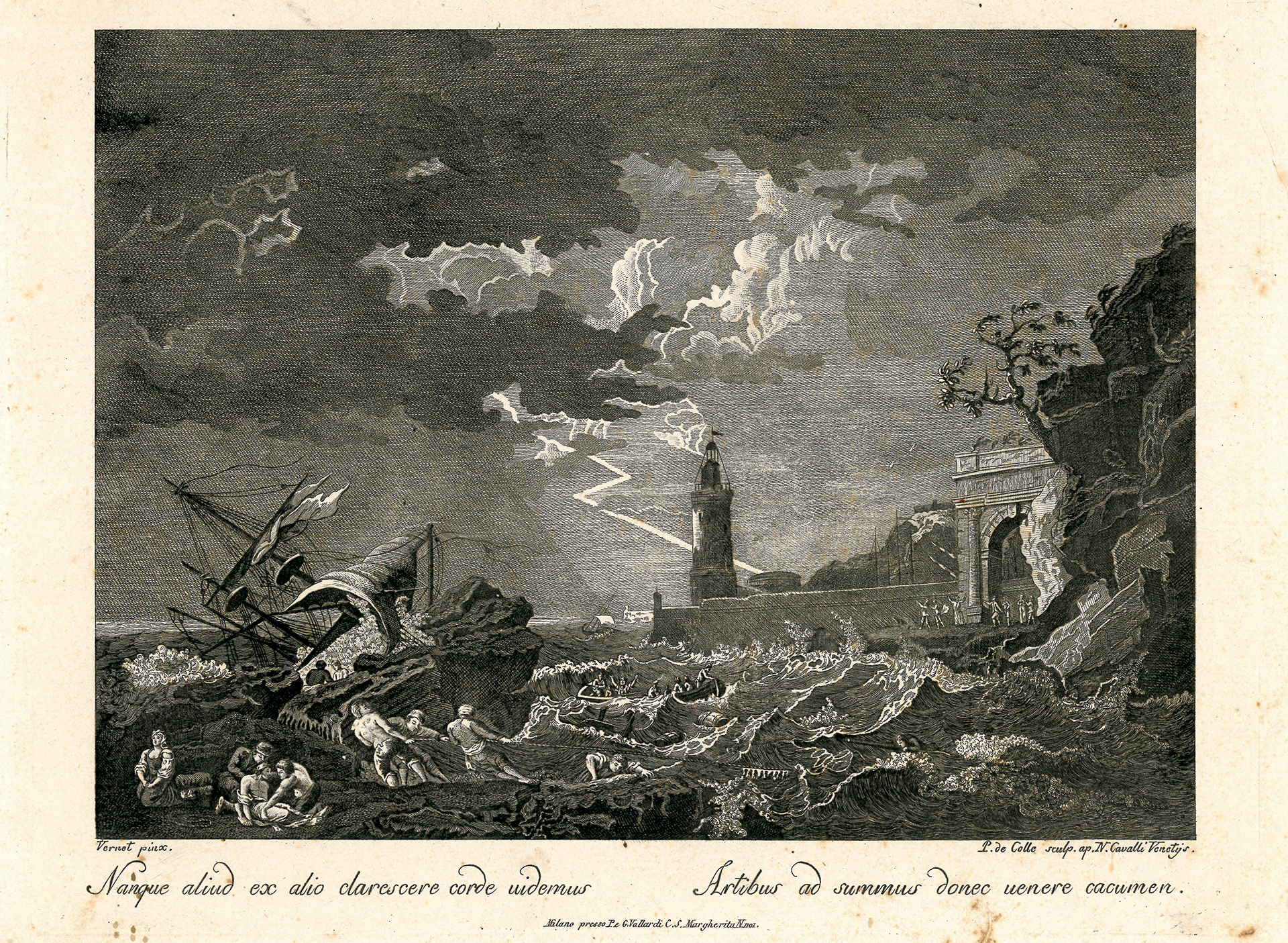
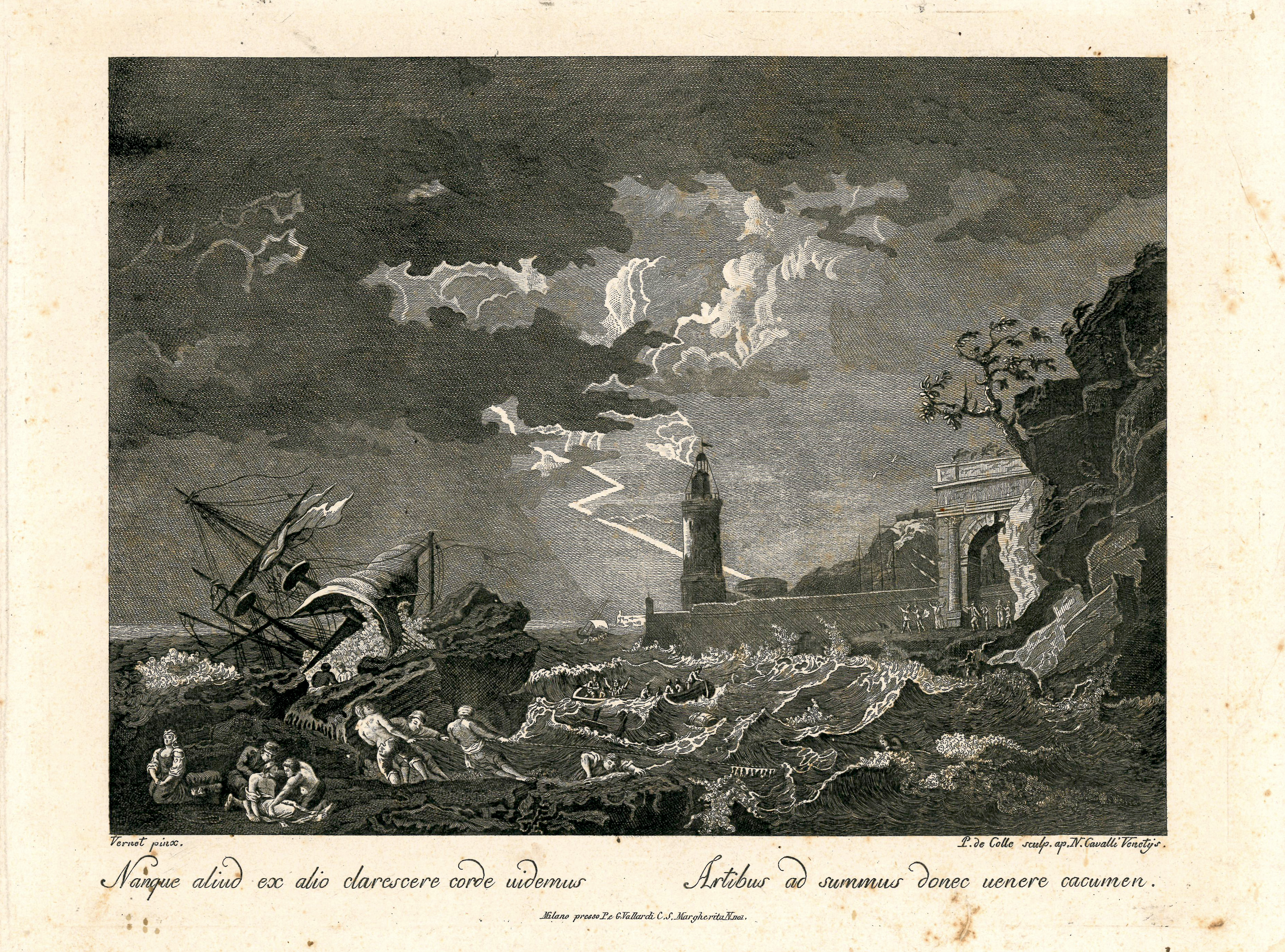
From rare auroras observed at unusually southern latitudes, to the eruptions of Vesuvius
and the earthquakes that marked
collective memory, up to the birth of a systematic meteorological tradition, the
exhibition explores the multiple perspectives through which Naples interpreted the sky and the
Earth: wonder, fear, curiosity, but also
scientific rigor and the capacity
for measurement. This history also includes the introduction of lightning rods,
installed in Naples as early as the late
eighteenth century, symbolizing a city that embraced electrical modernity and trusted
science as a tool of protection
and progress.
The astronomers of the Observatory played a decisive role in this story. They not only
recorded celestial and
atmospheric phenomena but also helped to build a true culture of meteorology: Carlo
Brioschi initiated systematic series
of observations and publications; Ernesto Capocci integrated barometric and thermometric
data with magnetic and
astronomical observations; Leopoldo del Re, Annibale de Gasparis, and Faustino Brioschi
consolidated the editorial and
experimental tradition of the Specola. At the same time, instruments such as barometers,
thermographs, seismoscopes, and
sunshine recorders transformed the perception of weather into objective, comparable
traces, placing Naples within an
international research network.
This tradition of observation and prevention continues today in the study of space
weather: from solar storms to
auroras, to the effects of coronal mass ejections on global technological
infrastructures.
In this interplay of art, science, and memory, Bellebbuono shows how the city has
learned to look at the sky and the
Earth with different eyes: those of popular wonder and those of scientific precision.
The ten panels on display thus
narrate a fragile and profound landscape, in which the South becomes a privileged
laboratory of observation and
dissemination, capable of transforming sudden events into shared knowledge and cultural
heritage.
___Mauro Gargano, Emilia Olostro
Cirella & Clementina Sasso