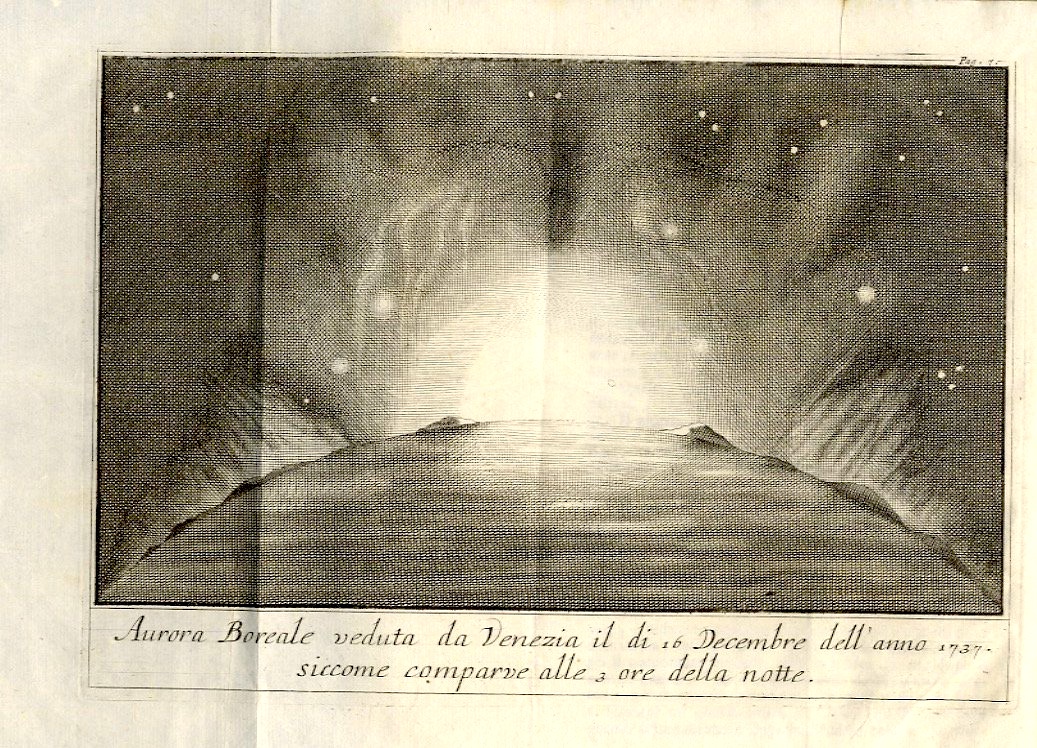
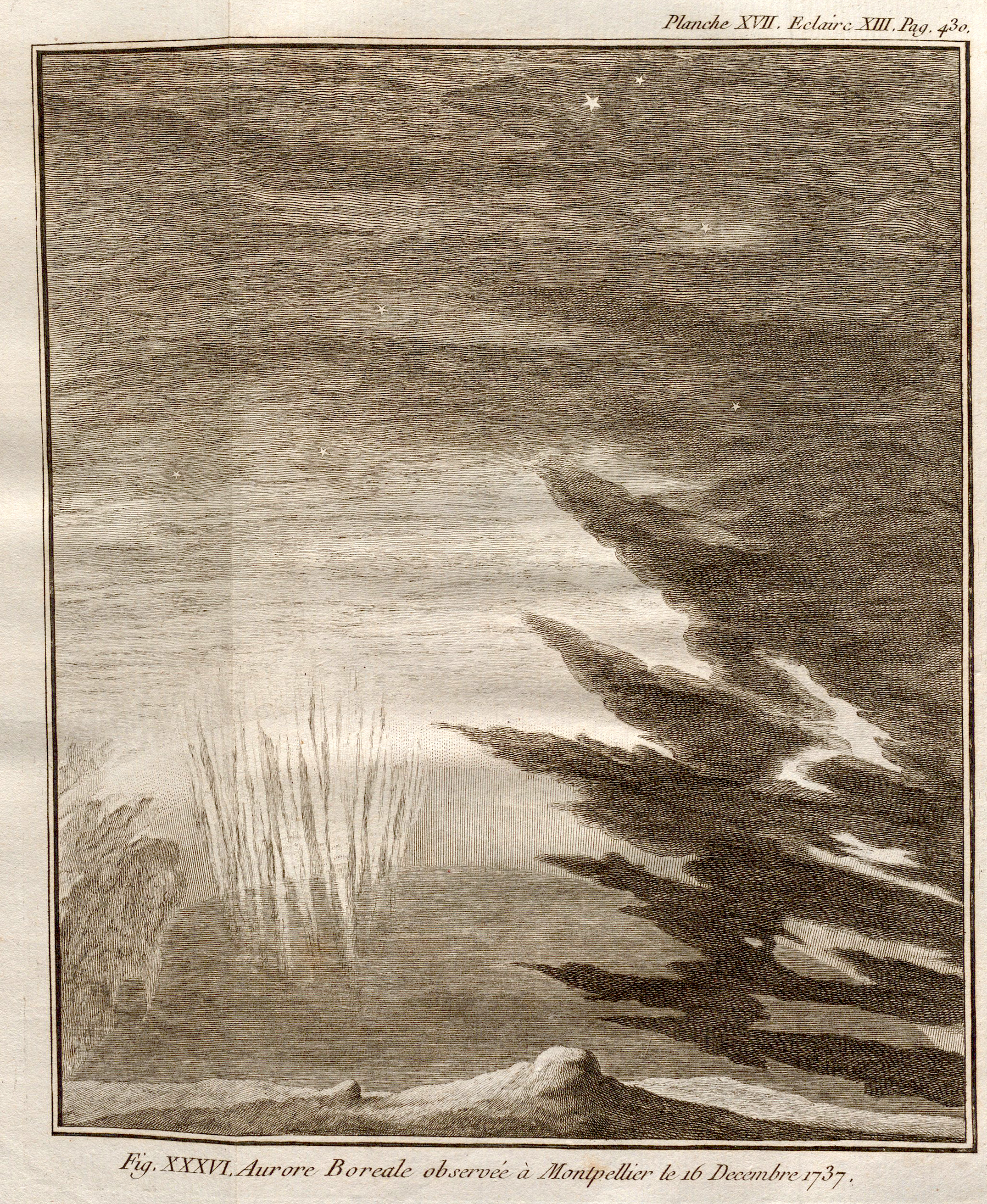
The engraving is among the first visual and interpretative accounts of the auroral
phenomenon observed from Italy.
Sguario attempts to explain the aurora through the principles of Newtonian mechanics,
reflecting the spirit of the
Enlightenment, which aimed to reconcile wonder and rationality. Although rare in
southern latitudes, the aurora borealis
has always aroused wonder, awe, and curiosity, fueling scientific, artistic, and
literary interest. In Naples,
observations of these events are documented from the 16th to the 20th century, revealing
the fascination these celestial
lights exerted on society and the scientific community.
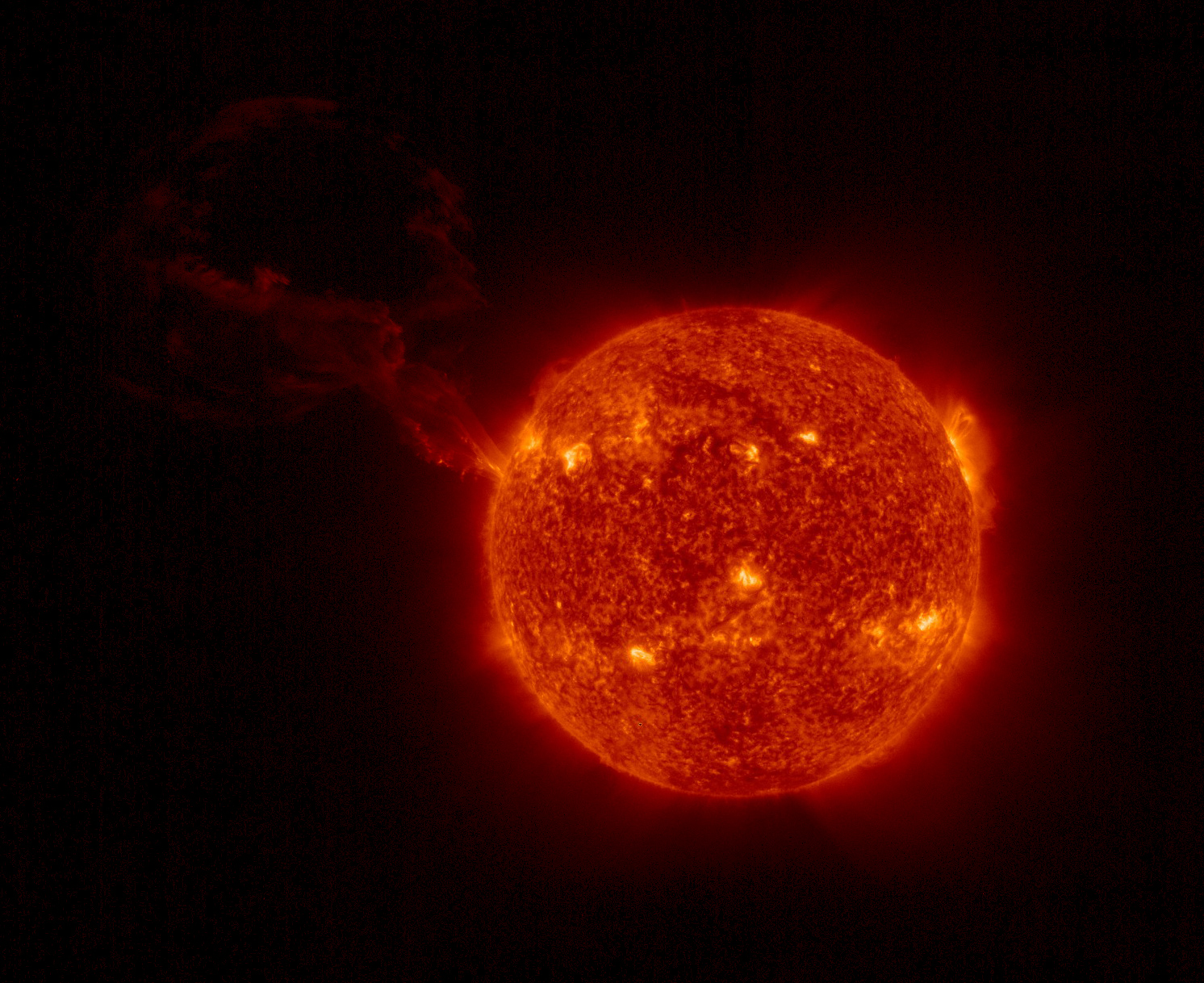
Auroras, or polar lights, are caused by the interaction between charged particles
emitted by the Sun and the gases in
Earth's atmosphere. During periods of intense solar activity, particularly at the peaks
of the eleven-year solar cycle,
coronal mass ejections can project plasma toward Earth. If directed toward our planet,
these particles penetrate the
magnetic field and head toward the poles, where they excite oxygen and nitrogen atoms in
the upper atmosphere (between
80 and 500 km), generating beams of colored light. To be visible from Naples, solar
storms must be particularly intense,
capable of illuminating a very extensive atmospheric layer. From here, looking north, it
is possible to see the highest
part of the aurora, often characterized by red flashes due to the de-excitation of
oxygen at high altitudes.
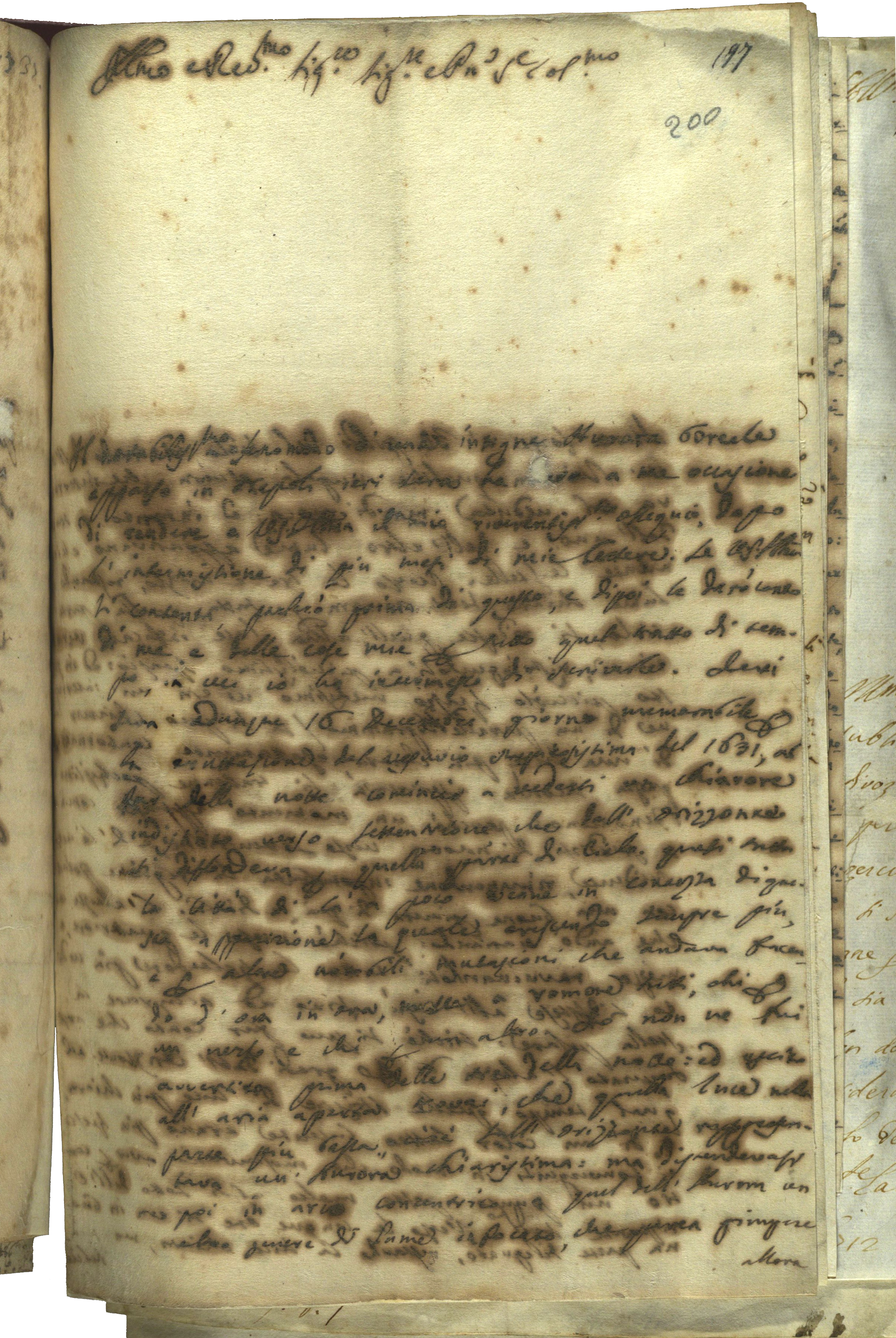
Among the eighteenth-century accounts, that of Francesco Serao, professor of anatomy and
medicine and secretary of the
Academy of Sciences founded by Celestino Galiani, stands out. He precisely described the
aurora of December 16, 1737, in
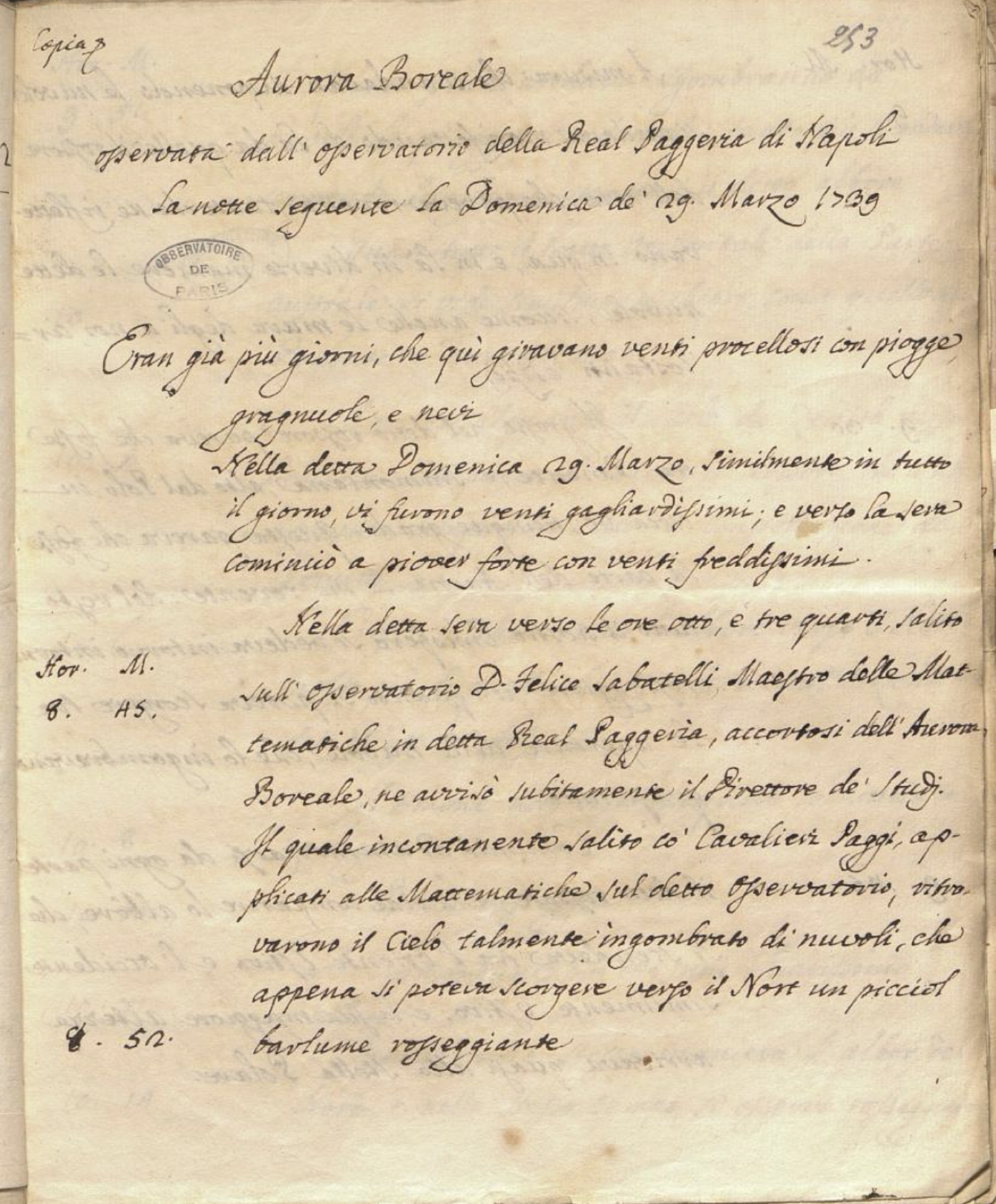
a letter sent to Galiani. A second sighting, on March 29, 1739, was recorded by the
Royal Pages of Naples, where
Francesco Maria Pertusio directed a small observatory frequented by Felice Sabatelli and
his students. The first
scientific explanations were consolidated in 1741, when Anders Celsius and Olof Hiorter
associated variations in the
magnetic needle with the influence of the auroras, introducing the concept of a
geomagnetic storm. Jean-Jacques Dortous
de Mairan, in his Treatise on the Physics and History of the Northern Lights
(1733 and 1754), confirmed the polar nature
of the phenomenon, attributing it, however, to atmospheric vapors, ruling out electrical
or magnetic causes. In 1778,
Benjamin Franklin hypothesized that auroras were generated by electrical charges
concentrated in the polar regions,
intensified by snow and humidity. These theories, born from rare and surprising
observations such as those in Naples,
demonstrate how celestial phenomena have stimulated widespread and interdisciplinary
scientific research.
___Clementina Sasso
References
D’Aragona, N.M. (1741). “An Account of Red Lights, on Dec. 5.
1737. as observed (at Naples) by
the Prince of Cassano,
F.R.S. and by him sent in a Letter to the President: Translated from the Italian by
T. S. M.D. F.R.S.”,
Philosophical
Transactions of the Royal Society of London, 41(459), pp. 583-586.
Di Martino, P. (1738). Philosophiae naturalis institutionum
libri tres, vol. 3.
Neapoli: excudebat Felix Carolus Mosca: sumptibus Cajetani Eliae.
Sasso, C., Gargano, M. & Olostro Cirella, E. (2025). “The Northern
Lights in Naples: An
Insights from Science, History
and Art,” in Magazù, S. & Caccamo, M.T. (eds.), Rischio Sud: dalla raccolta dati
agli interventi di
monitoraggio e
prevenzione dei rischi. Una storia del Sud. Messina: Accademia Peloritana
dei Pericolanti. (in press)
___
___