In the 19th century understanding of the aurora borealis was enriched by new scientific
and artistic perspectives,
marking a growing awareness of the connection between solar activity and terrestrial
atmospheric phenomena. In Naples
observations of the aurora multiplied, giving rise to accounts that interweave
scientific rigor, aesthetic sensitivity,
and social participation.
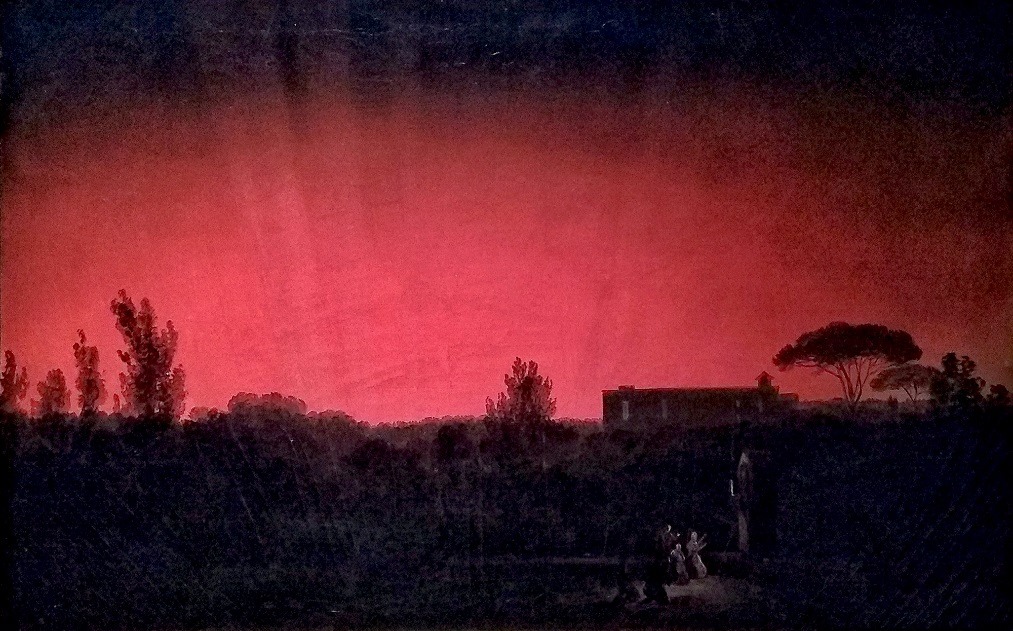
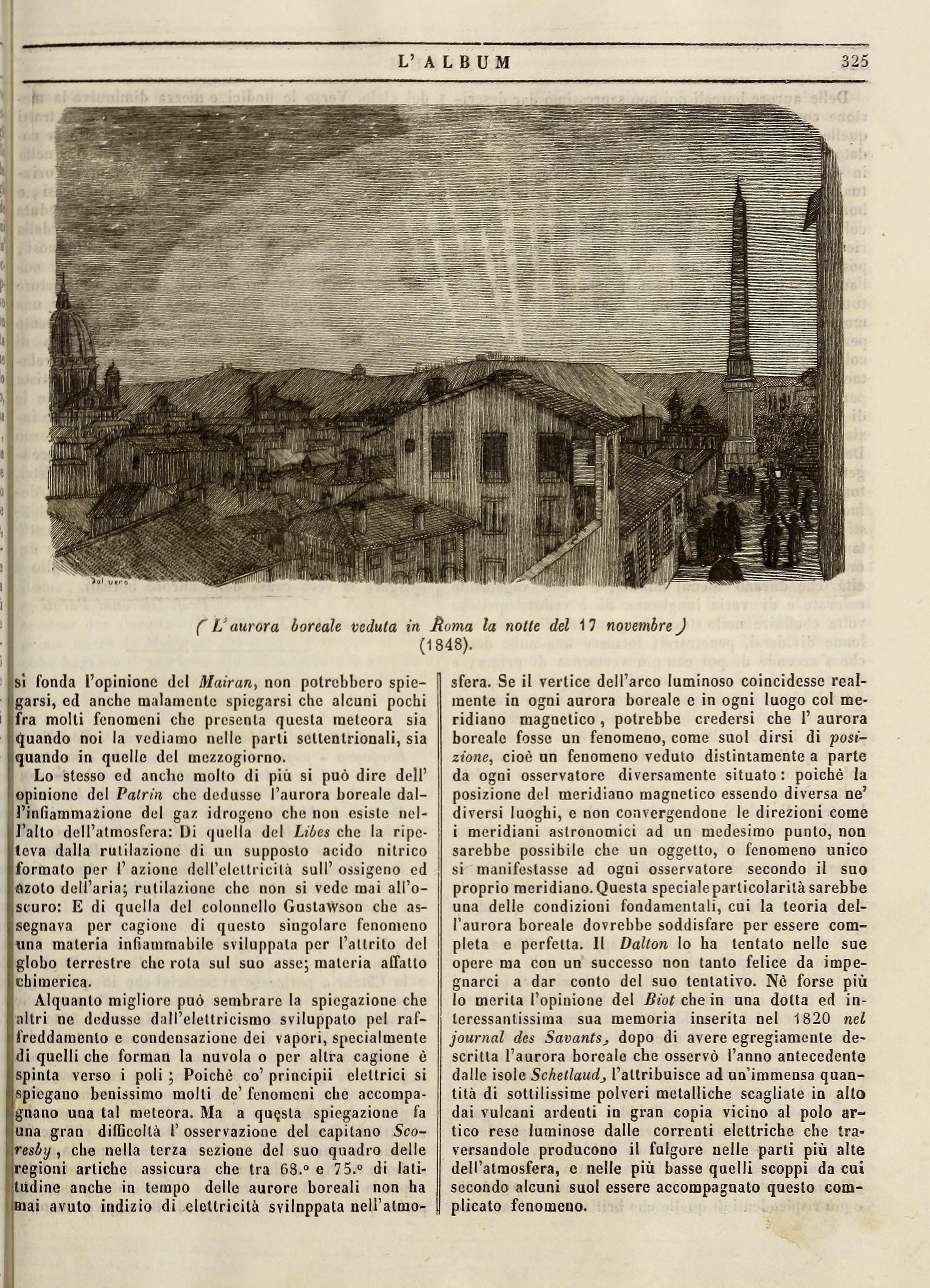
A landmark episode was the aurora of 1848, observed from the Capodimonte Observatory and
portrayed by Salvatore Fergola,
a painter of the Posillipo School. Fergola created two versions of the phenomenon,
documenting the different phases with
intense colors and rays of light overlooking the countryside northwest of the
observatory. In the second painting, a
small votive shrine and a group of people gathered in prayer testify to the emotional
reaction to the event. Commander
Mario Patrelli, director of the Royal Navy Observatory, offered a technical description,
contributing to the recording
of the event.
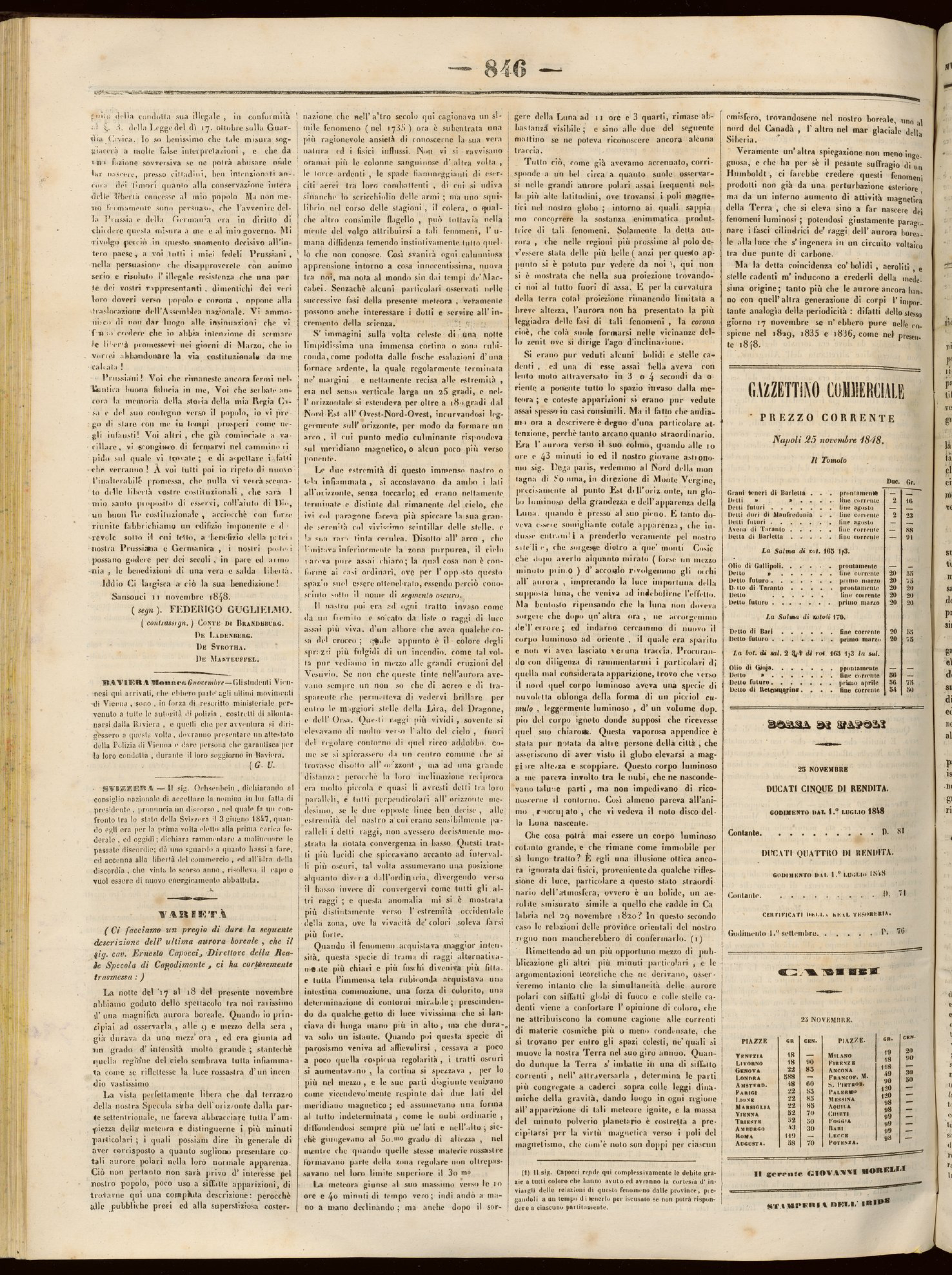
Scientific outreach joined the popular narrative through the voices of Ernesto Capocci
and Annibale de Gasparis, who
described the aurora in local newspapers. Capocci described "a crimson zone" that
extended 180° across the horizon, with
transparent shadows that allowed the stars to be glimpsed. Capocci urged Neapolitans to
interpret the phenomenon with
scientific curiosity, without resorting to superstition.
His reflections received international resonance: in the Comptes Rendus de l’Académie
des Sciences, he was praised for
his poetic sensitivity, although there were reservations about his hypothesis that
moonlight during eclipses could
derive from terrestrial auroras. In the Monthly Notices, his theory on the common
origin of auroras, meteorites, and
comets was discussed by Thomas Galloway, who appreciated its originality while
emphasizing the need for experimental
confirmation.
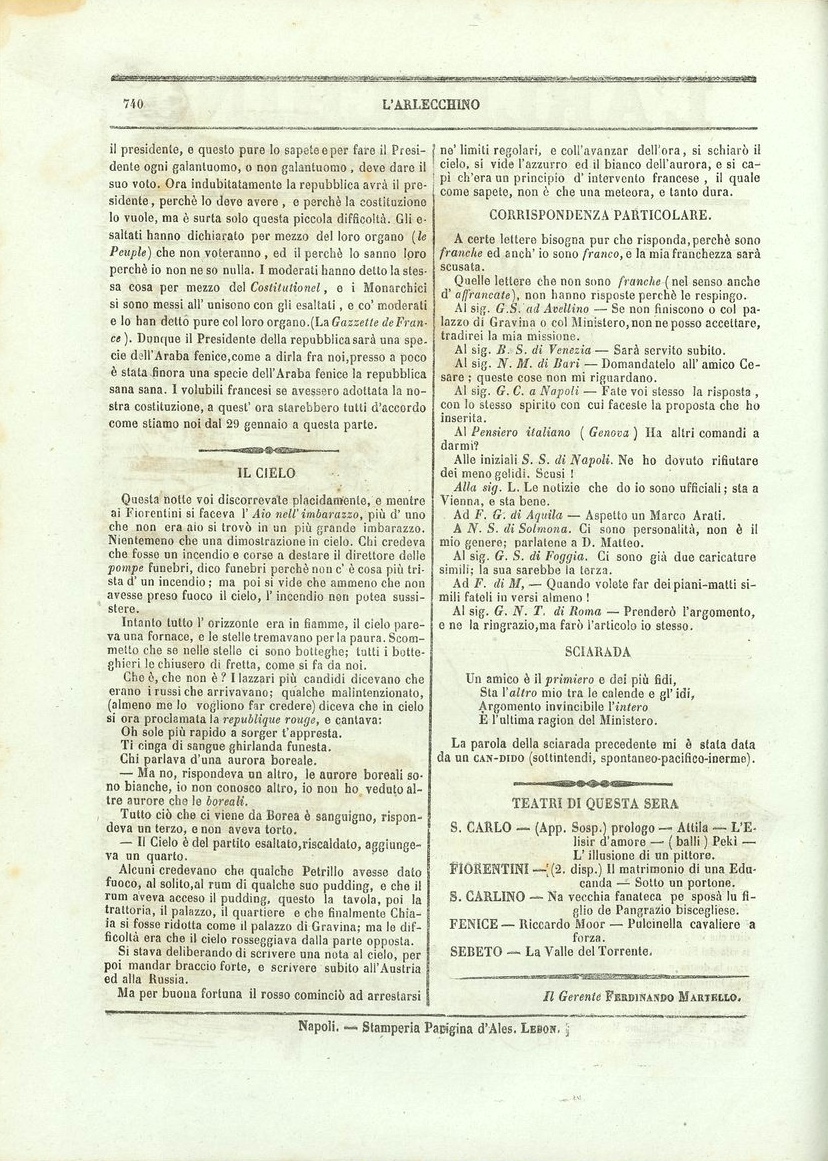
Neapolitan satire greeted the event with comic flair: in the magazine
L'Arlecchino, the aurora became a theatrical and
political allegory, featuring celestial merchants, red republics, and burning puddings.
In contrast, the clerical
response was severe: the magazine Verità e Libertà accused Capocci of having
characterized the popular reaction to the
aurora of 1737 as "superstitious consternation," defending the role of the clergy and
criticizing the astronomer for
failing to provide reassuring explanations.
Interest in the "Sun-Earth connection" was consolidated thanks to the studies of Angelo
Secchi, who in his book Le
Soleil hypothesized continuous magnetoelectric influences between the Sun and the Earth.
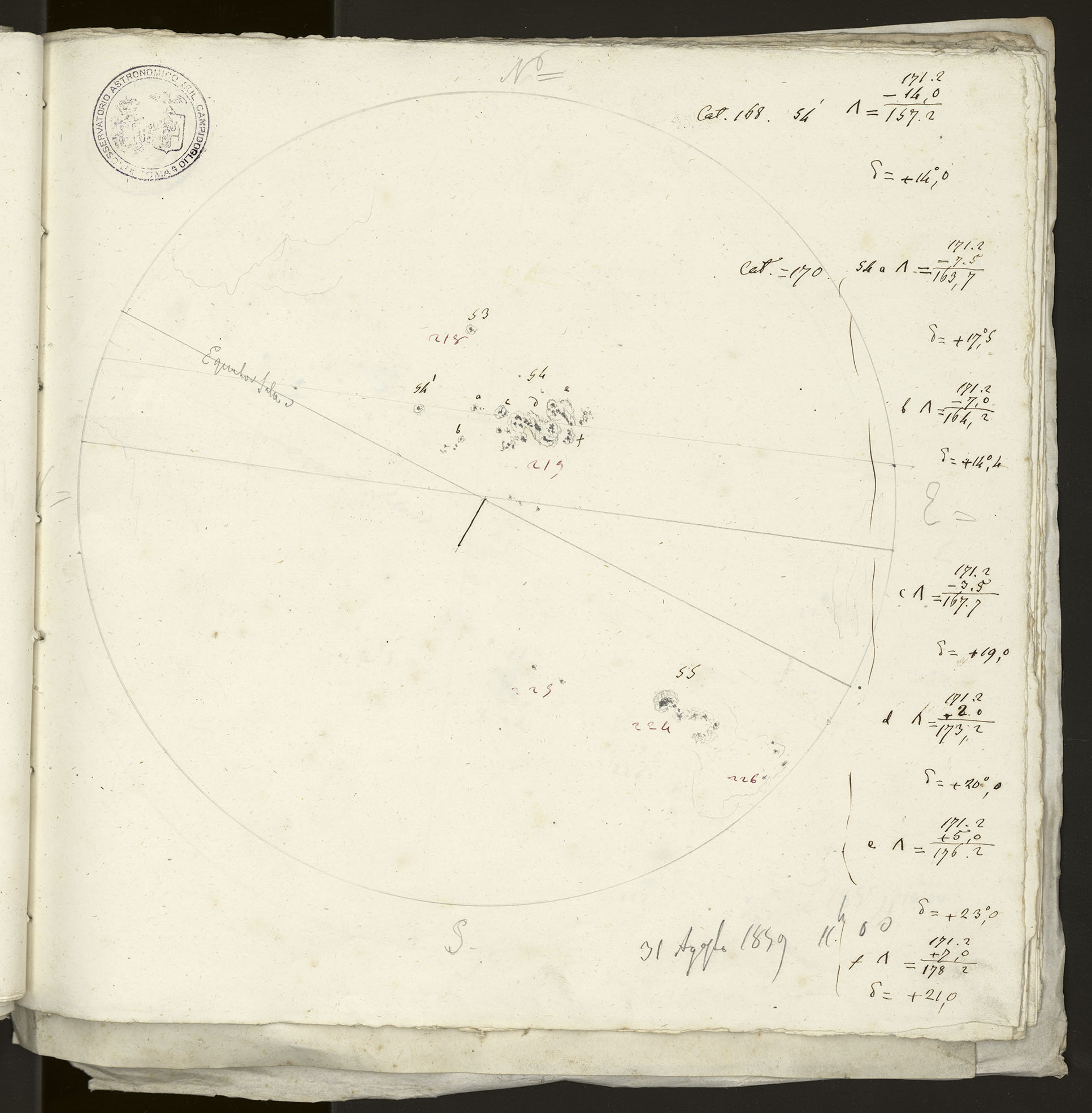
On September 1, 1859, Richard
Carrington observed a strong solar flare, associated with auroras visible even at low
latitudes and global telegraph
failures. Secchi observed the phenomenon from Rome, while no sightings were recorded in
Naples on that date. However, on
October 12, 1859, Patrelli documented an aurora borealis from the Royal Naval
Observatory, visible for 43 minutes. These
episodes demonstrate how, in the 19th century, Naples was an active participant in a
network for the observation and
interpretation of celestial phenomena, where art, science, and society converged in the
splendor of the sky.
___Clementina Sasso
References
Chinnici, I. & Gargano, M. (2018). “L’aurora boreale osservata a
Napoli”, in Chinnici I. (a cura
di), Tra cielo e terra:
l'avventura scientifica di Angelo Secchi. Napoli: Arte’m, p.27.
Patrelli, M. (1848). “Relazione dell’aurora boreale osservata in
Napoli la sera del 17 novembre
1848 dall’Osservatorio
Astronomico della Reale Marina”, endiconto delle adunanze e de’ lavori
dell'Accademia napolitana delle
scienzeR, 7, pp.
383-388.
Patrelli, M. (1859). “Relazione dell’aurora boreale osservata la
sera del 12 ottobre 1859 dal
Reale Osservatorio di
Marina di Napoli”, Annali civili del Regno delle due Sicilie, 67, pp. 158.
___
___