In February 1778, Naples saw the installation of its first lightning rod, thanks to the
initiative of Ascanio
Filomarino, Duke of La Torre. Inspired by the principles of Benjamin Franklin, the device was
mounted on the home of
Giovanni Carpintero, marking the city’s entry into electrical modernity and a new culture of
scientific prevention.
This pioneering installation was soon followed by others: on the British embassy residence at
Palazzo Sessa near today’s
Piazza dei Martiri, commissioned by the English envoy William Hamilton; on the Palazzo
Caramanico in Via Medina; and on
Palazzo Doria d’Angri at Largo Santo Spirito. The presence of atmospheric conductors on both
public and private
buildings reflected a growing trust in science as a tool for urban protection and rational
planning.
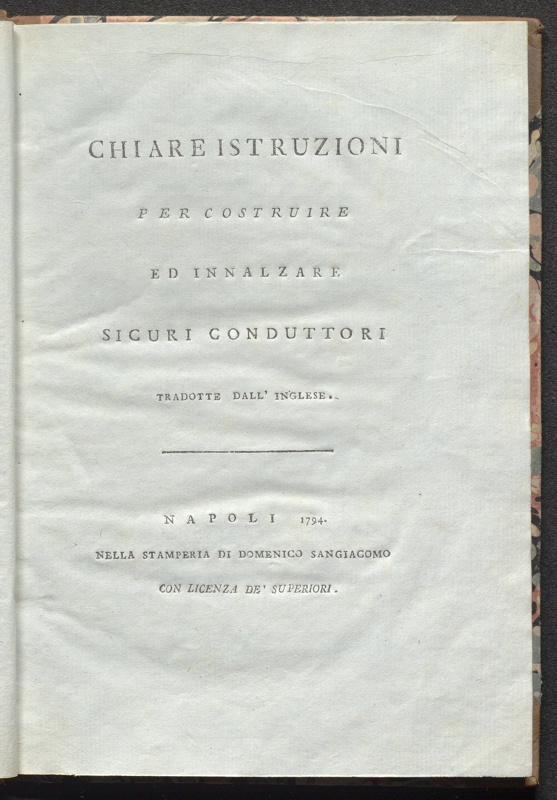
The spread of lightning rods was supported by the publication of the treatise Clear Instructions
for Constructing and
Raising Safe Conductors, translated from English by Felice Sabatelli, professor of astronomy at
the University of
Naples, and printed in 1794. Brought to Naples through the mediation of Lord Hamilton, the text
offered practical
guidance for building and installing conductors, helping to promote their acceptance in both
urban and scientific
circles.
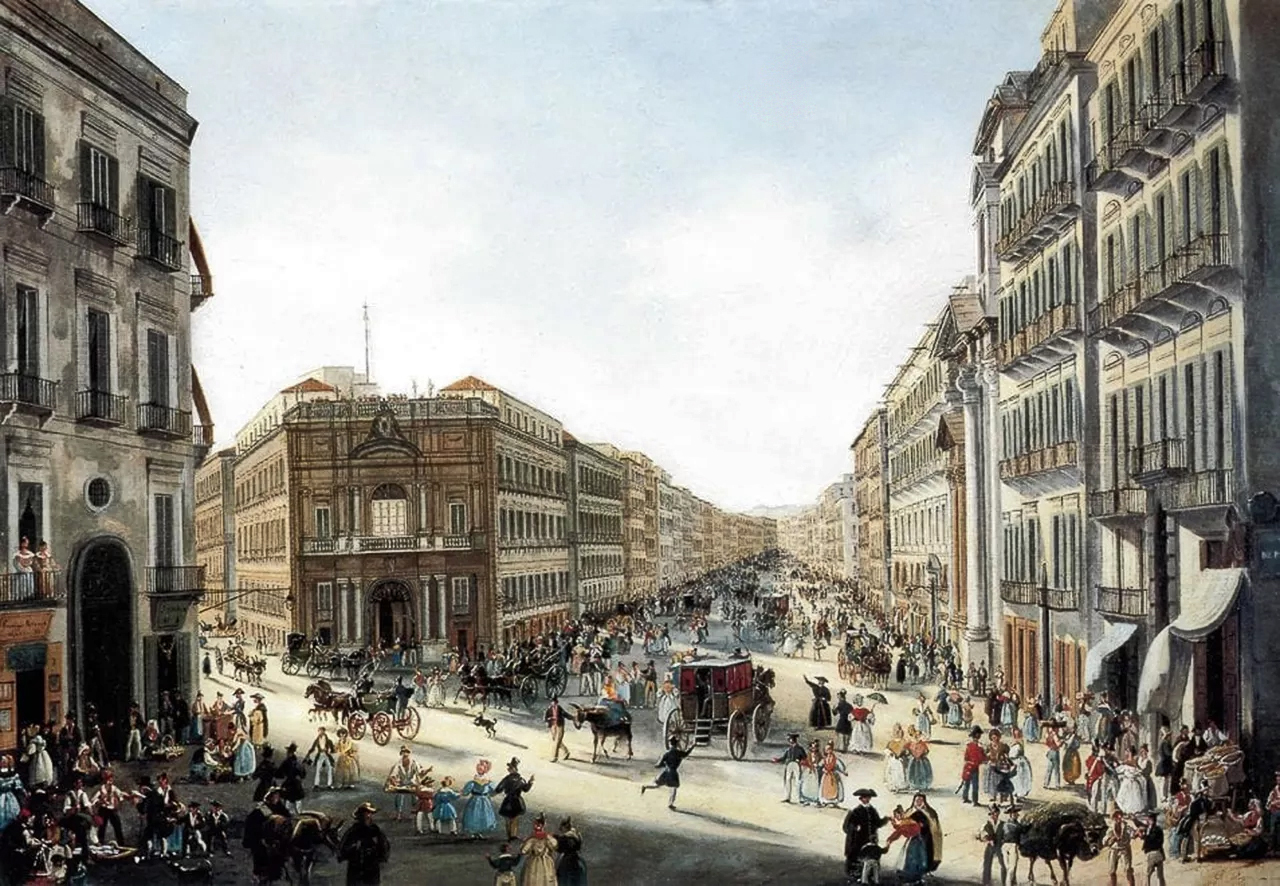
A striking visual example of the lightning rod’s adoption appears in Gaetano Gigante’s painting
Via Toledo from Piazza
dello Spirito Santo, where a conductor is clearly visible atop Palazzo Doria d’Angri.
This seemingly minor detail
reveals how technology became integrated into daily life and the architectural imagination of
nineteenth-century Naples.
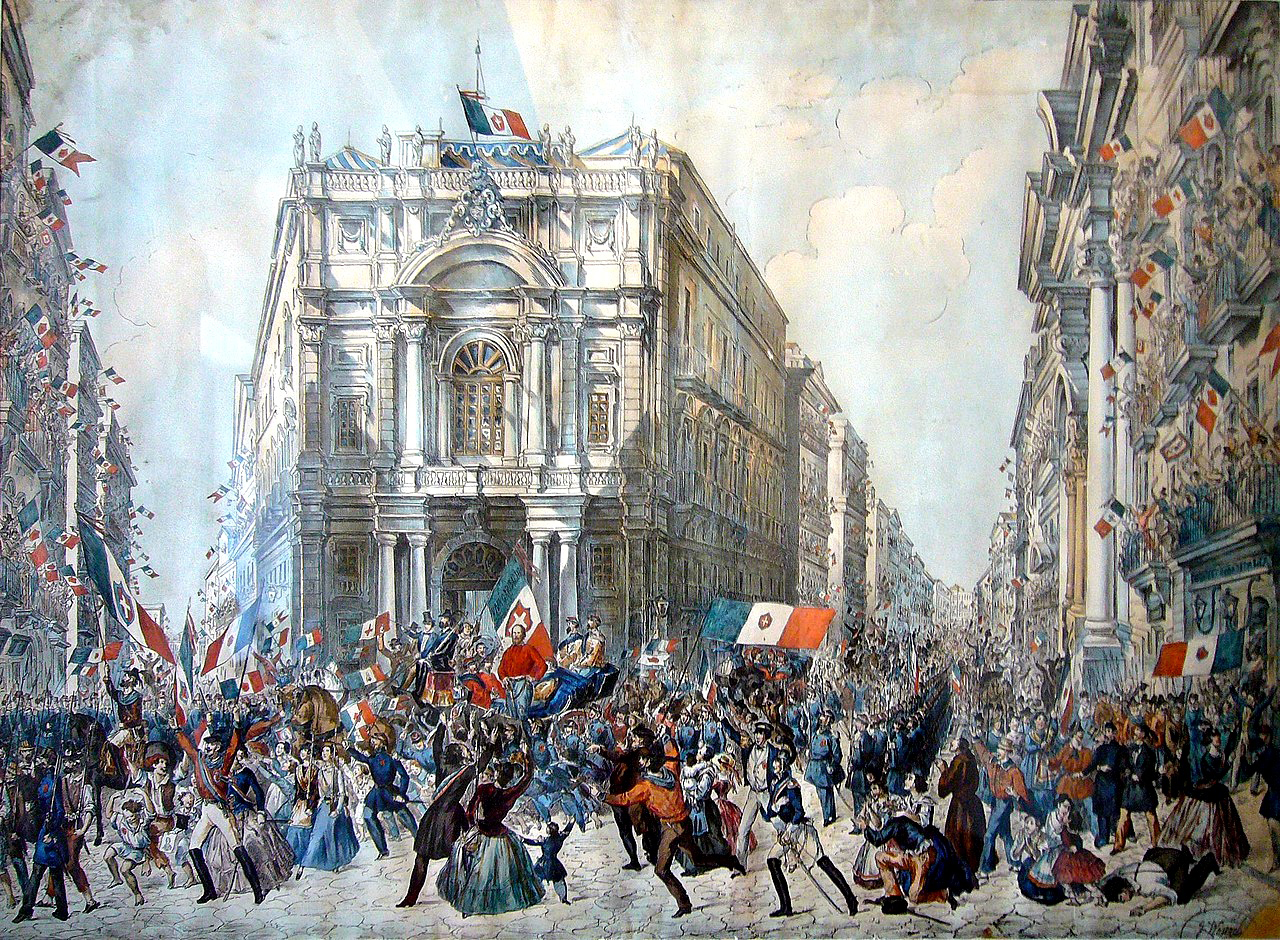
The device also appears in the famous print of Garibaldi’s entrance into Naples on 7 September
1860, mounted on the very
building from which the general proclaimed the annexation of the Kingdom of the Two Sicilies to
Italy: “of which Naples
forms the finest part … [today] is truly a glorious and sacred day, in which the people [become]
… a free nation.”
From technical device to symbol of rationality and progress, the lightning rod transformed the
urban landscape and
helped solidify Naples’ role as a center of scientific experimentation and electrical outreach.
___Mauro Gargano
References
Gargano, M. (2025). “South-risk, South-safety: the lightning rod in
enlightenment Naples”,
Bulletin of Regional Natural History, 5(2), pp.24-45.
Sangiacomo, D. (1794). “Ai Lettori”, in Simmons, J., Chiare
istruzioni per costruire ed innalzare sicuri conduttori.
Napoli: nella stamperia di Domenico Sangiacomo, pp. V-X.
Simmons, J. (1775). An essay on the cause of lightning, and the manner
by which thunder-clouds
become possessed of their electricity,
deduced from known facts and properties of that matter To which are added, Plain
directions for constructing and
erecting safe conductors. Rochester: printed and sold by T. Fisher, London: by S.
Crowder, Pater-noster-Row.
___
___