In 1845 Ernesto Capocci (1798-1864) added to the traditional Calendario di Napoli per l’anno
1846, “calculated at the
Royal Observatory of Naples for common use,” a new editorial project: the Annuario del reale
Osservatorio di Napoli. His
aim was innovative: to devote ample space to scientific news from around the world and make it
accessible even to a
non-specialist audience.
In the Preface to the work, Capocci clearly explains the aims of
the almanac, “in a certain
sense encyclopedic and intended to pass through everyone’s hands”, conceived to combine
scientific popularization with
practical usefulness in everyday life.
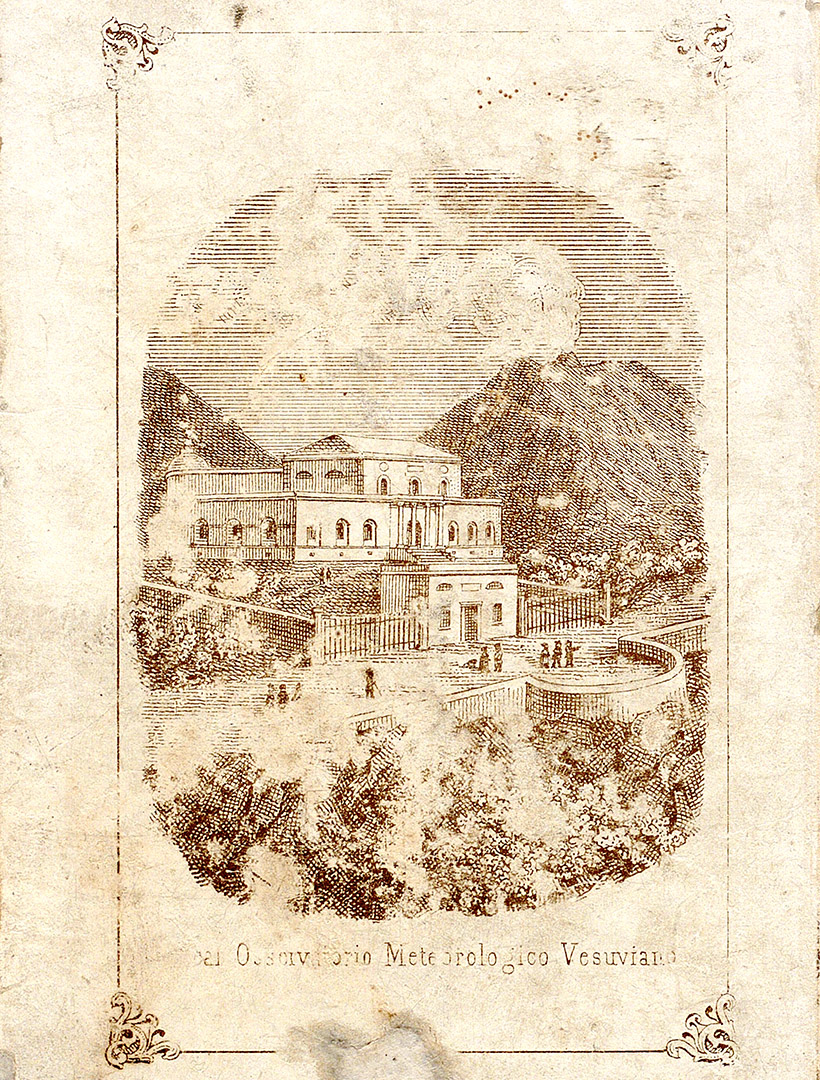
The originality of the little volume is emphasized by
its publisher’s cover,
embellished with two charming engravings by the German painter and engraver Ludwig Richter
(1803-1884). The front cover
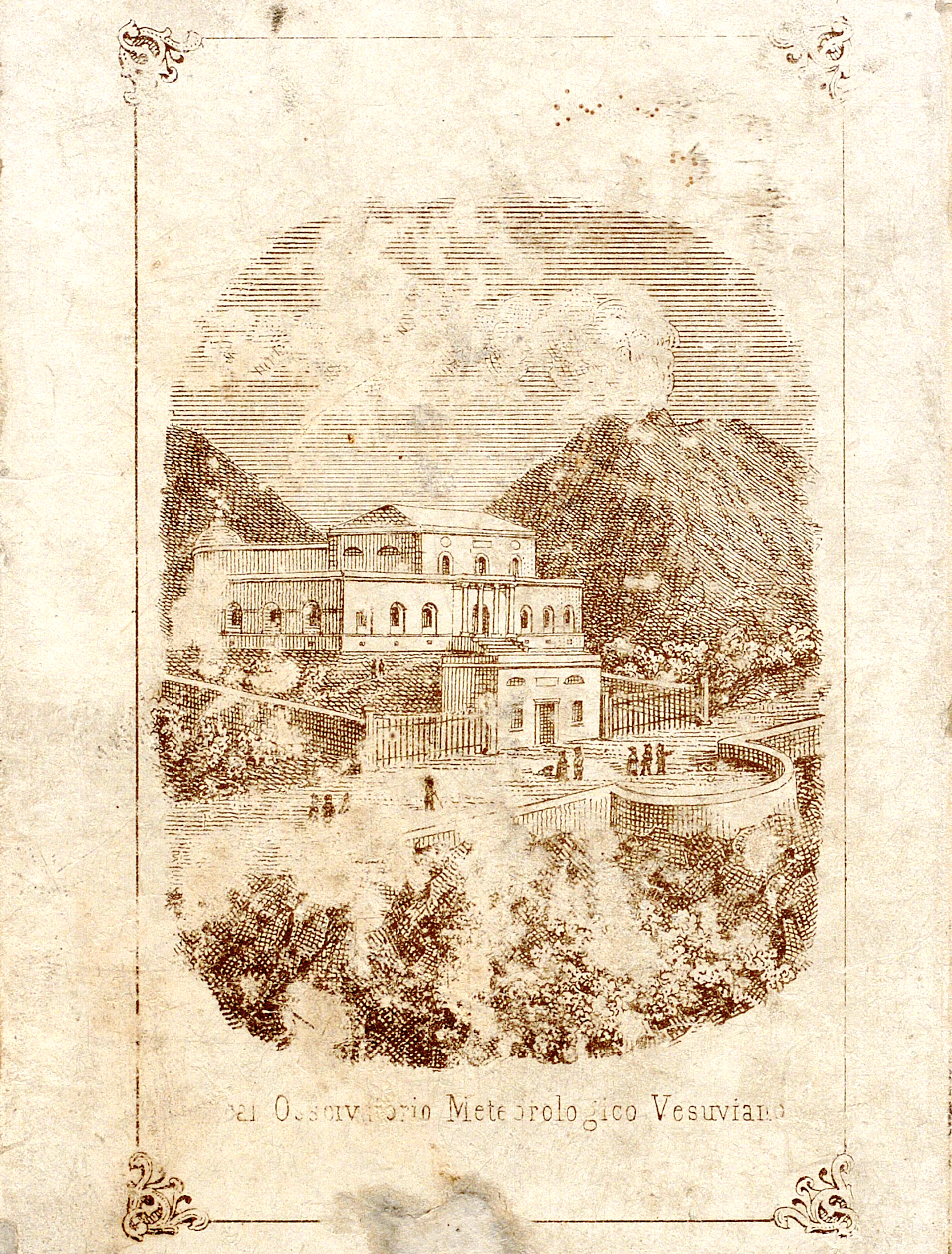
depicts the “Royal Astronomical Observatory”, framed by ivy tendrils; the back cover, by
contrast, shows the “Royal
Vesuvius Meteorological Observatory”, enclosed within small decorative motifs. The choice was
not accidental. In 1845,
on the occasion of the Seventh Congress of Italian Scientists held in Naples, the Vesuvius
Observatory was inaugurated
and entrusted to Macedonio Melloni (1798-1854), although the construction of the building was
still far from complete.
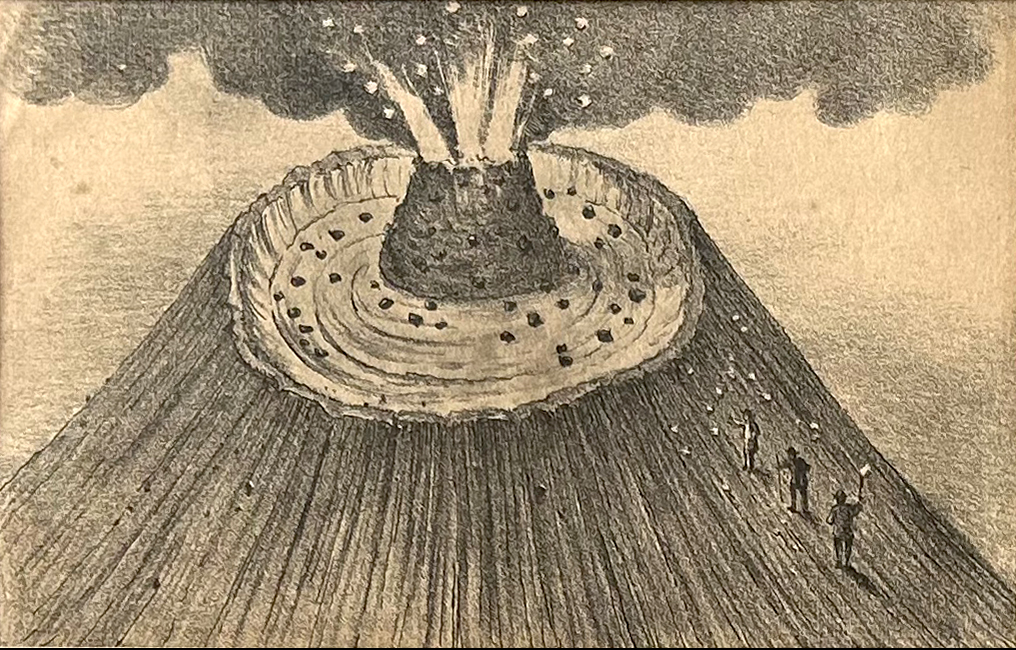
The distinguished physicist was tasked with delivering the inaugural address and, at the same
time, presenting an
important report on the origin of double-crater volcanoes.
Melloni’s arrival in Naples was
strongly supported by Ernesto
Capocci, with whom he shared both scientific and political affinities. The two scientists had
met in Paris in 1837, when
Melloni was in exile after being expelled from Parma for his liberal sympathies and for having
praised the French
student uprisings of 1830. Capocci undertook that stay in the French capital to examine new
technologies – such as gas
street lighting – and to purchase scientific instruments. He was deeply impressed by Melloni’s
personality and by his
expertise in experimental physics, which had earned him the prestigious Rumford Medal of the
Royal Society. Capocci
worked with great determination to persuade the king that his friend and colleague should be
called to Naples to assume
a position worthy of his scientific talents.
Finally, in 1839, Melloni was appointed
director. Moreover, on several
occasions he had expressed his appreciation for the interest shown by the government of the
Kingdom of the Two Sicilies
in scientific matters. Thus, he wrote to Giovanni Battista Amici (1786-1863) about Capocci and
about Naples: “…Mr.
Capocci, director of the Astronomical Observatory, seeing me indefatigably engaged in physics…
asked me whether the
offer of a position in that city [Naples] would be agreeable to me. Upon my affirmative reply,
he immediately informed
the Government of Naples, requesting me to not accept any other position before hearing the
Minister’s decision, which
he expected to be prompt and favorable.”
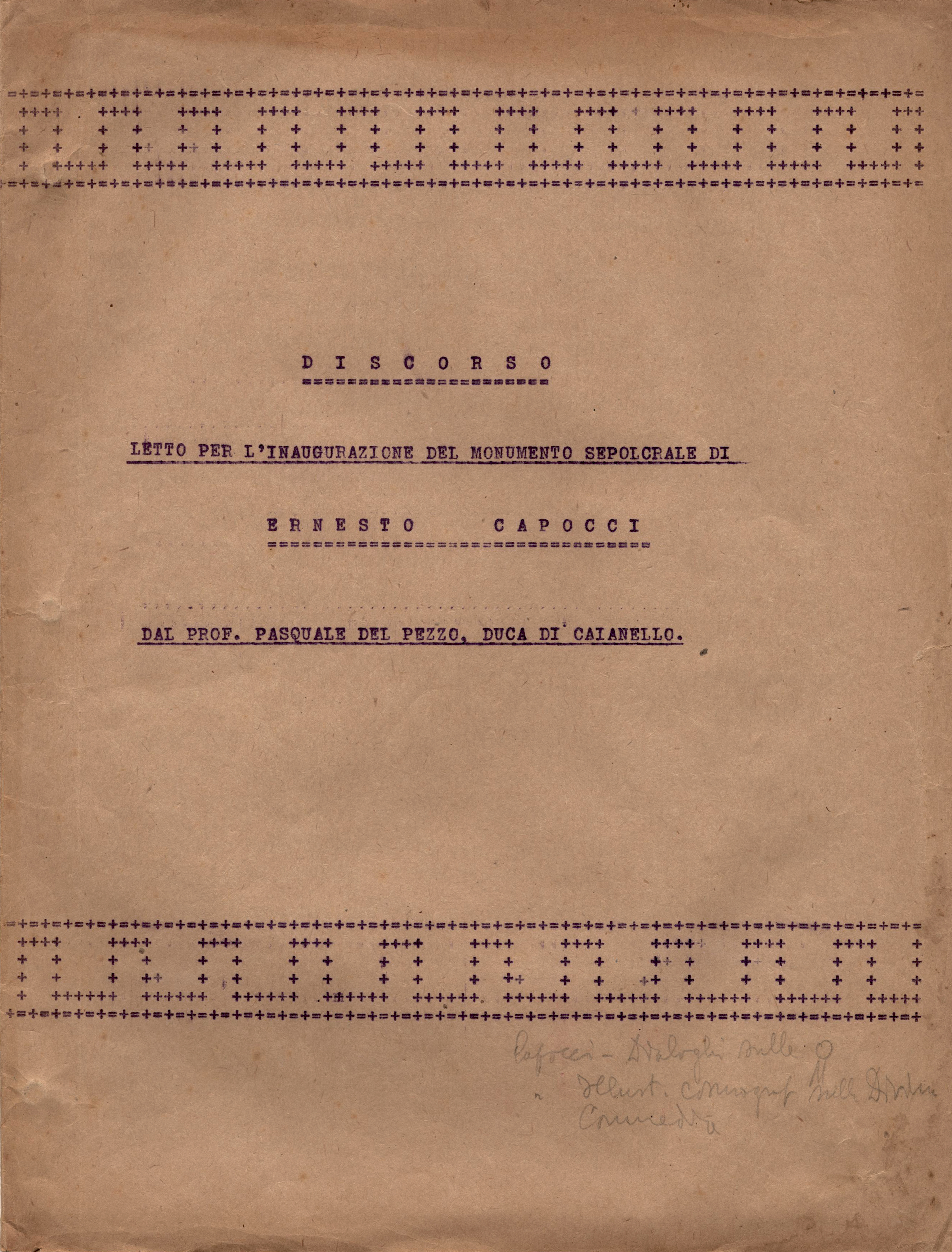
Also the Discorso letto per l’inaugurazione del
monumento sepolcrale di Ernesto
Capocci (Address delivered for the inauguration of Ernesto Capocci’s funerary monument) by
Pasquale Del Pezzo
(1859-1936), Duke of Caianello, preserved in the Archives of the Capodimonte Observatory,
testifies to the deep bond of
esteem and friendship between the two scientists: “He returned to Naples in the spring of 1838,
and there he was the
most ardent and effective advocate,with the Bourbon Government, for the arrival of Macedonio
Melloni as director of the
Vesuvius Observatory.”
It took some time to convince King Ferdinand, and just as much
perseverance on Melloni’s part in
declining the invitations, including those coming from influential figures. “After endless
efforts, undertaken to
overcome the inertia of the Government, Capocci was finally able, triumphantly, to inform Arago
in Paris of the success
on 5 March 1839.” After the uprisings of 1848, they shared the same fate as well: removal from
their respective
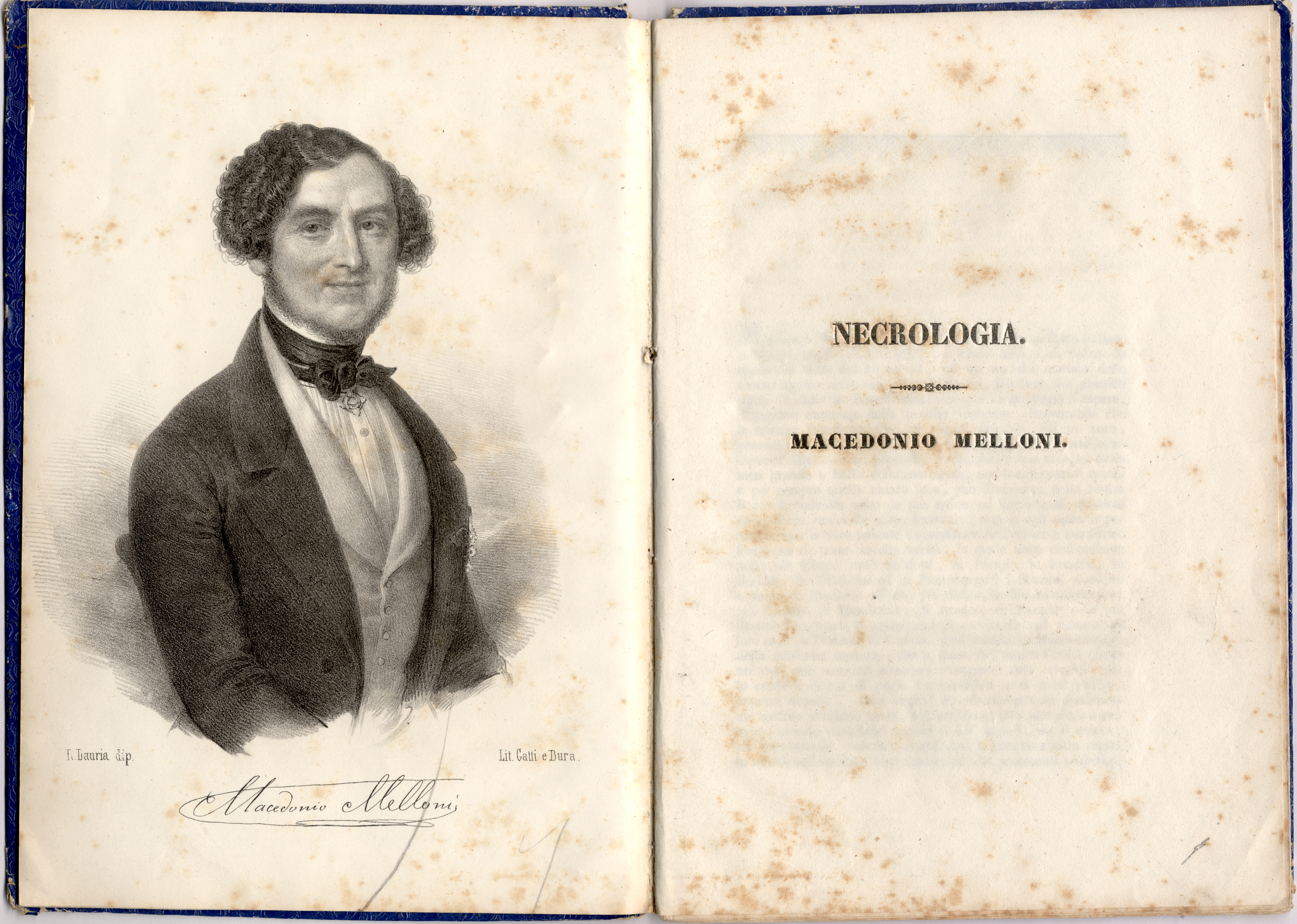
positions due to their progressive ideas. To understand the greatness of these two figures,
above all, let the words
spoken by Capocci in the obituary he wrote upon Melloni’s death serve as an example: “But let us
now cease vain
lamentation, and strive to delineate the imperishable part of this illustrious man, which will
render him glorious in
the memory of posterity, as long as the Sun warms the Earth with its radiant light”.
___Emilia Olostro Cirella
References
Gasparini, P. & Pierattini, D. (1996). “Macedonio Melloni e l’Osservatorio
vesuviano. Le vicissitudini del primo
osservatorio al mondo edificato su un vulcano, e del noto fisico che si battè per la sua
istituzione”, Le scienze, 333
(maggio), pp. 88-95.
Civetta, L. et al. (2004). Il Vesuvio negli occhi. Storie di
osservatori.
Napoli: Unità Funzionale Vulcanologia e
Petrologia, Osservatorio Vesuviano – INGV, pp. 21-24.
Del Pezzo, P. (2015). Discorso letto per l’inaugurazione del monumento
sepolcrale di Ernesto Capocci dal prof. Pasquale
Del Pezzo, duca di Caianello, M. Gargano & E. Olostro Cirella (eds.). Napoli:
INAF-Osservatorio Astronomico di
Capodimonte
___
___