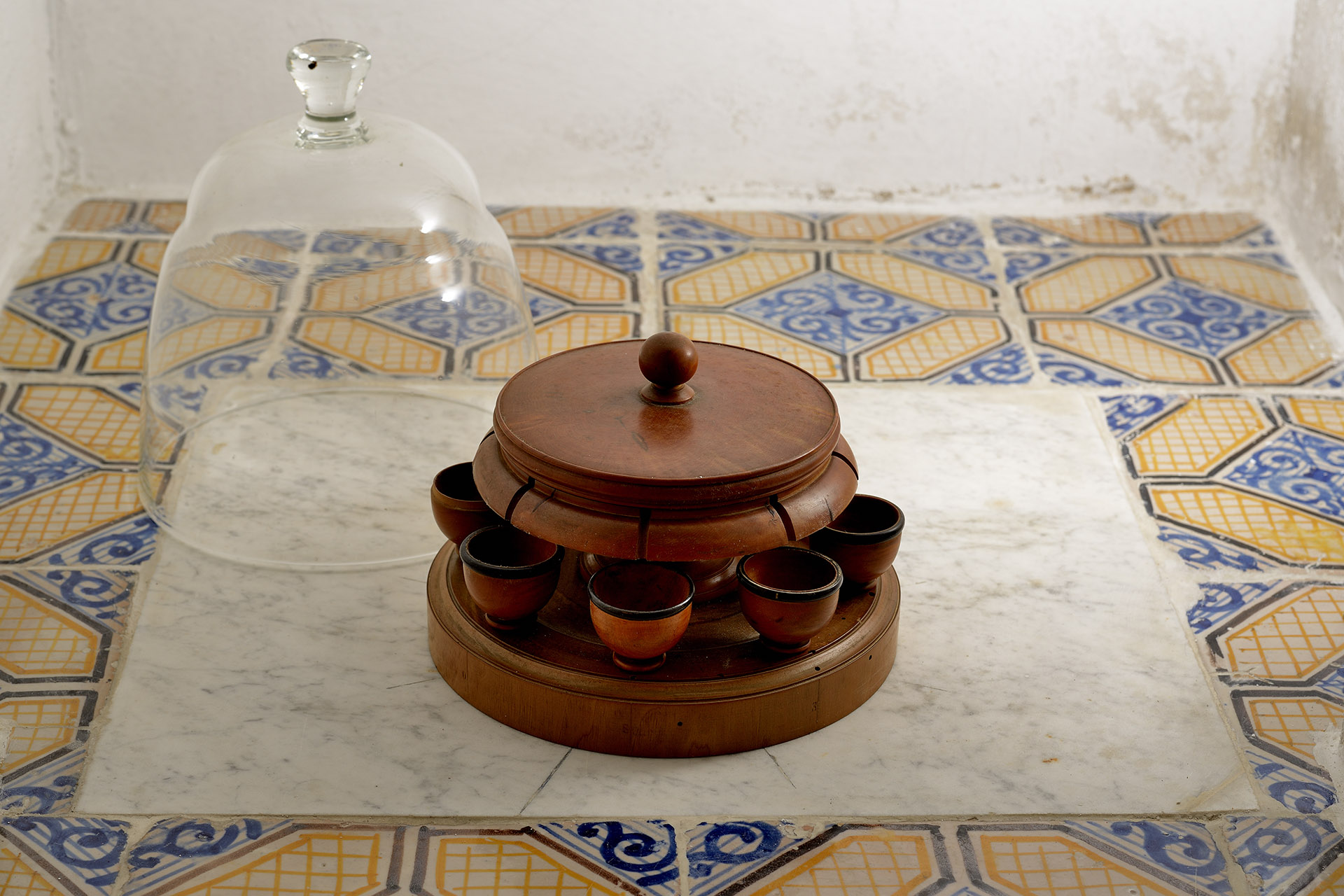
In 1818, Niccolò Cacciatore, director of the Palermo Observatory, designed an ingenious seismoscope based on a mercury
system, intended to permanently record seismic shocks. Although effective, his device could not detect the weaker
oscillations, which Cacciatore himself considered crucial for understanding seismic dynamics.
This pursuit of precision gave rise, throughout the nineteenth century, to a true scientific culture of earthquakes,
nurtured also by the astronomers of the Capodimonte Astronomical Observatory. As early as 1795, Duke Ascanio Filomarino
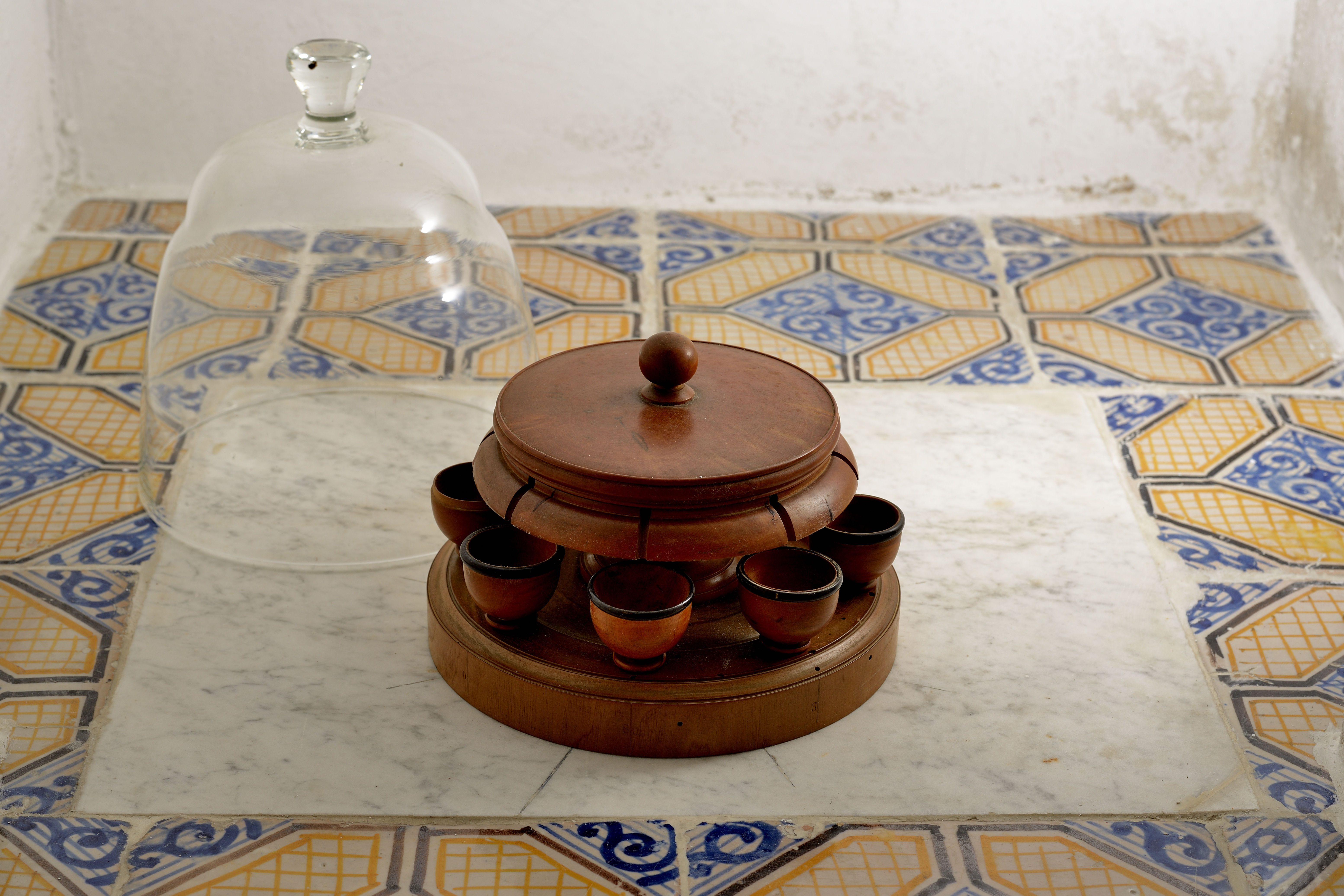
had devised a mechanical seismograph: a pendulum with a spherical mass that, upon the arrival of a tremor, traced a line
on paper and triggered alarm bells. A horsehair filament blocked the clock’s balance wheel, which would start only with
minimal displacement, thus recording the exact time of the quake.
Around 1840, Ernesto Capocci devised an alternative seismometric mechanism: the pendulums of clocks, displaced by the
tremor, left their plane of oscillation and lodged into a rack, stopping the clock and indicating both the time of the
event and the direction of movement.
In 1856, Luigi Palmieri invented the sophisticated electromechanical seismograph that he installed on Vesuvius to record
earthquakes preceding eruptions. “We inhabitants of this southern part of Italy,” he wrote, “have felt more than anyone
else the need for instruments to indicate earthquakes”.
Seismic observations at Capodimonte were regular and rigorous. On 14 August 1851, a tremor stopped one of the pendulum
clocks in the meridian hall. Leopoldo del Re analyzed the residual oscillations, deducing a wave motion direction from
southeast to northwest. On 17 December 1857, two shocks, the second more intense, were felt in Naples and caused two of
the Observatory’s clocks to stop, while three others continued running. Del Re reported in the Giornale del Regno minor
structural damage to the tower and further aftershocks in the following hours.
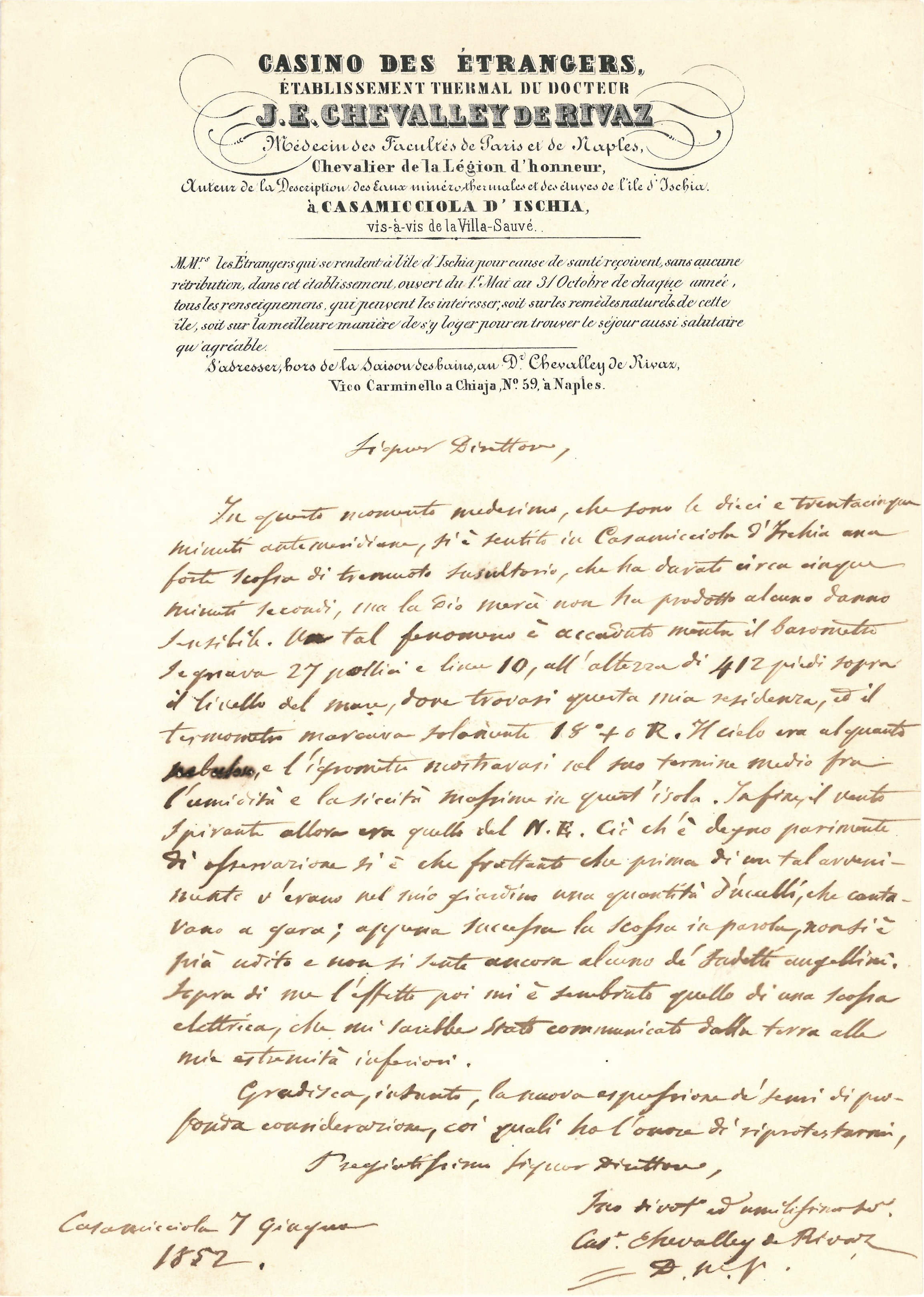
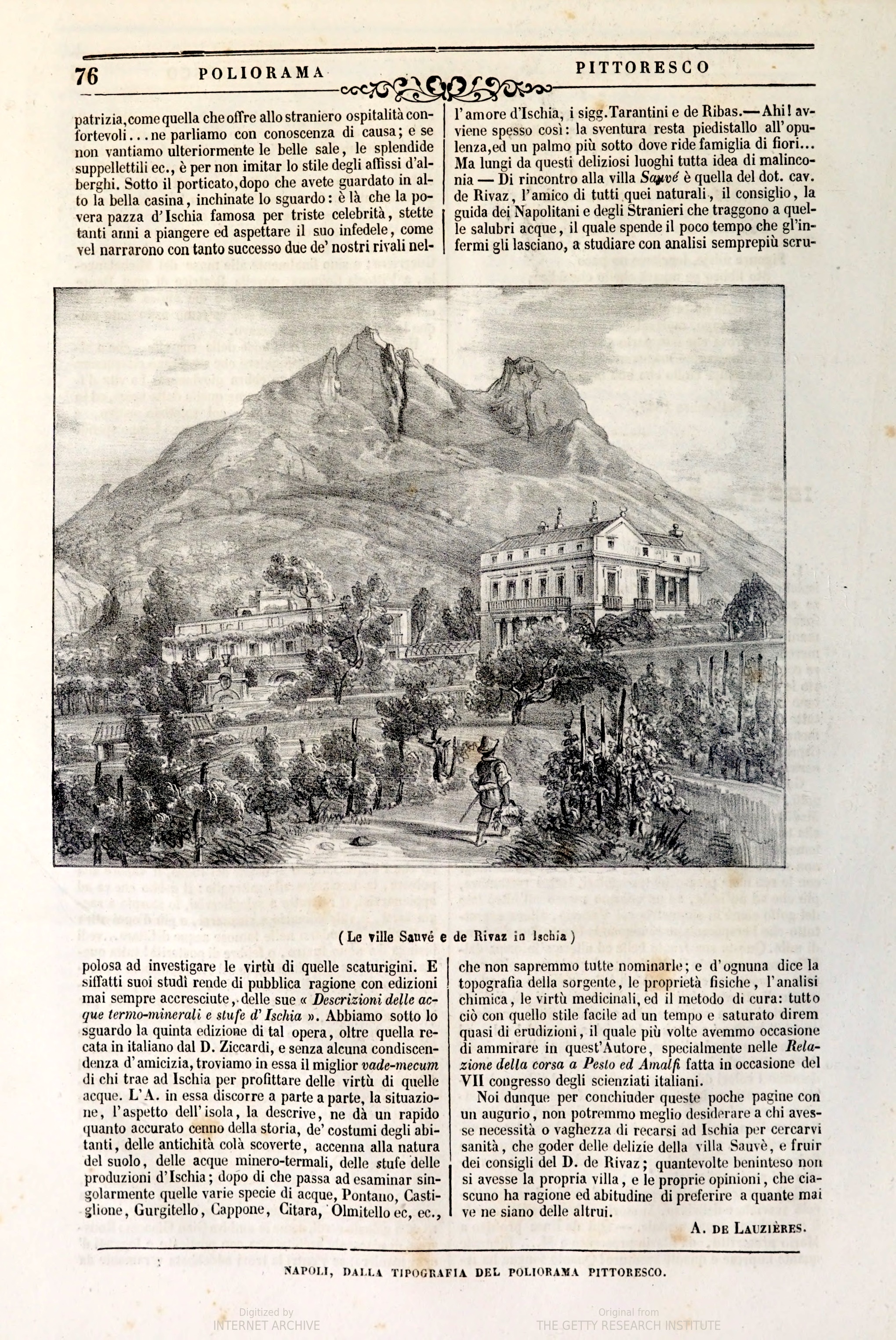
That same year, in July 1857, Chevalley de Rivaz, who operated a meteorological station at the Casino des Étrangers in
Casamicciola, recorded a quake and turned to the Capodimonte Observatory to compare data. The episode confirms the
Observatory’s role as a scientific reference center for verifying and correlating seismic observations.
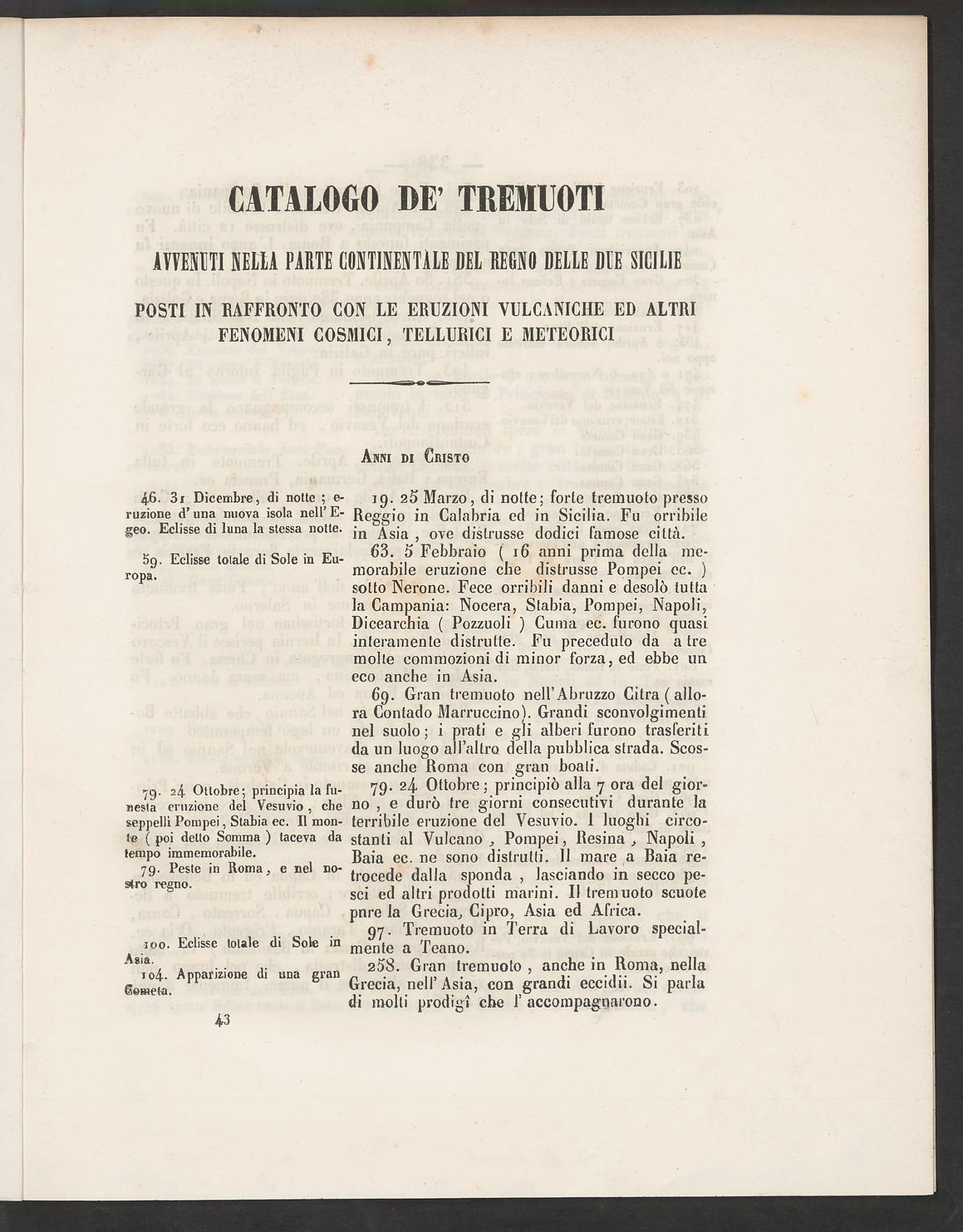
In 1859, Capocci published the monumental Catalogue of Earthquakes Occurring in the Continental Part of the Kingdom of
the Two Sicilies, in comparison with volcanic eruptions and other cosmic, telluric, and meteorological phenomena. The
catalogue spans from 31 December 46 to 19 August 1858, and was followed by a Memoria seconda, with documents and
detailed investigations of the most devastating earthquakes.
This network of instruments, observations, and writings testifies to the role of Southern Italy in building an
experimental seismology, well before its formalization as a discipline.
___Mauro Gargano
References
Palmieri, L. (1859). Annali del Reale Osservatorio Meteorologico
Vesuviano. Napoli: presso Alberto Detken
Del Re, L. (1857). Lettera al direttore, Giornale del Regno delle Due
Sicilie, 17 dicembre.
Il Lucifero (1841). 4(8), 31 marzo, p. 65.
Filomarino, A. (1796). Gabinetto Vesuviano del Duca della Torre.
Napoli:
Presso Domenico Sangiacomo.
___