The Blood Rain of 1901 and the Investigative Lens of Cosimo De Giorgi
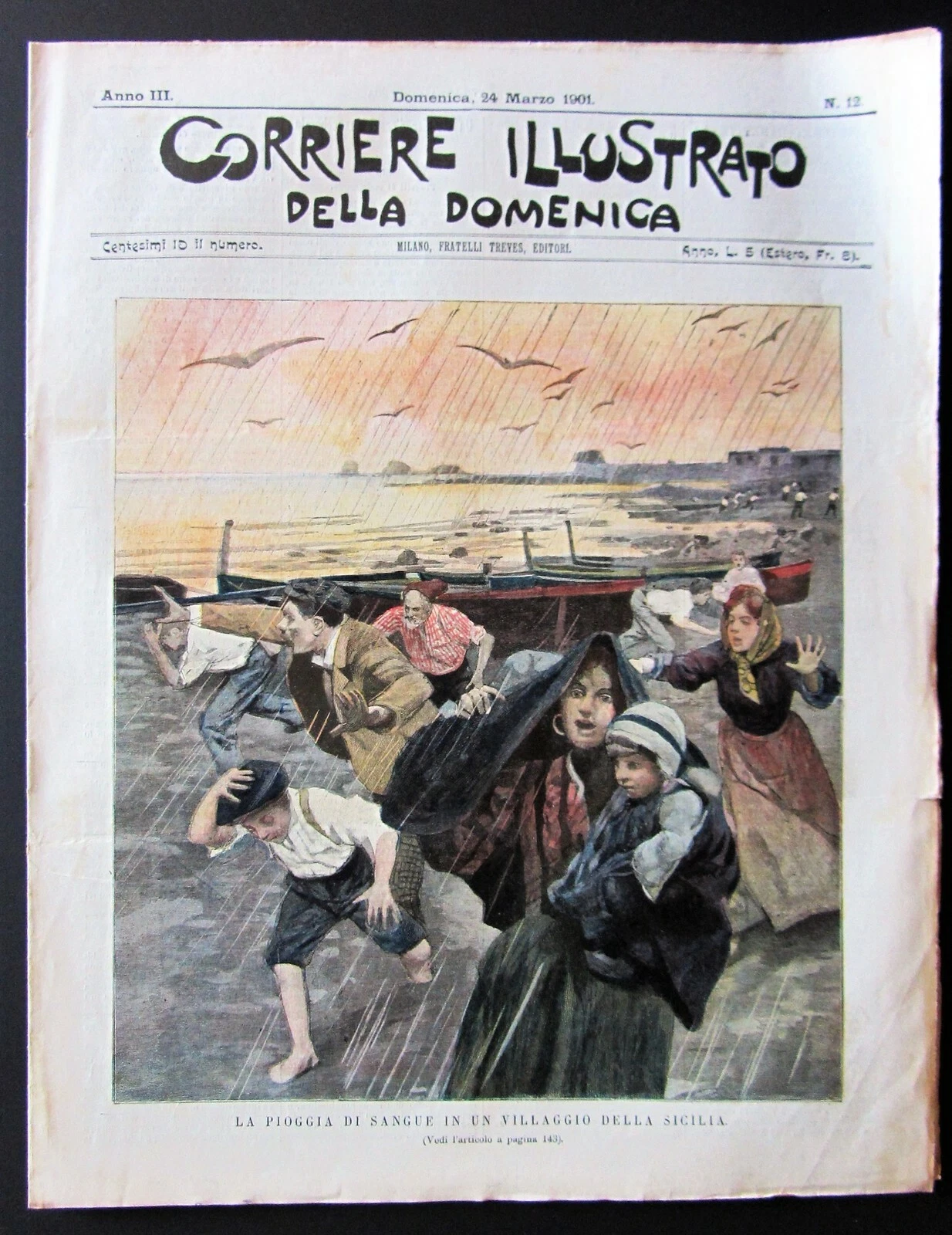
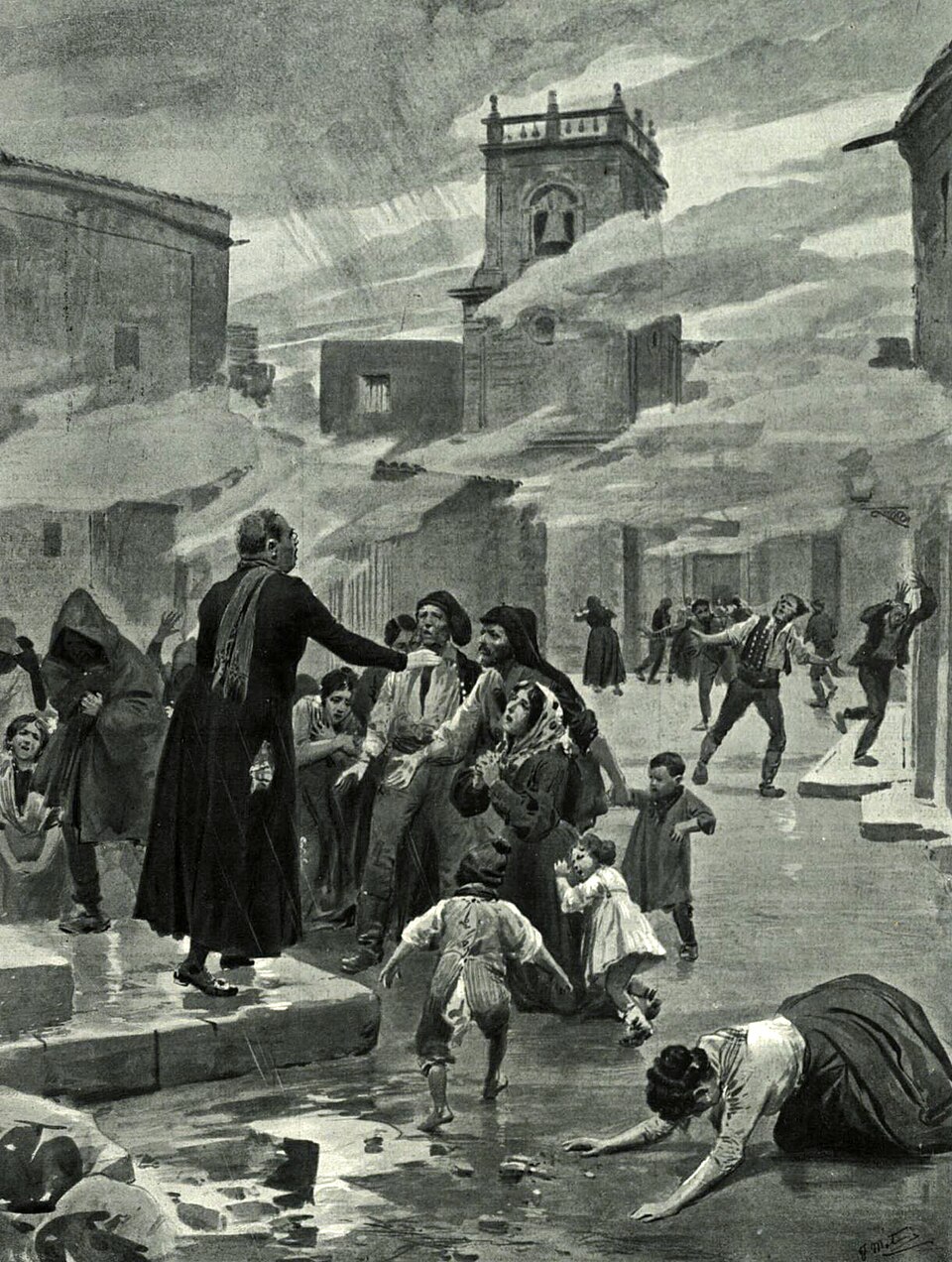
On 10 March 1901, the skies of Europe turned red – from Rome to Sicily, all the way to Lecce.
There, the rain brought
down a yellowish-red dust that settled on the leaves of the garden in front of the house of
Cosimo De Giorgi
(1842–1922), physician and meteorologist. It was not the first time such a phenomenon had been
observed. Already at the
end of the eighteenth century, Giuseppe Maria Giovene (1753–1837), meteorologist from Molfetta,
had offered a “rational”
explanation against superstition: the reddish dust falling with the rain, he argued, came from
the Sahara, carried
northward by the winds. This “African hypothesis,” later echoed in the nineteenth century by the
astronomer and science
popularizer Camille Flammarion (1842–1925), had by then become almost a commonplace. De Giorgi,
however, was not content
to accept it. A man of method and systematic observation, he collected samples, examined them
under the microscope with
the help of his assistants, and published his findings in two instalments in the
Corriere Meridionale.
The result was
surprising: among the grains were visible the siliceous shells of diatoms – microscopic aquatic
organisms incompatible
with a desert origin. Moreover, by applying the law of the Dutch meteorologist Buys Ballot
(1817–1890), De Giorgi
demonstrated that, on that day, the winds had blown from the east-southeast, not from the south.
The dust, therefore,
had not come from the Sahara but from the Balkans and Asia Minor. It was a true reversal of
perspective: the so-called
“blood rain” was not African sand but fine dust lifted from the moist soils of the East, swept
up by cyclones and
carried across the Adriatic before falling on Apulia as coloured rain. The explanation – later
confirmed by other
scholars such as Napoleone Passerini (1862–1951) – revealed De Giorgi not only as a positivist
meteorologist but also as
an investigator of the clouds, capable of reading in faint traces the hidden truth of the skies.
Thus the red rain, once
interpreted as a divine sign or mysterious prodigy, became for the Lecce meteorologist an
opportunity for useful science
– a phenomenon to be understood in order to protect agriculture and public health. Through this
episode, De Giorgi and
his observatory emerged as a crucial node in an international network, a place where meteorology
became both knowledge
of the heavens and care for the land.
___
Stefano Daniele & Francesco Paolo de Ceglia
References
De Giorgi, C. (1901). “Sul pulviscolo meteorico caduto in Lecce il 10 marzo 1901”, Corriere
Meridionale, 12, 28
marzo
(parte I).
De Giorgi, C. (1901). “Sul pulviscolo meteorico caduto in Lecce il 10 marzo 1901”,
Corriere Meridionale, 11,
4 aprile
(parte II).
De Giorgi, C. (s.d). Sul pulviscolo meteorico caduto in Lecce il 10 marzo 1901,
Biblioteca Bernardini di
Lecce, Fondo
Manoscritti [Cosimo de Giorgi], 147, pp. 513-517.
___
___