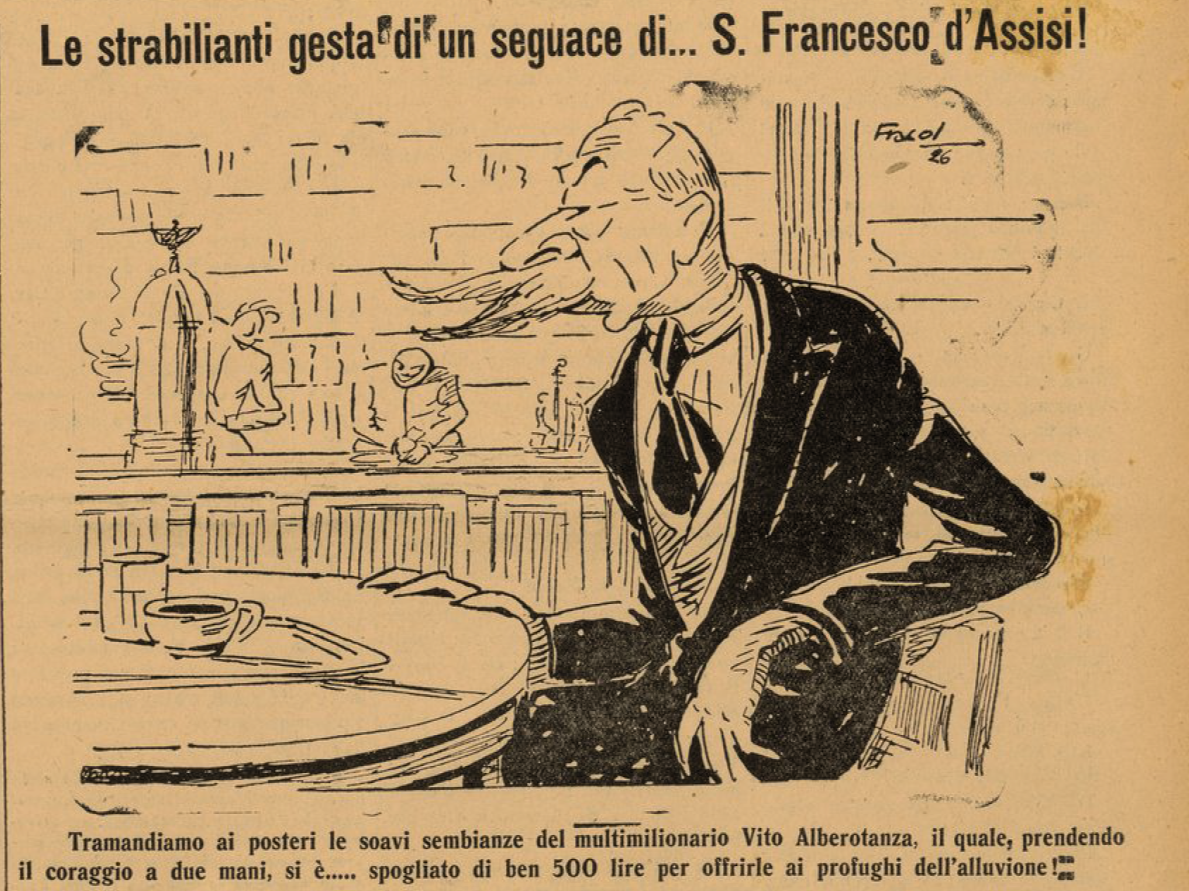
Vignetta satirica
L’Asso di bastone (Il nuovo corriere), 2 novembre 1926
acknowledgement: Roberta Ranieri, University of Bari Aldo Moro, for bringing this image to our attention.
SOUTH RISK
From data collection to monitoring intervention. A southern history
L’Asso di bastone (Il nuovo corriere), 2 novembre 1926
acknowledgement: Roberta Ranieri, University of Bari Aldo Moro, for bringing this image to our attention.
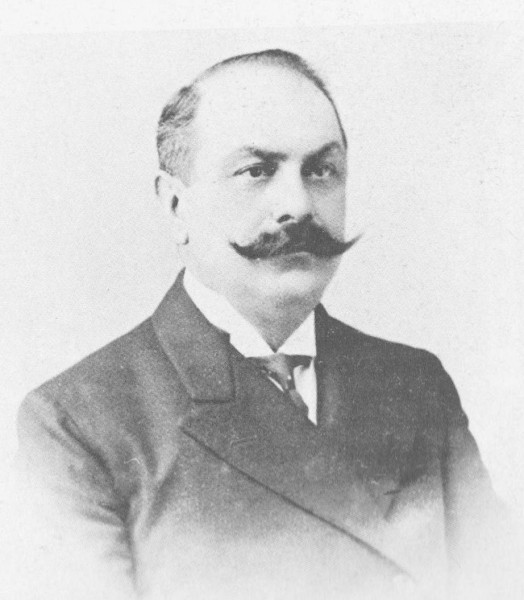
Not Even a Penny to Spare. Vito Alberotanza: Satire on Hollow Charity
Mud tells more than a thousand chronicles. Between the 5th and 6th of November 1926, roughly
160.8 millimetres of rain
fell over Bari in just forty-eight hours. The Lama Picone – swollen with water and burdened with
debris – burst its
banks and turned the city into a lake. The districts of Carrassi, Libertà, and Madonnella were
overwhelmed: streets
became torrents, homes and workshops drowned beneath the flood. The photographs of that November
reveal the city’s bare
and wounded face. In the first image, men and boys bend their backs, shovelling earth and water
in a desperate attempt
to restore dignity to the streets. It is a collective, almost ritual act: bodies sinking into
their boots, gestures
repeated endlessly, a community rebuilding itself – spade by spade. In another image, a farmer
rides his cart through
the high water, the donkey straining against the current. It is the portrait of a rural world
forced to become
seafaring, treating the street as though it were a river. By contrast, another shot captures a
stalled automobile –
modernity itself, turned into a clumsy raft in the mire. Before the deluge, class and technology
ceased to matter: the
mud levelled all distinctions, peasant and bourgeois, beast and machine.
Even the trains were defeated. The city’s station was swallowed by sludge; the tracks became
liquid labyrinths, the
platforms disappeared beneath the current. The toll was severe: nineteen dead, fifty injured,
and hundreds left
homeless. Yet beyond the numbers, what strikes the observer is the physical force of these
images: the muffled sound of
shovels seems to echo still; one can almost sense the acrid smell of the mud rising from them.
That morning of 6
November 1926, Bari awoke fragile – yet stubbornly alive. In those days, the city was forced to
learn that rain is not
always a celestial gift. It can suddenly become a river that breaks through your doorway, that
stalls your new
automobile, that drowns the tracks of the station, that forces you to grip a shovel and start
again from nothing.
___
Stefano Daniele & Francesco Paolo de Ceglia
References
From data collection to monitoring
interventions and
risk prevention
Project realized by:
University of Bari Aldo Moro
INAF - Astronomical Observatory of Capodimonte
University of Naples Federico II
University of Messina
PROGETTO SOUTH RISK © 2026 ALL
RIGHTS
RESERVED
The exhibition is realized for the project:prin
pnrr
South-Risk
From data collection to monitoring
interventions
and
risk prevention
A southern history
P2022TA5M8
