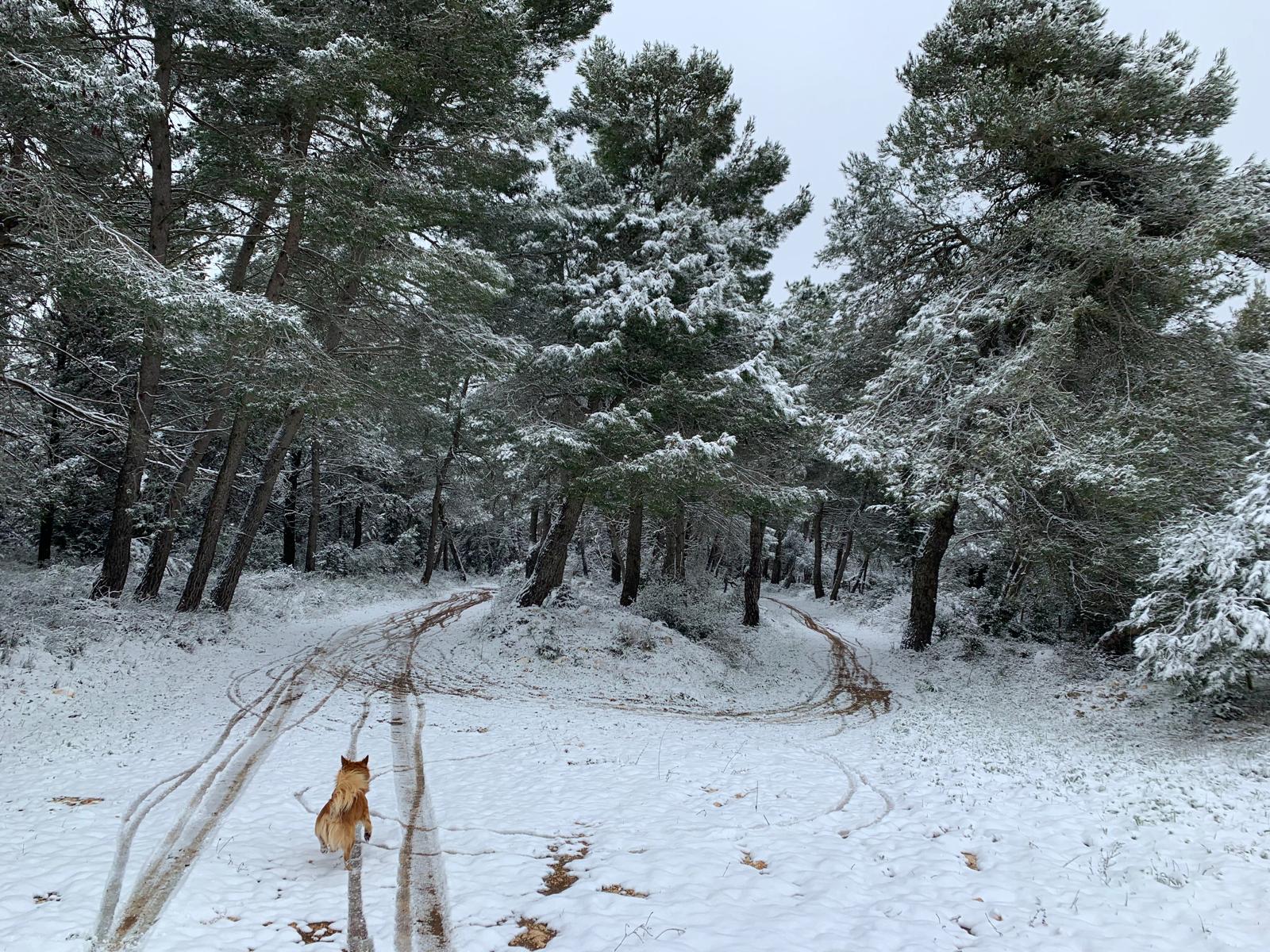
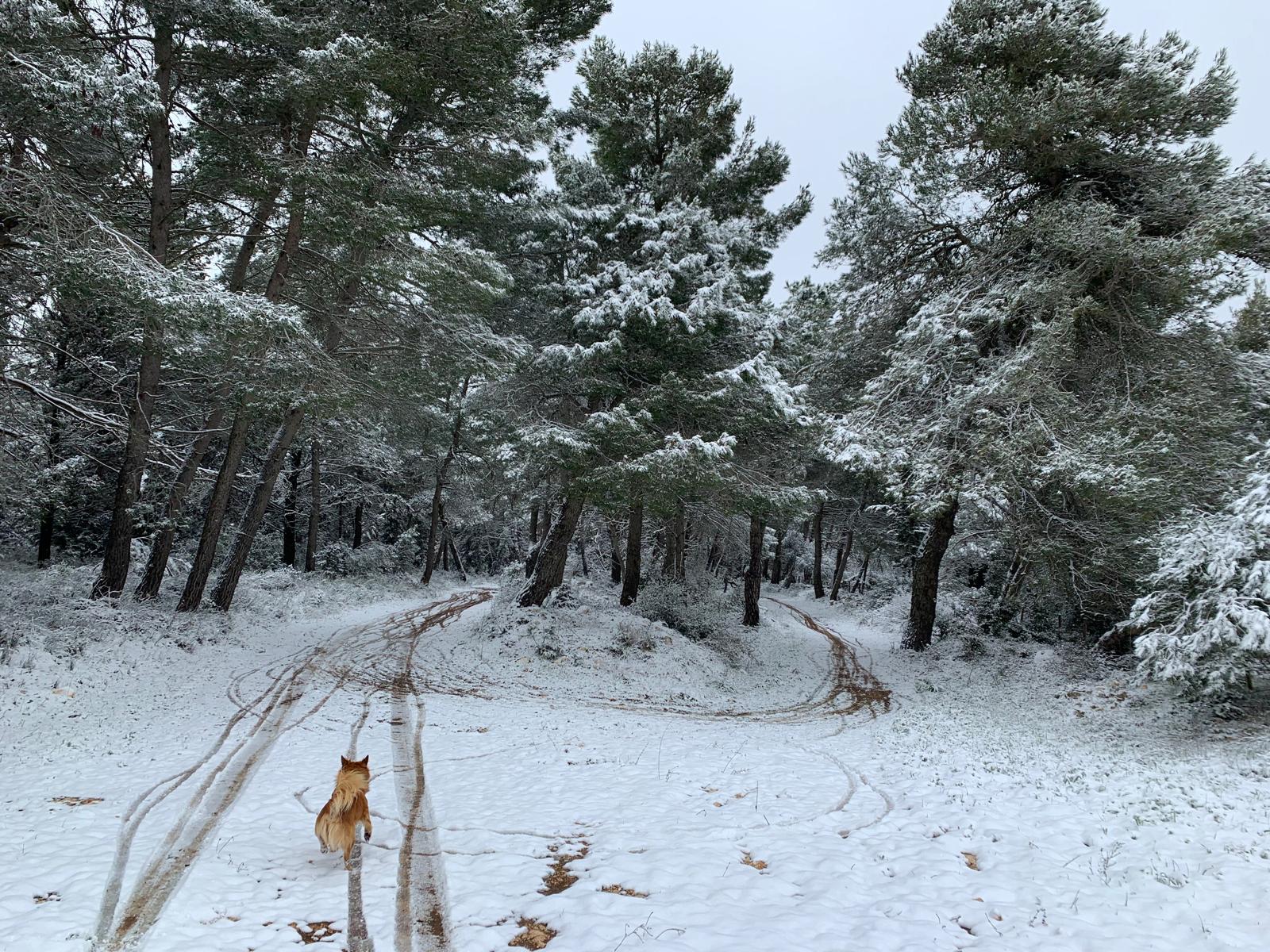
Photograph of the Mercadante Forest under snow (winter 2024)
credits: Lorenzo Sardone, University of Bari Aldo Moro
SOUTH RISK
From data collection to monitoring intervention. A southern history
The Recovered Forest. From the Picone Catastrophe to Mercadante
When the Lama Picone broke its banks in November 1926, some observers traced the cause to the
deforestation of the Alta
Murgia. The reasoning was simple: without trees, the soil could not retain water, and
unrestrained water would rush
downhill. But for engineer Pio Alberto Nencha, writing in the Rassegna Tecnica Pugliese,
that was too easy an
explanation. Floods, he argued, had always existed; they could not be blamed solely on the
absence of trees. The real
culprit was humankind, which had dared to build houses and factories along the course of the
stream. The debate was far
from academic. Deforestation had not been a natural accident but the outcome of political and
economic choices that,
since the late Middle Ages, had turned the Murgia into a vast field of agricultural
exploitation. First came
pastoralism, whose grazing depleted the vegetation and eroded the soil; then large-scale grain
cultivation, which
uprooted the scrub and left the land bare for much of the year. By the mid-nineteenth century,
the landscape was already
impoverished, and by 1913, under the heading “Forests and Chestnut Groves (boschi e
castagneti),” national statistics
recorded no data at all for forested land. The effects were plain to see: slope erosion, reduced
soil permeability,
violent runoff, alternating droughts and sudden floods. The Forest Law of 1877 had foreseen
this, imposing conservation
restrictions on deforested lands precisely to prevent landslides and floods. But those measures
remained largely on
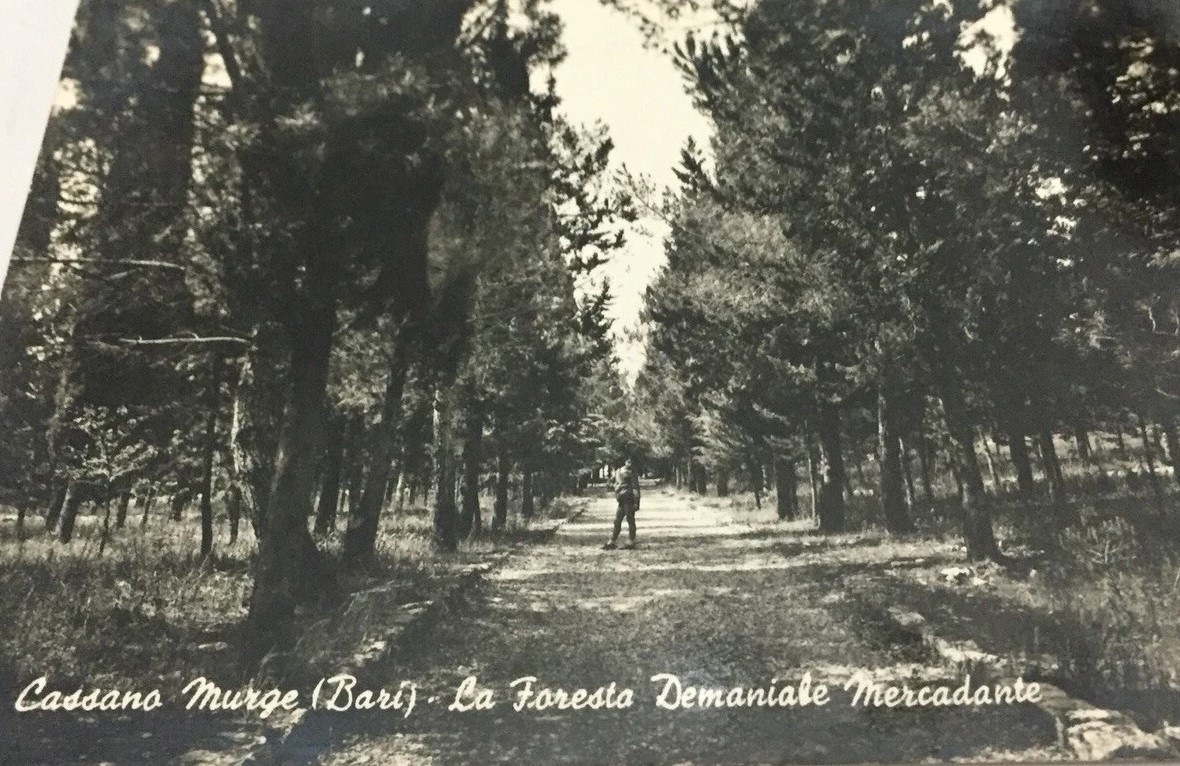
paper. After the catastrophe of 1926, the authorities finally acted, launching a reforestation
project in the upper
Picone basin: the Mercadante Forest was born – a feat of environmental engineering before it was
one of landscape
design. It was a late act of reparation, yet a revealing one. If trees had been felled by
centuries of extensive
agriculture, they now became the green rampart defending the city. The flood thus carried with
it a bitter lesson:
disasters are not born of nature alone, as in a Leopardi vision of fate, but of historical,
political, and social
transformations that create vulnerability. Every tree that took root in Mercadante was, in the
end, an admission of
guilt.
___Stefano Daniele & Francesco Paolo de
Ceglia
References
From data collection to monitoring
interventions and
risk prevention
Project realized by:
University of Bari Aldo Moro
INAF - Astronomical Observatory of Capodimonte
University of Naples Federico II
University of Messina
PROGETTO SOUTH RISK © 2026 ALL
RIGHTS
RESERVED
The exhibition is realized for the project:prin
pnrr
South-Risk
From data collection to monitoring
interventions
and
risk prevention
A southern history
P2022TA5M8
