Land, Sea, and Sky. A Meteorological Observatory atop Bari’s Palazzo Ateneo
The Bari Meteorological Observatory was established within the Regio Istituto Tecnico e Nautico, the only school of its
kind in Apulia, which had relocated in 1881–82 to the newly completed Palazzo Ateneo. The project was ambitious: to
complement the Institute’s physics laboratory with a permanent meteorological station serving the Nautical School, local
agriculture, and public health. The Province of Bari financed the installation with more than 3,000 lire, while the
Ufficio Meteorologico Centrale in Rome supplied the first set of instruments. Yet construction and calibration took
longer than expected: the Observatory was formally handed over only on 10 January 1884. Descriptions of the site portray
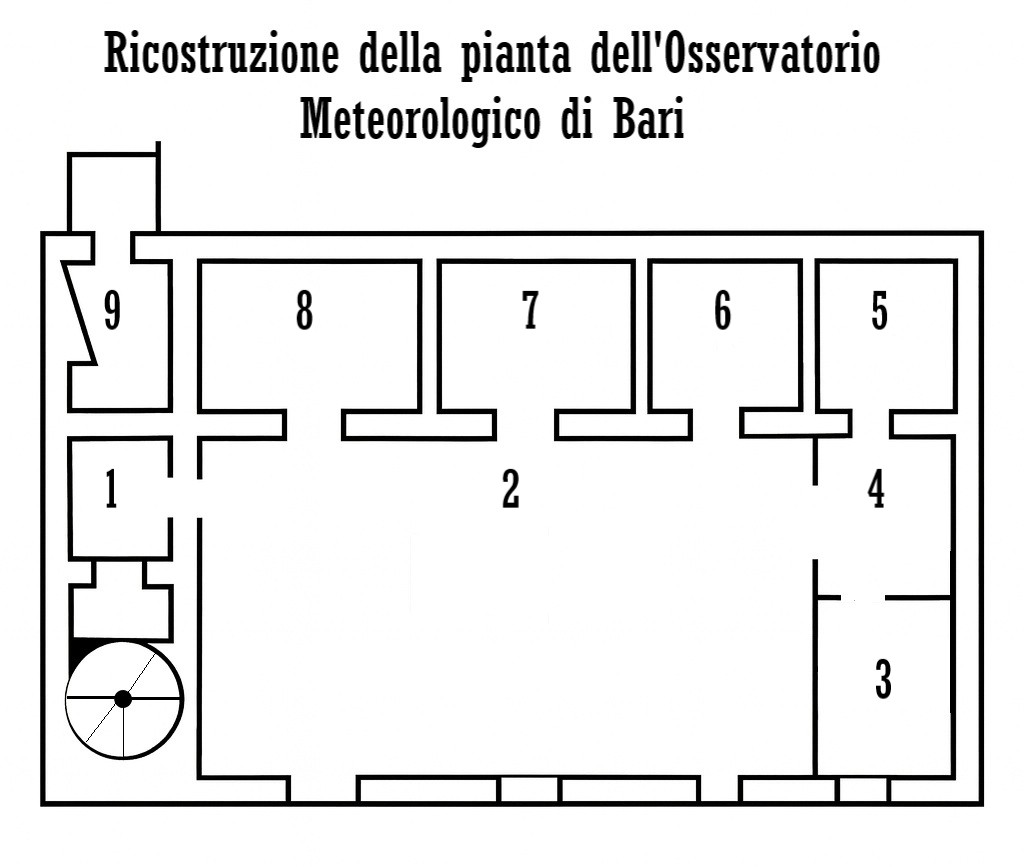
it as a small labyrinth within the Ateneo – a large central room surrounded by eight smaller chambers, and, on the
rooftop terrace, a pavilion housing the open-air instruments. There stood the most advanced recording devices of the
day: the barograph, thermograph, and anemograph, alongside rain gauges, psychrometers, evaporimeters, ozonoscopes, and
seismographs. The Observatory’s first director was a mathematician, Onofrio Porcelli, the Institute’s headmaster. Daily
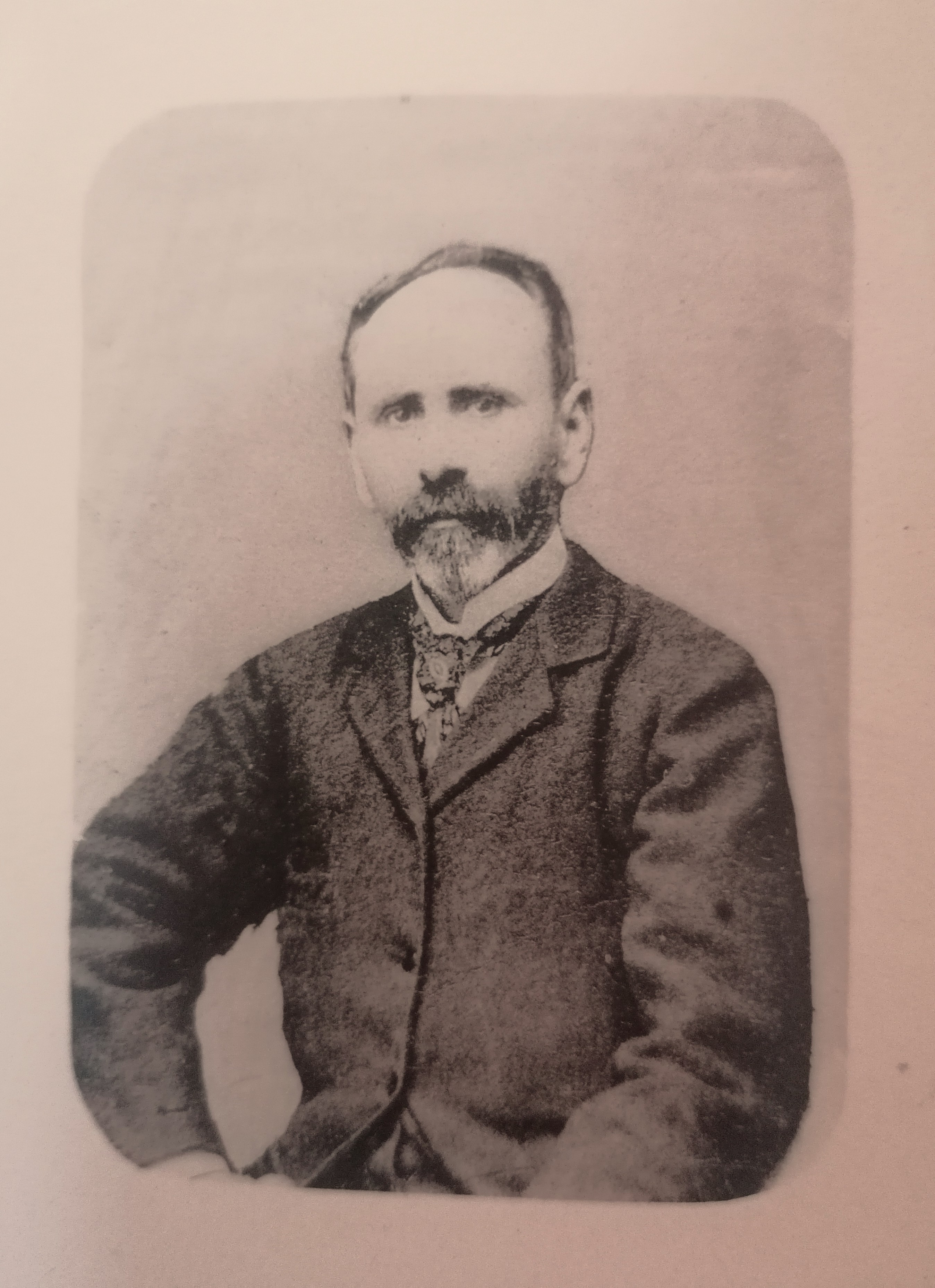
operations and the maintenance of instruments fell to Antonio Racchetti, professor of physics, who for decades carried
out the observations with unwavering precision. Each day, at 7AM-8AM and several times thereafter, he recorded pressure,
temperature, wind, cloud cover, sea conditions, rainfall, and any unusual phenomena. The data, telegraphed to Rome, were
incorporated into the official meteorological bulletins of Italy and Europe. But the Observatory’s story was far from
linear. Chronic shortages of funds, limited staff, and institutional ambiguity often left it fragile and uncertain. Its
position – suspended between Provincial authority, University administration, and later military oversight – made it as
much a contested symbol as a scientific station. By 1928, an episode involving a soldier demanding access to the terrace
revealed how the site had come to be viewed as strategically significant. Compared with other southern observatories,
such as Lecce or Foggia, Bari’s stood apart: founded late, yet capable of revealing the complexity of a frontier
scientific institution. Not merely a tower overlooking the city, it was a threshold between science and politics,
prediction and power, between the solidity of the earth and the instability of the sky.
___Stefano Daniele & Francesco Paolo de
Ceglia
References
Annuario del Regio Istituto Tecnico e Nautico di Bari, (1883). Anno
1882.
Annuario del Regio Istituto Tecnico e Nautico di Bari, (1885). Anno
1884,
pp. 66-72.
De Frenza, L. (2007). “L’istituto Tecnico Pitagora di Bari”, in de Ceglia,
F.P. (a cura di), Scienziati di Puglia.
Secoli V a.C.-XXI d.C. Bari: Adda, p. 317.
___
___