The Grid and the Rain. The Meteorological Series of the Bari Observatory
At times, rain in Bari became catastrophe. The Meteorological Observatory housed within the
Ateneo preserved its traces
– in notebooks, in graphs, in the measured language of science. In 1926, the institution
depended administratively on
the Istituto Tecnico “Pitagora”, yet it continued to operate atop the Palazzo Ateneo, where
barometers, thermometers,
and rain gauges translated the instability of the sky into orderly sequences of numbers. That
same year’s flood –
between 5 and 6 November 1926, which devastated entire neighbourhoods – did not halt the
Institute’s classes, but it
demanded the direct involvement of its students. A team from the Surveying Section, led by
Professor Alberto Bevilacqua
and his assistant Vito Brunetti, was dispatched for two weeks to the worst-affected areas, while
others assisted in
dormitories and emergency shelters. Meanwhile, Professor Amedeo Nobile, physicist and technical
observer, began
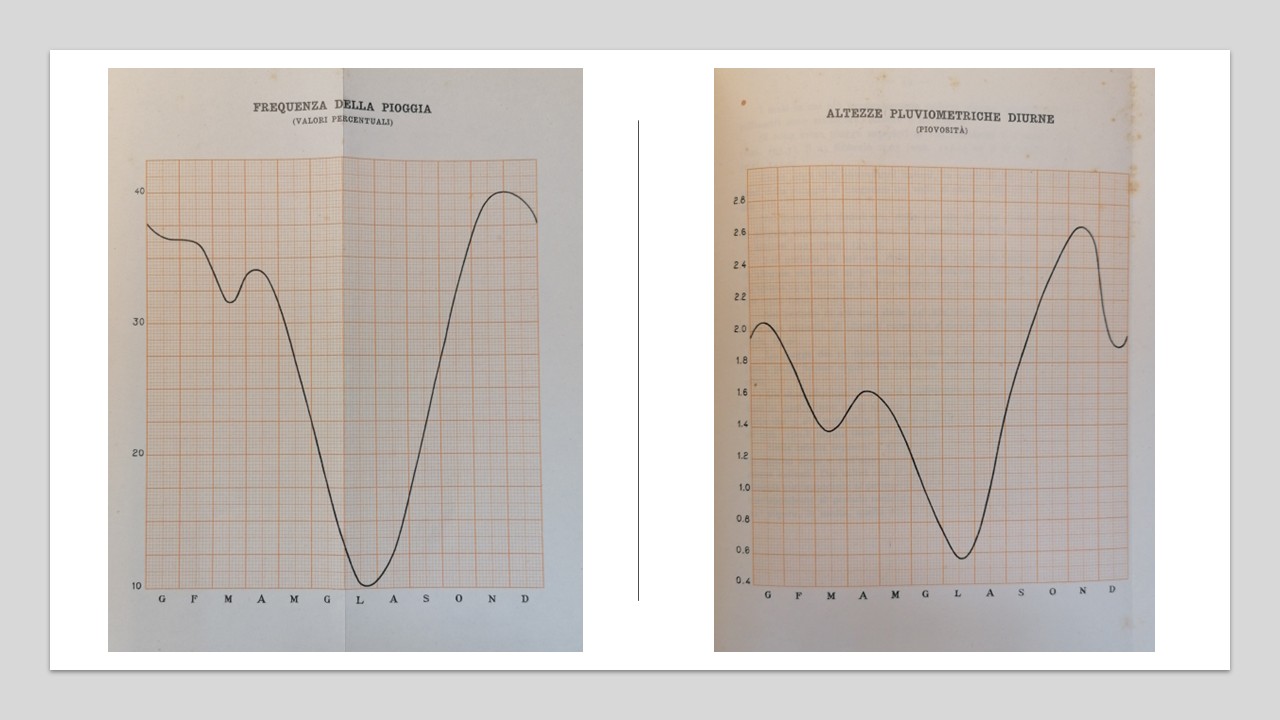
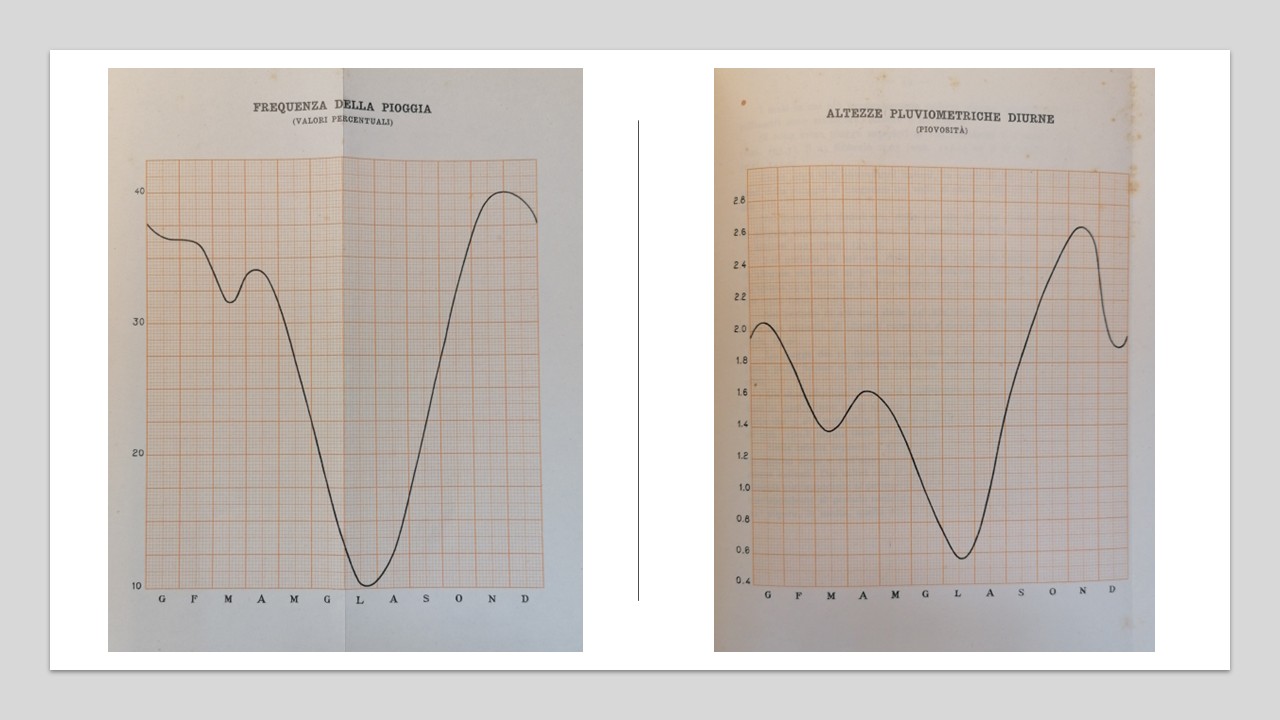
compiling what would become one of the Observatory’s most comprehensive reports. Nobile
reconstructed the pluviometric
data over a period of nearly fifty years, enriching them with tables and graphs. The chart for
“Rainfall in millimetres
(Quantità di pioggia in millimetri)” for November 1926 recorded 170.3 mm, of which 160.8 mm fell
between 9 a.m. on 4
November and 9 a.m. on 6 November. An extraordinary value, though not unique: the previous
November had measured 172.6
mm, and the absolute maximum occurred in November 1916, with 276.2 mm, even if the most
devastating flood had struck
earlier, in February 1915. Numbers may seem cold, yet within their grid one can still read the
story of flooded streets,
homes buried in mud, lives overturned. Thanks to the work of Nobile and his predecessors, the
flood of 1926 did not
remain merely a painful memory told through newspapers or photographs. It was transformed into
data, graphs, and tables
– into a scientific memory that transcended reportage. Bari thus learned that rain is not only
sudden ruin: it is also a
datum, a measure, a prediction. And that only by recording it patiently, day after day, can
disaster be turned into
knowledge – and memory into understanding.
___Stefano Daniele & Francesco Paolo de
Ceglia
References
Annuario del Real Istituto Tecnico “Pitagora” Bari, 1926. Anno
Scolastico 1925-26, n.s., 3.
Annuario del Real Istituto Tecnico “Pitagora” Bari, 1927. Anno
Scolastico 1926-27, n.s., 4.
___
___