The 200 kg Wiechert Seismograph: A Masterpiece of Historical Seismology Restored in the 21st
Century
The 200 kg Wiechert seismograph is one of the most emblematic instruments of early instrumental seismology. Designed by
the German physicist Emil Wiechert, a pioneer of geophysics, this horizontal pendulum system rapidly became a worldwide
standard thanks to its remarkable sensitivity and mechanical robustness. Its operating principle relies on the inertia
of a large mass, 200 kilograms in this model, suspended by a refined combination of springs and cardanic joints that
allow the mass to remain nearly motionless while the ground moves beneath it. The relative motion between mass and
ground is transferred to a continuous trace on smoked paper.
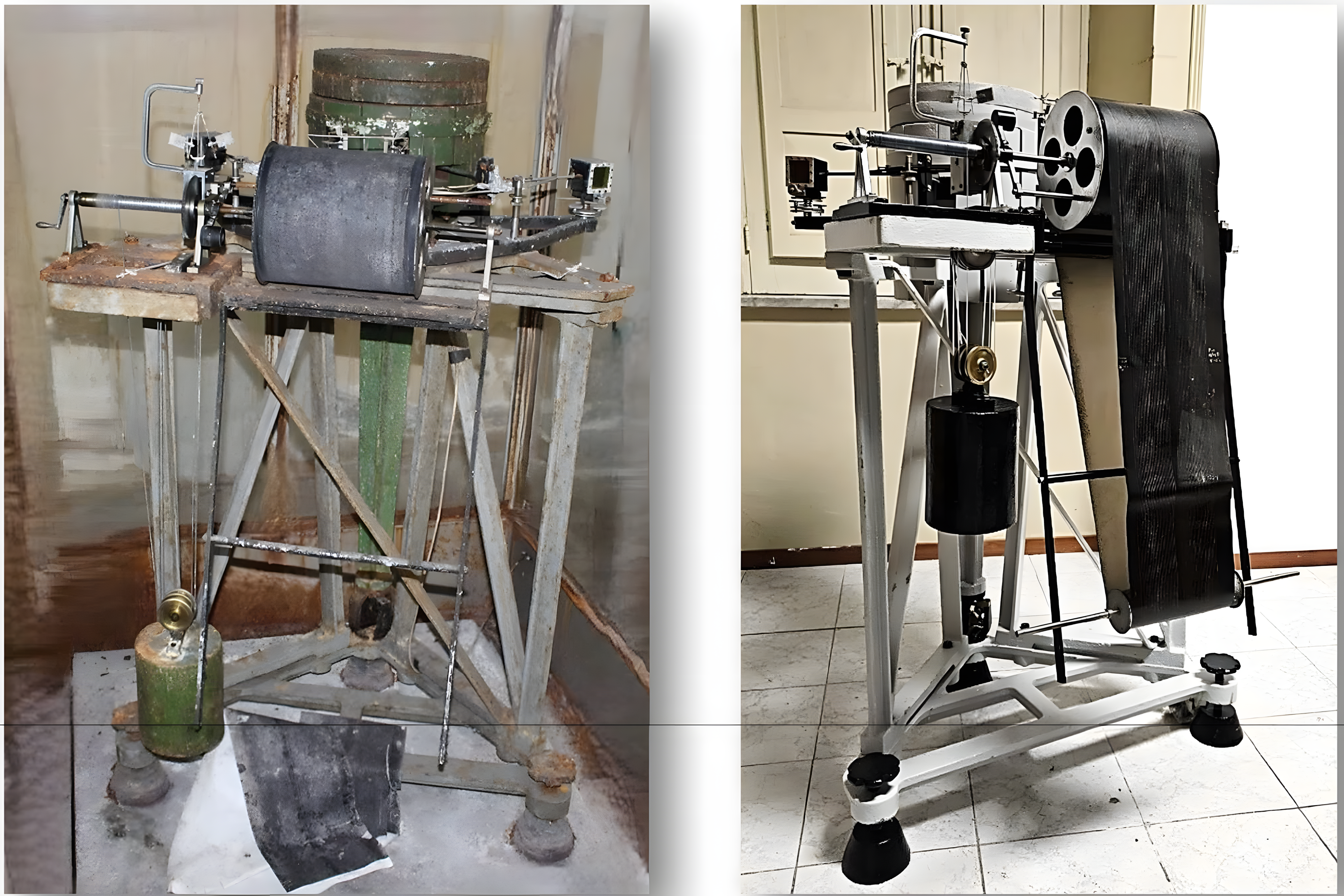
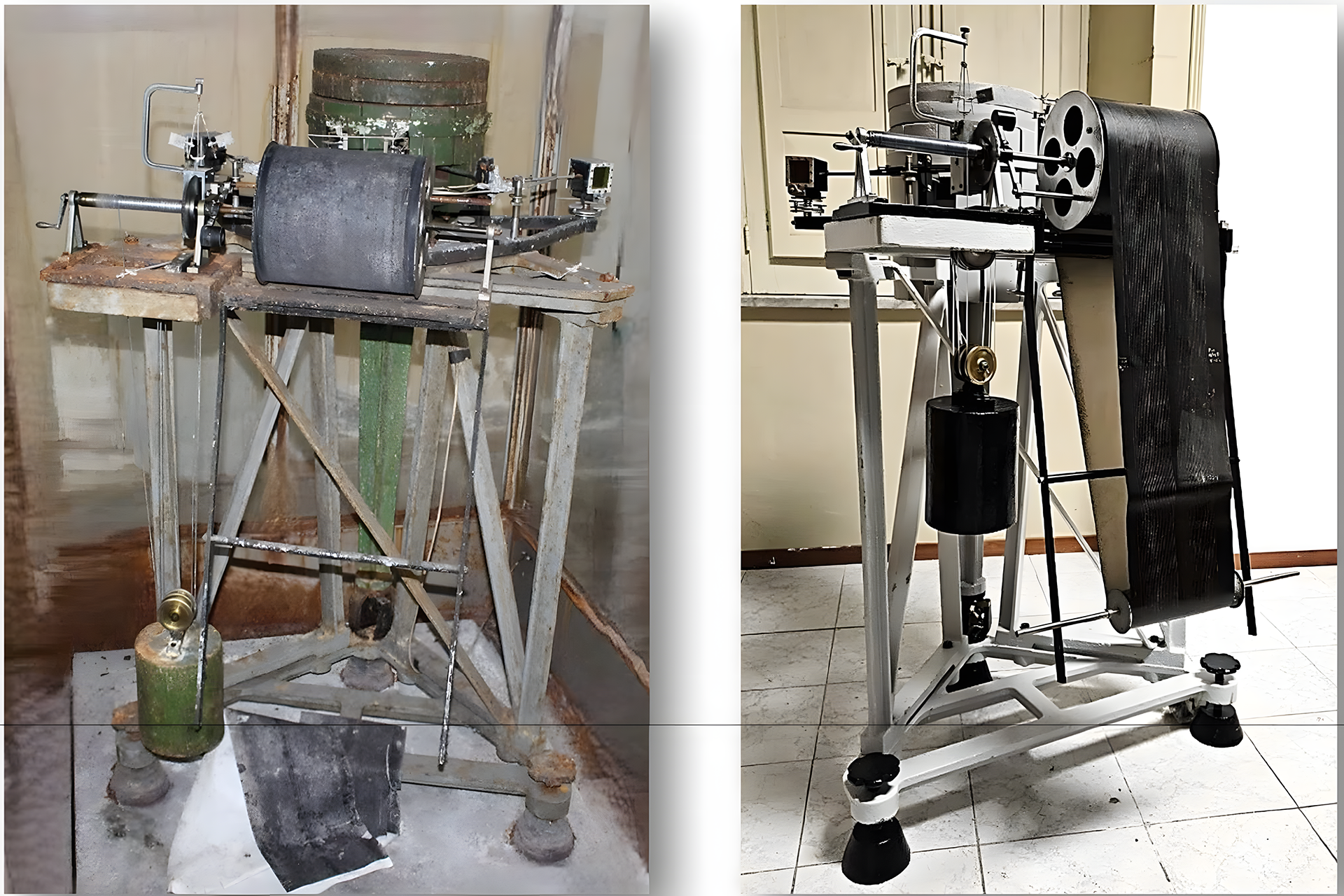
The main image of this panel presents a striking comparison between the instrument before and after its recent
restoration carried out within the PNRR “South Risk” Project. Over decades of inactivity, corrosion, dust accumulation
and mechanical deformation had severely affected the pendulum’s stability and the readability of the recording system.
The restoration has re-established structural and functional integrity, preserving original components whenever possible
and replacing only those irreversibly compromised.
This intervention is not merely a technical operation but a
significant act of scientific heritage preservation, returning visibility and value to an instrument of great historical
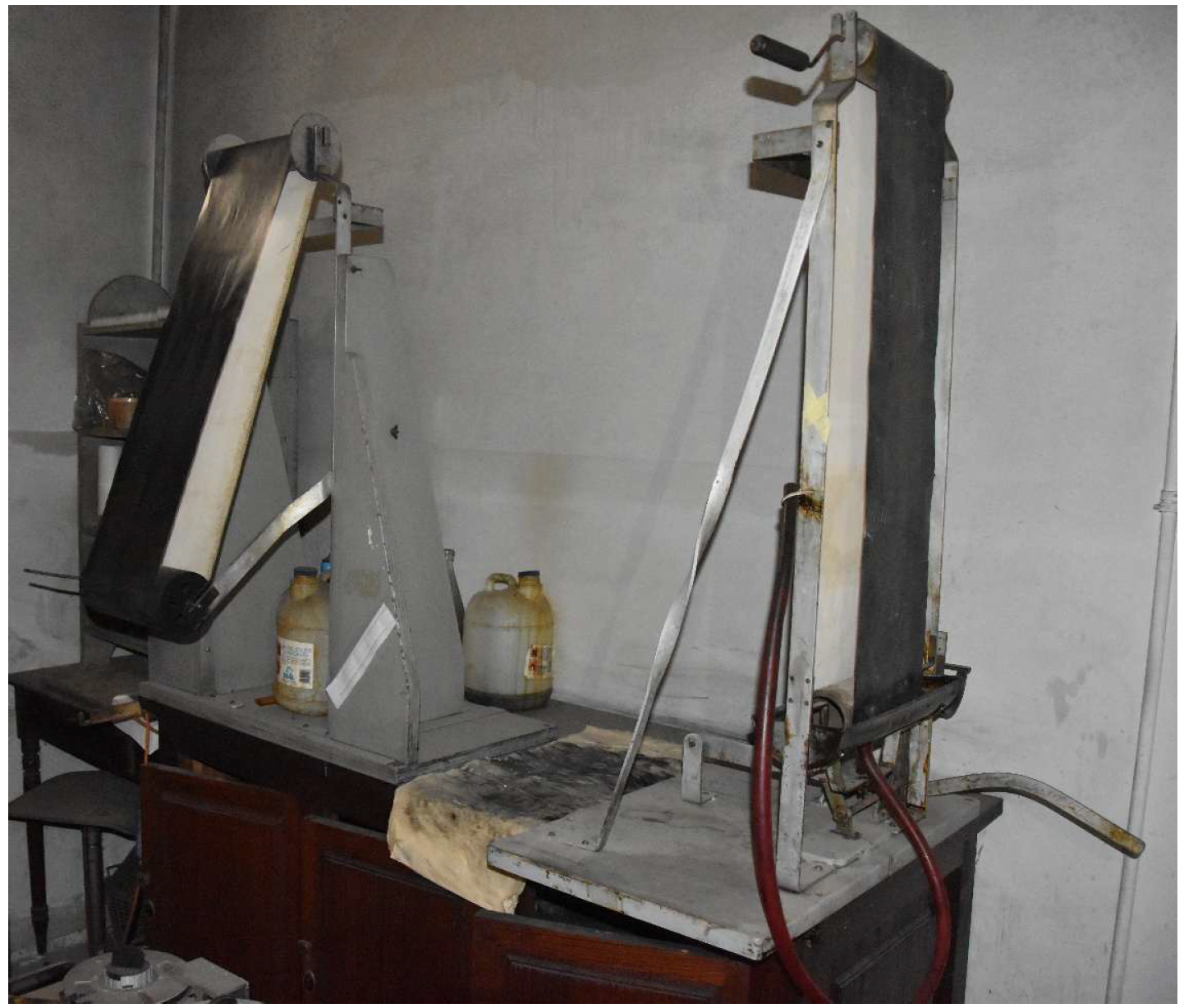
relevance. One of the most refined mechanical elements of the Wiechert design is its cardanic suspension system, shown
in the first secondary image. This assembly, coupled with calibrated springs, enables the pendulum to oscillate with
natural periods exceeding 15 seconds, allowing the recording of long-period seismic waves. The precision and
craftsmanship required to manufacture such a mechanism testify to the extraordinary engineering maturity achieved at the
beginning of the twentieth century.
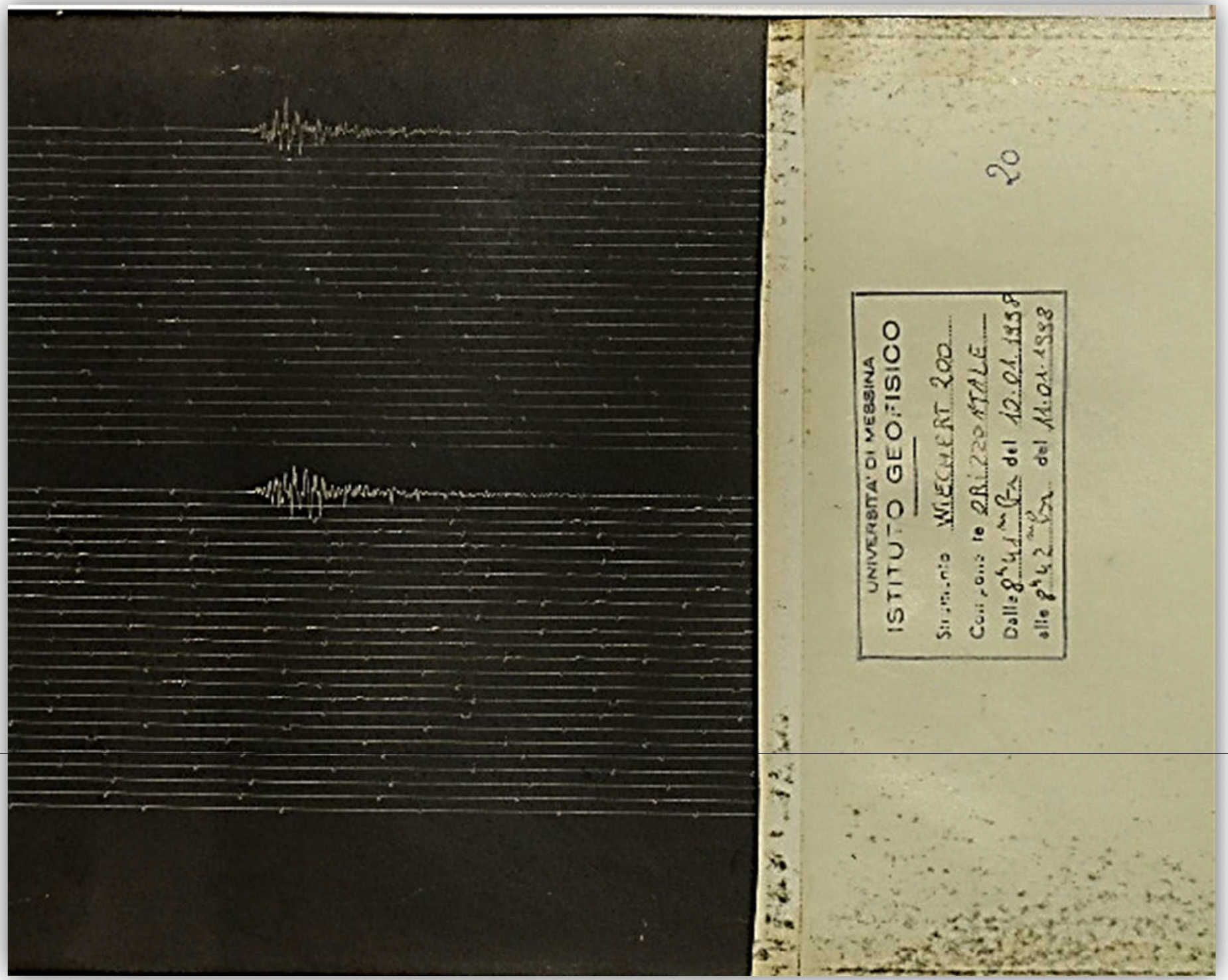
The second secondary image features an original smoked-paper seismogram, recorded by a stylus tracing directly onto a
soot-coated surface. This method, now obsolete, produced continuous and highly detailed records: amplitude, frequency
and timing of seismic waves were immediately readable. Because of the fragility of smoked paper and the instability of
the soot layer, these documents are extremely delicate and valuable.
The restoration of the 200 kg Wiechert seismograph
is therefore far more than a technical refurbishment: it is a crucial contribution to safeguarding Italy’s seismological
heritage. With its restored mechanisms and renewed aesthetic integrity, the instrument now serves as a tangible bridge
between the early history of geophysical research and contemporary monitoring practices, offering the public a vivid
understanding of how earthquake science has evolved through ingenuity, craftsmanship and scientific commitment.
___
Domenica De Domenico, Domenico Bonanno, Maria Teresa Caccamo, Salvatore Magazù
References
Wiechert, E. (1904–1906). Sui sismografi a grande massa, diversi contributi fondamentali di sismologia
strumentale.
Agnew, D. (2002). “History of Seismology”, in Lee, W.H.K., et al. (eds.) International Handbook of Earthquake and
Engineering Seismology, Part A, 3-12. London and San Diego: Academic Press.
Bormann, P., (ed.) (2012). New Manual of Seismological Observatory Practice. Potsdam: GeoForschungs Zentrum.
___
___