Girlanda’s Electromagnetic Seismograph: Italian Innovation in Twentieth-Century Seismology
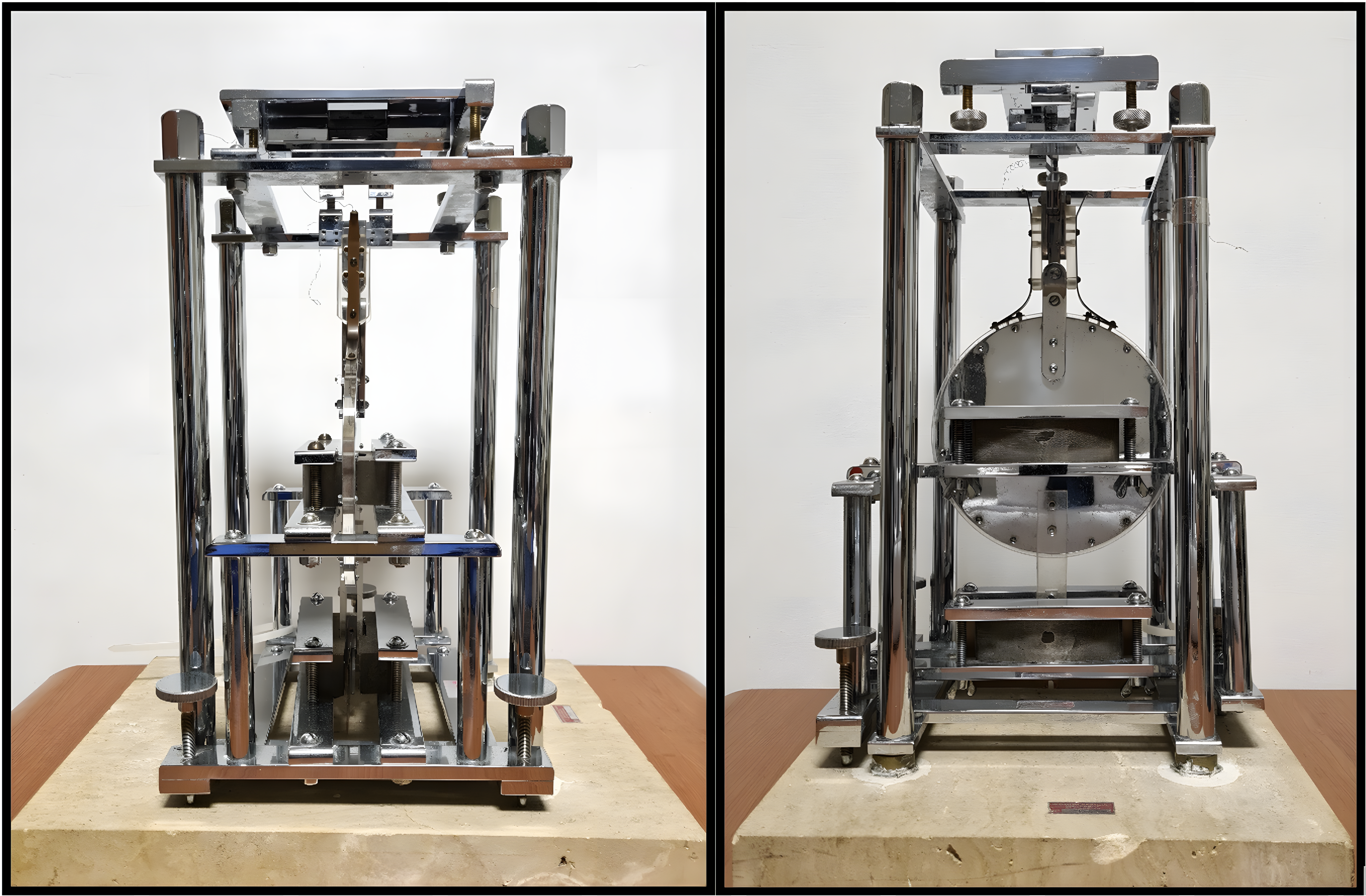
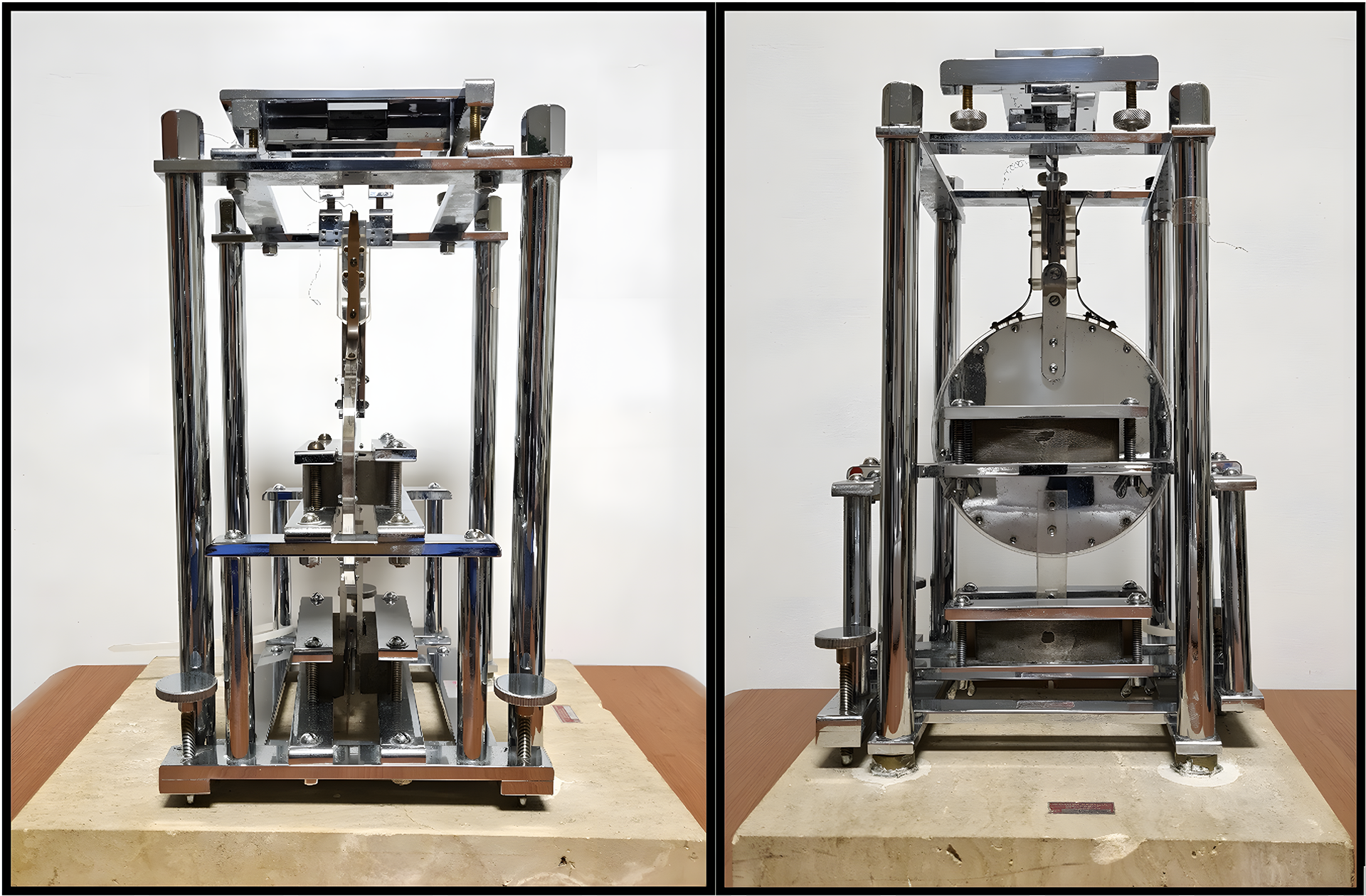
The electromagnetic seismograph designed by Antonio Girlanda in the early 1960s represents one of
the most refined
examples of Italian seismological instrumentation in the post-war period. Conceived as an evolution
of the Galitzin
model introduced in the early twentieth century, it stands out for its simplified structure,
accessible construction,
and optimised dynamic response for short-period components. The horizontal pendulum, selected as the
main image of this
exhibit panel, forms the core of the instrument. It is characterised by a suspension system made of
thin metal strips,
ensuring nearly frictionless rotation and allowing the mass to oscillate with remarkable
sensitivity. The mass contains
four induction coils, easily interchangeable and designed to vary the electromagnetic amplification
without altering the
system’s inertia. Copper vanes, placed within a permanent magnetic field, provide constant magnetic
damping, limiting
free oscillations and stabilising the pendulum’s response. The electromagnetic operating principle,
derived from the
Galitzin seismograph but rendered more essential, made it possible to achieve high dynamic
amplification while keeping
construction requirements moderate. This allowed Girlanda to devise an instrument that could be
entirely built within an
ordinary university mechanical workshop, while still ensuring performance fully comparable to
industrially manufactured
models. The simplicity and practicality of the design facilitated its adoption in several Italian
seismic stations. The
vertical pendulum, also developed by Girlanda and documented in one of the secondary images,
completed the
three-component system for recording seismic motion. The combined use of a suspended mass, spiral
spring, and magnetic
damping enabled the acquisition of the vertical component of ground motion with dynamic
characteristics similar to those
of the horizontal pendulum. Coupling the pendulums to moving-coil galvanometers equipped with
reflective mirrors allowed
optical recording on photosensitive paper, producing continuous, high-quality seismograms.
Girlanda’s instruments
operated for decades within the seismic network of the University of Messina, generating records
that today possess
great historical and scientific value. Their significance lies not only in their technical
performance but also in the
ingenuity with which advanced instruments were made accessible within a local academic setting. They
represent a crucial
chapter in the history of Italian seismology, where artisanal precision and scientific inquiry
intersect.
___
Maria Teresa Caccamo, Domenica De Domenico, Salvatore Magazù
Bibliografia
Girlanda, A. (1963). “Sulla realizzazione di due pendoli a breve periodo per sismografi orizzontali e verticali ad
amplificazione ottico-galvanometrica”, Annali di Geofisica, 16(3), pp. 493-511.
Wenner , F., McComb H.E. (1936). “The Galitzin seismometer: Discrepancies between the Galitzin theory and the
performance of a Wilip-Galitzin seismometer”, Bulletin of the Seismological Society of America, 26 (4), pp.
317-322.
___
___