Niccolò Cirillo, the 1731 Apulia
earthquake
and the first seismoscope
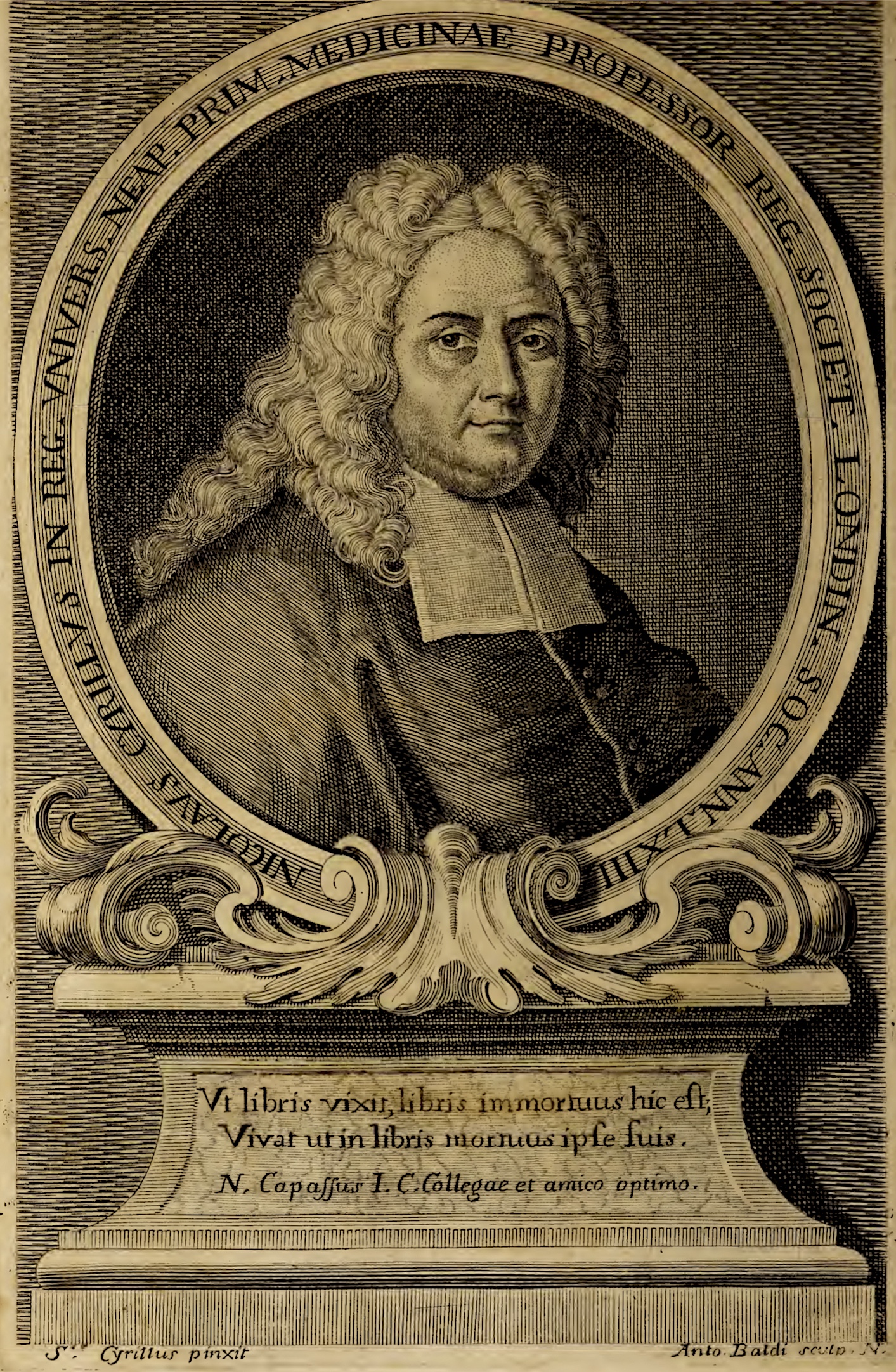
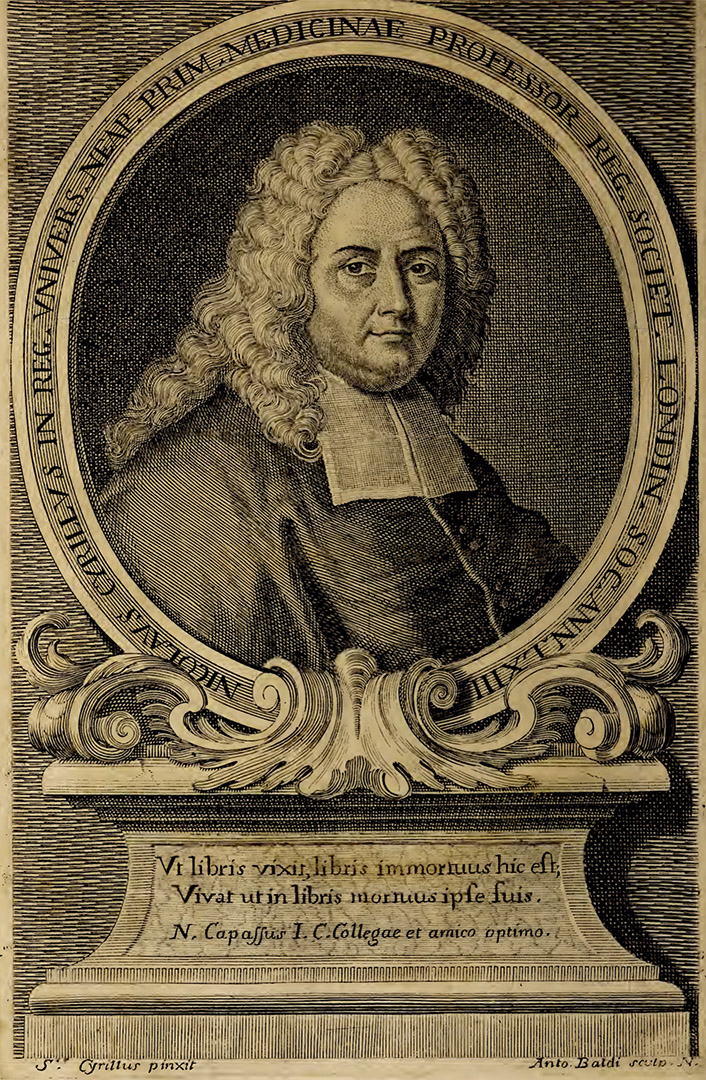
Born in Grumo Nevano, near Naples, in 1671, Niccolò Cirillo worked at Santa Maria del Popolo
degli Incurabili hospital
as a physician, later obtaining the chair of Natural Philosophy in 1705 and that of Medicine
in
1706, both at the Royal
University of Naples. In 1718 he became a fellow of the Royal Society of London and very
soon
became to collect
meteorological data on the climate of Naples. In his correspondence kept at the Royal
Society,
he also focussed on the
volcanic activity of Mount Vesuvius, as well as on seismic events. Very interesting was his
report on the disruptive
earthquake that in March 1731 hit Apulia, with effects on the whole Kingdom of Naples. Here
Cirillo described the whole
development of the seismic event according to three different steps: the “Tremor”, the
“Succussatio” and, finally, the
“Inclination or tottering of the Earth”. The main event was followed by a series of shorter
and
weaker aftershocks,
provoking severe damages to houses and people. By observing that the shocks were centered
about
the town of Foggia and
that their strength diminished with the distance, Cirillo conjectured a progressive motion
decreasing in a quadratic
proportion to the distance. To test this hypothesis, he carried out observations along with
his
collaborators based at
Ascoli Satriano (near the epicenter) and at Giovinazzo (located at a quadruple distance from
the
epicenter). They
recorded the oscillations of a couple of pendulums, with length equal to a Neapolitan palm
(about 26 cm), applied to a
semicircle divided into degrees, finding that a weak sesimic activity in Foggia produced
small
pendulum oscillations in
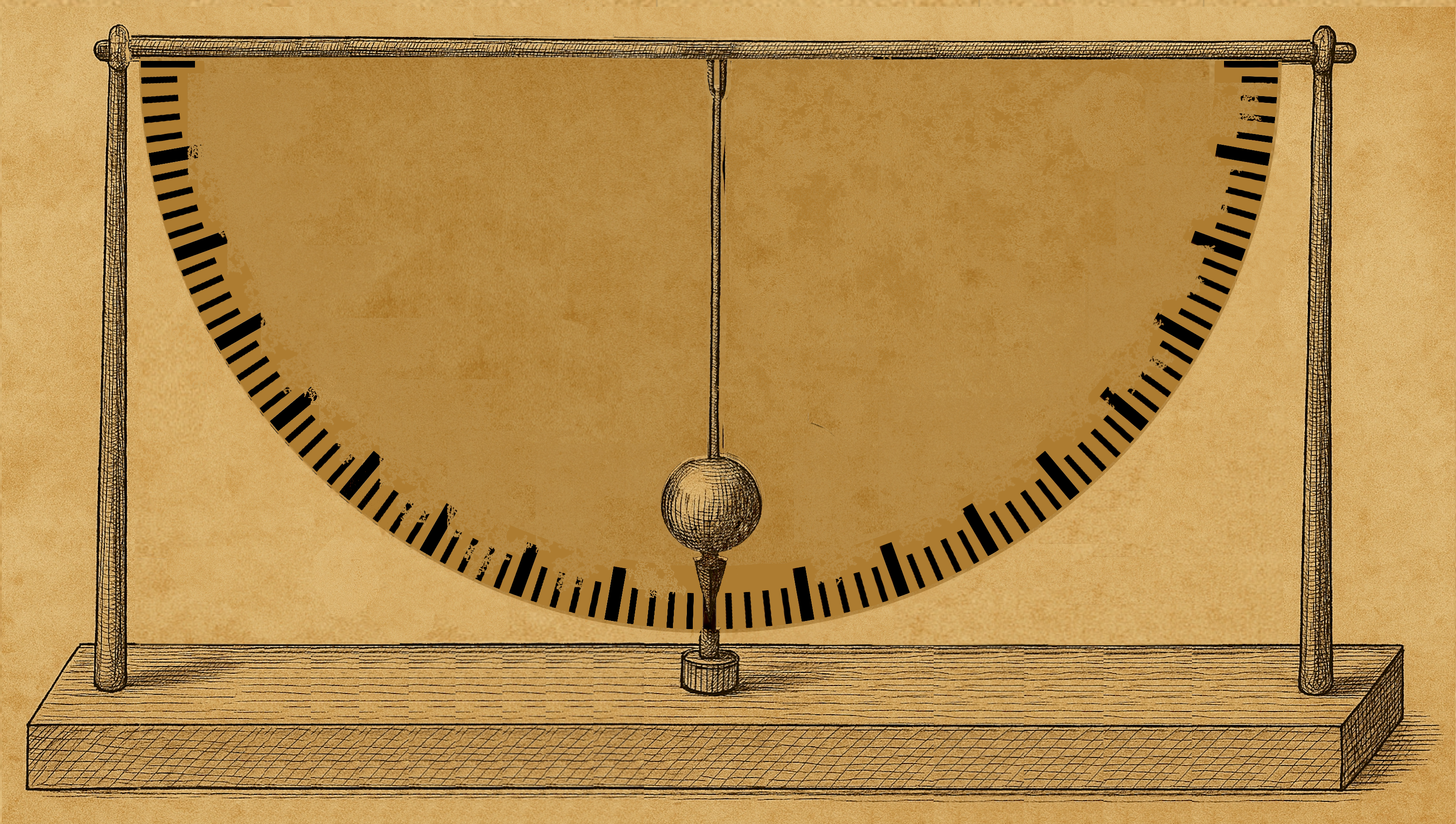
Ascoli Satriano but no oscillations at all in Giovinazzo. Cirillo devised for the first time
an
experimental device
(graphically reconstructed in fig. 1), the vertical pendulum seismoscope, able to detect (in
principle) the occurrence
of a seismic shock and to provide an estimate of its strength. This device paved the way to
the
subsequent development
of modern seismometers and seismographs.
___Salvatore Esposito & Adele
Naddeo
References
Cirillo, N. (1732). “A History of the Earthquake, which in the
year 1731
afflicted Apulia and
almost the whole Kingdom
of Naples”,
The Royal Society, Translation of a letter, from Nicholaus
Cyrillus to
Cromwell
Mortimer, el_c2_72, 1732.
Cirillo, N. (1733). “Historia Terraemotus Apuliam et totum ferè
Neapolitanum
Regnum Anno 1731, vexantis”,
Philosophical Transactions of the Royal Society of London, 38 (428), pp.
79-84.
Batllò, J. (2014). “Historical Seismometer”, Encyclopedia of
Earthquake
Engineering.
Berlin, Heidelberg: Springer,
pp. 1-31.
___