The 1783 Calabrian earthquake - 1
Among the longest and disruptive seismic events occurring in Italy, there was the
sequence of earthquakes that in 1783
hit Calabria and north-east Sicily. Its main features were the displacement of
epicenters from Messina towards the
North-North-East direction and a very shallow focal zone. Thus many physical changes
were clearly visible on the Earth’s
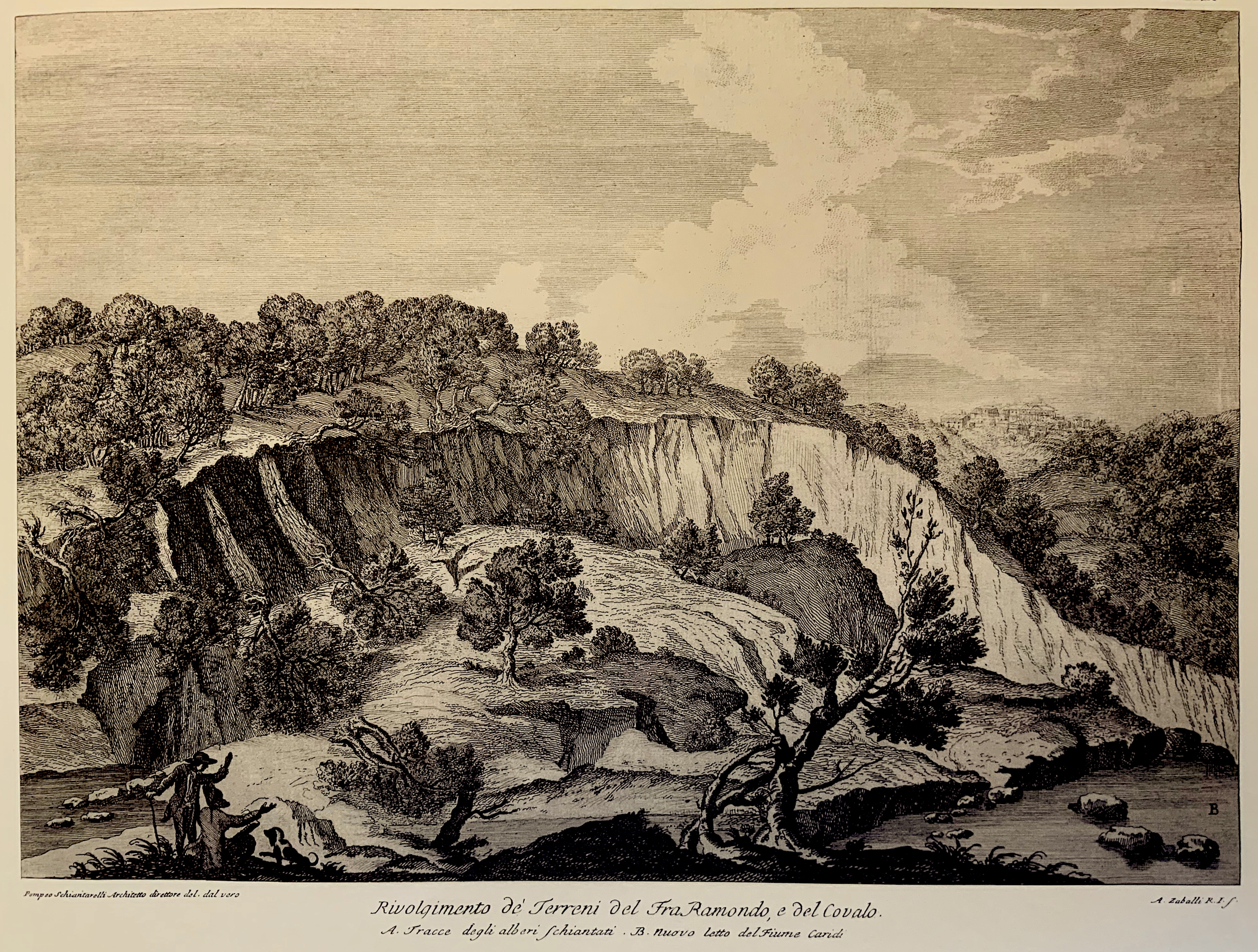
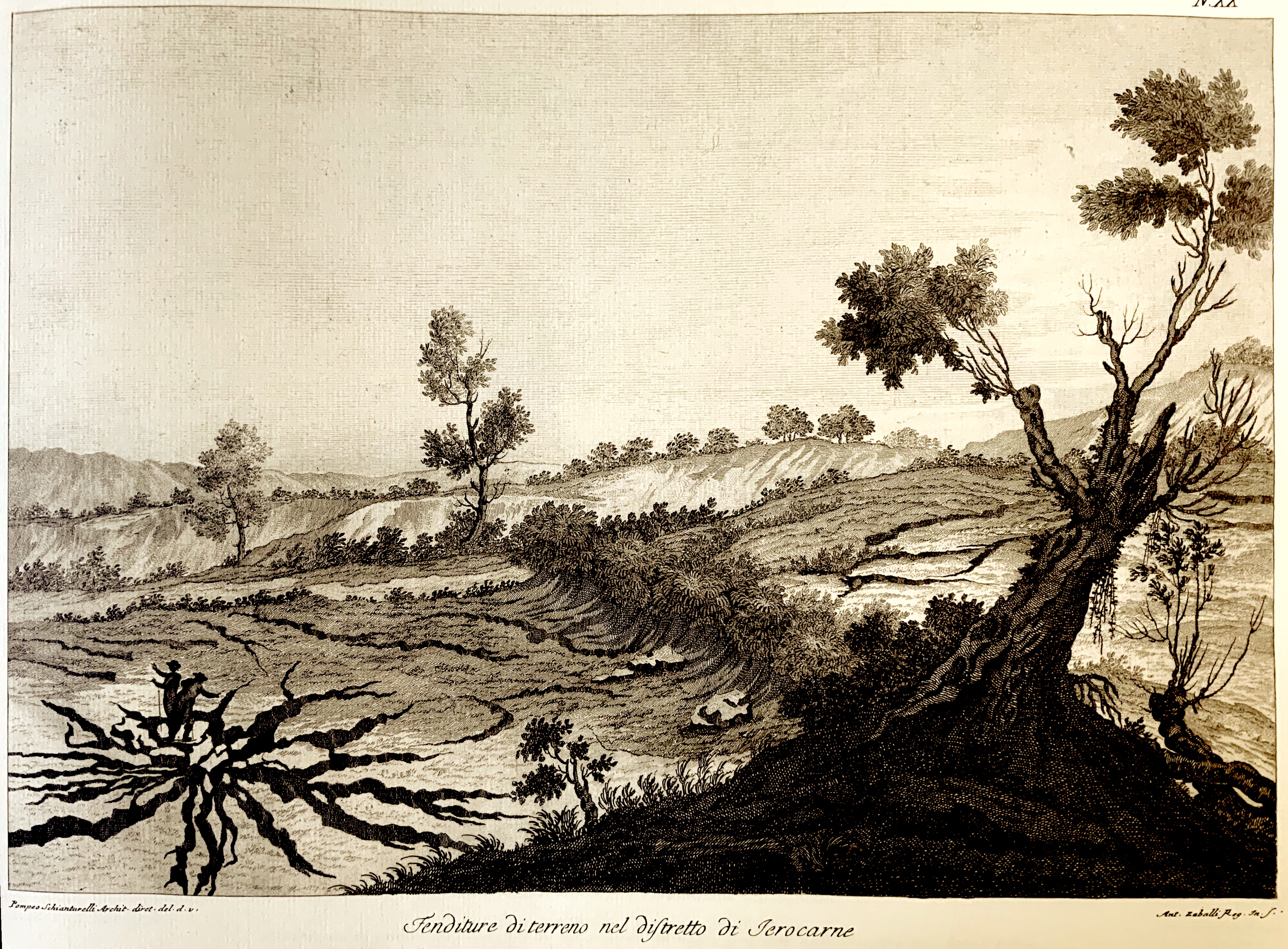
surface, ranging from large block collapses to massive landslides and wide crack
openings (fig. 1). With reference to
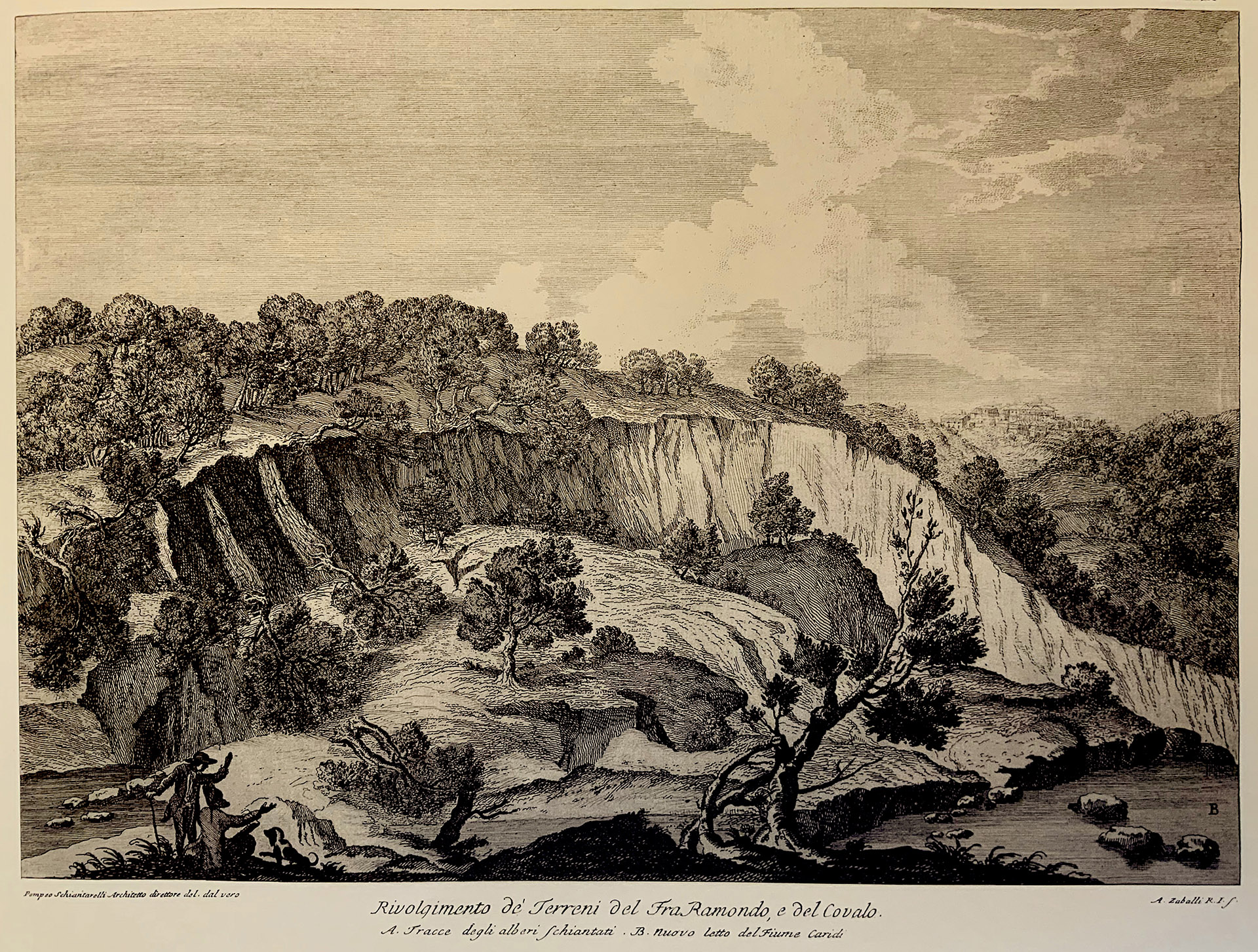
the Fra Ramondo and Covalo area, the geologist Charles Lyell wrote: “A small valley,
containing a beautiful olive-grove,
called Fra Ramondo, underwent a most extraordinary revolution.
Innumerable fissures
first traversed the river-plain in
all directions, and absorbed the water until the argillaeous substratum became soaked,
and a great part of it was
reduced to a state of fluid paste. Strange alterations in the outline of the ground were
the consequence, as the soil to
a great depth was easily moulded into any form. In addition to this change, the ruins of
the neighbouring hills were
precipitated into the hollow; and while many olives were uprooted, others remained
growing on the fallen masses and
inclined at various angles. The small river Caridi was entirely concealed for many days;
and when at length it
reappeared, it had shaped for itself an entirely new channel” (C. Lyell, 1830, p.
425).
The wide range of effects produced by the seismic sequence attracted many Italian and
European scholars, interested in
studying the event in detail and understanding the underlying phenomenology. Among them
there were Giovanni Vivenzio,
Déodat de Dolomieu and William D. Hamilton.
For the first time, a seismological commission led by Michele Sarconi was set up in
Naples by the Reale Accademia delle
Scienze e Belle Lettere, appointed by the Bourbon government to carry out systematic
investigations of earthquake’s
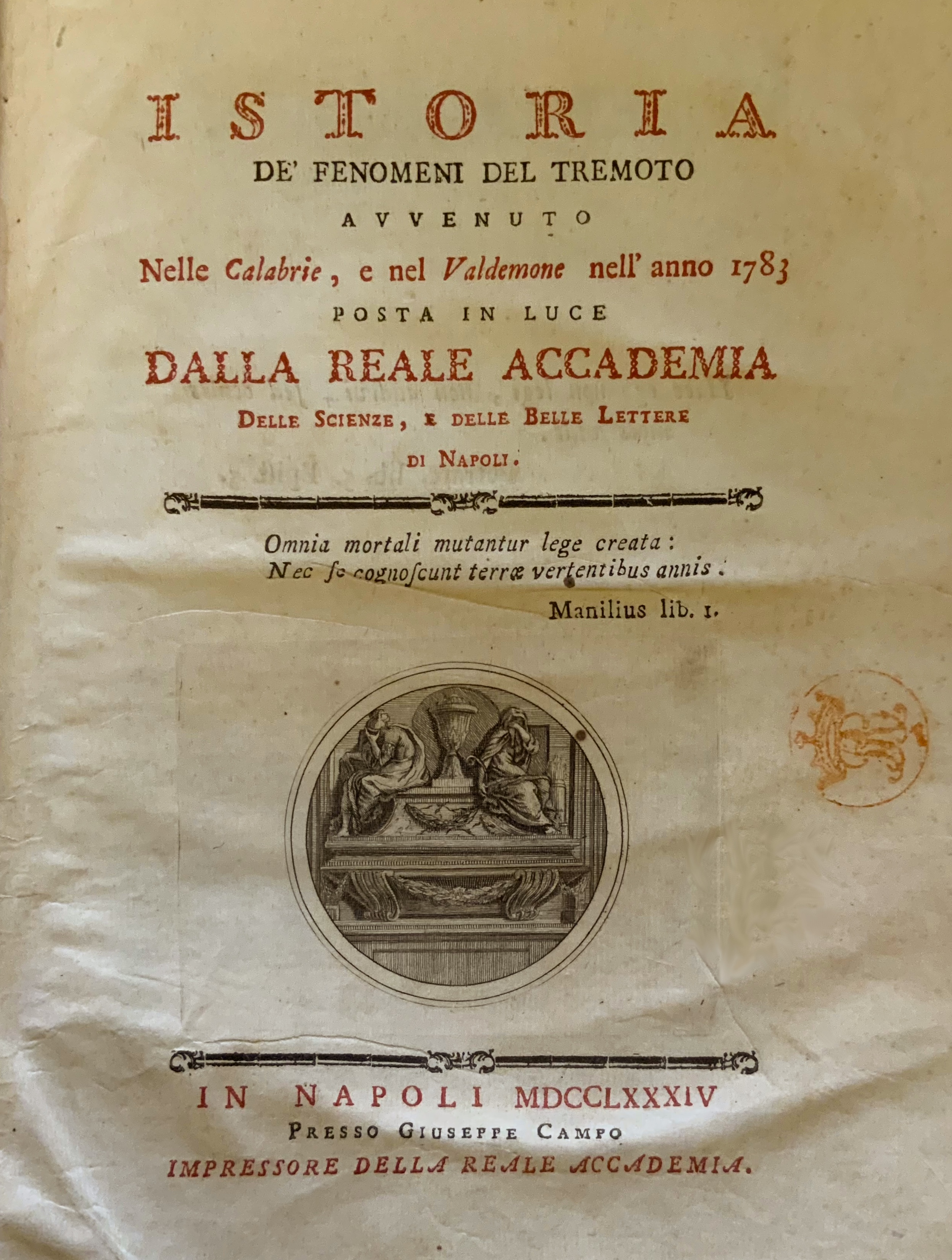
effects and estimate the damage producted. Interestingly, Sarconi’s final report (fig.
2) is accompanied by an atlas of
pictures, drawn by the architects Pompeo Schiantarelli and Ignazio Stile. This
exceptional document testifies the
disruptive power of an earthquake that forever changed the environment and the
characteristics of those regions.
___Salvatore Esposito & Adele
Naddeo
References
Sarconi, M. (1784). Istoria de’ fenomeni del tremuoto avvenuto
nelle
Calabrie, e nel Valdemone
nell’anno 1783, posta in
luce dalla Reale Accademia delle Scienze, e delle Belle Lettere di Napoli.
Napoli:
presso Giuseppe Campo.
Lyell, C. (1830). Principles of geology, being an attempt to
explain
the former changes of the
Earth’s surface, by
reference to causes now in operation, vol. 1. London: John Murray, pp.
412-435.
Grimaldi, F.A. (1784). Descrizione de’ tremuoti accaduti nelle
Calabrie
nel 1783, Napoli:
presso Giuseppe Maria
Porcelli.
___
___