The 1783 Calabrian earthquake - 3
Among the most impressive effects on the landscape of the eathquake-affected areas there
were
landslides, huge masses
detachments from hills, collapses and liquefaction phenomana. Particularly devastating
effects
were observed near the
Aspromonte and in the Gioia Tauro Plain: entire hills collapsed and filled the valleys,
while
the landslides blocked a
large number of waterways giving rise to lakes. Giovanni Vivenzio reported on such
phenomena and
pointed out that about
fifty lakes arose as a consequence of the seismic shocks. In the report of the
seismological
commission chaired by
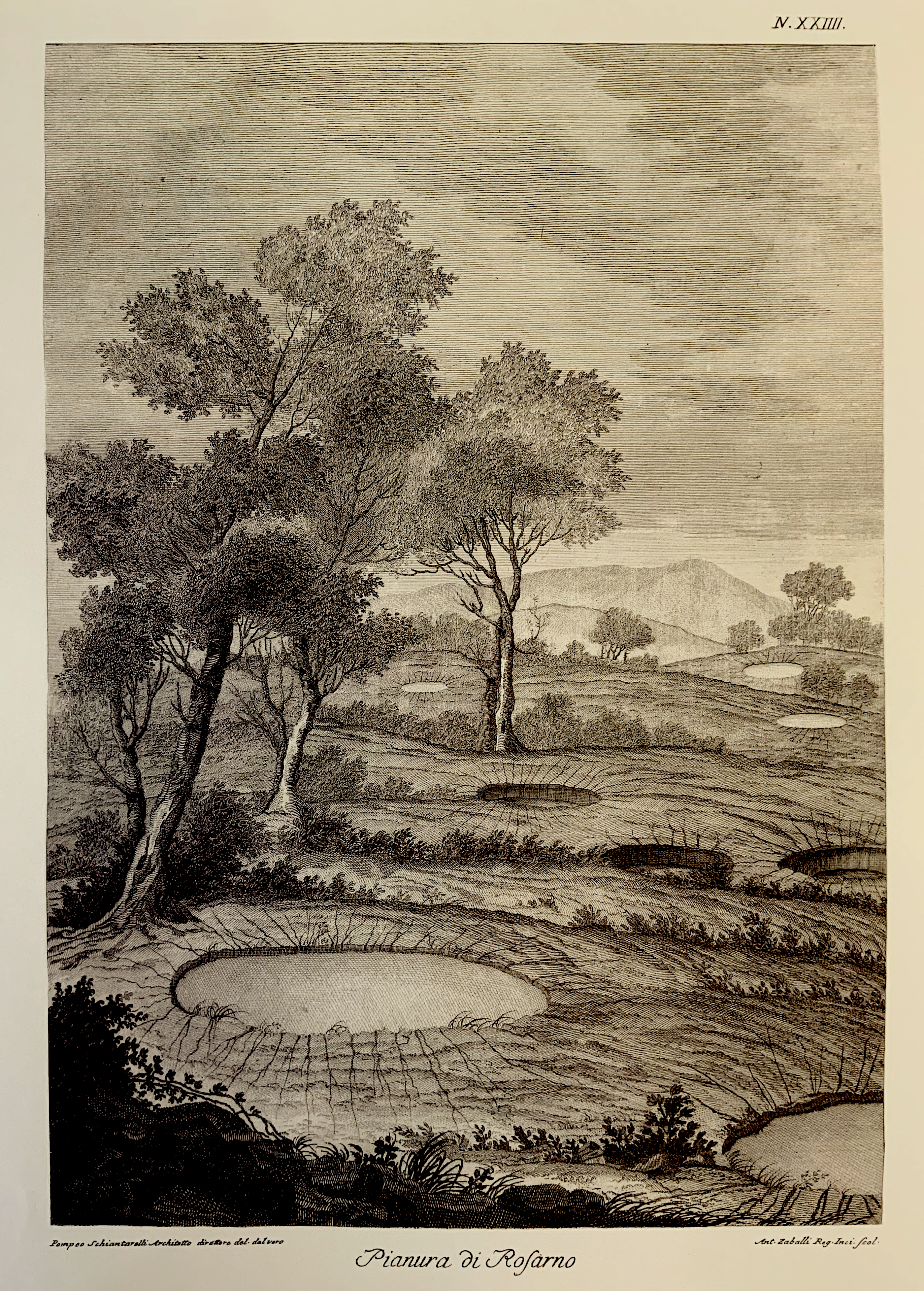
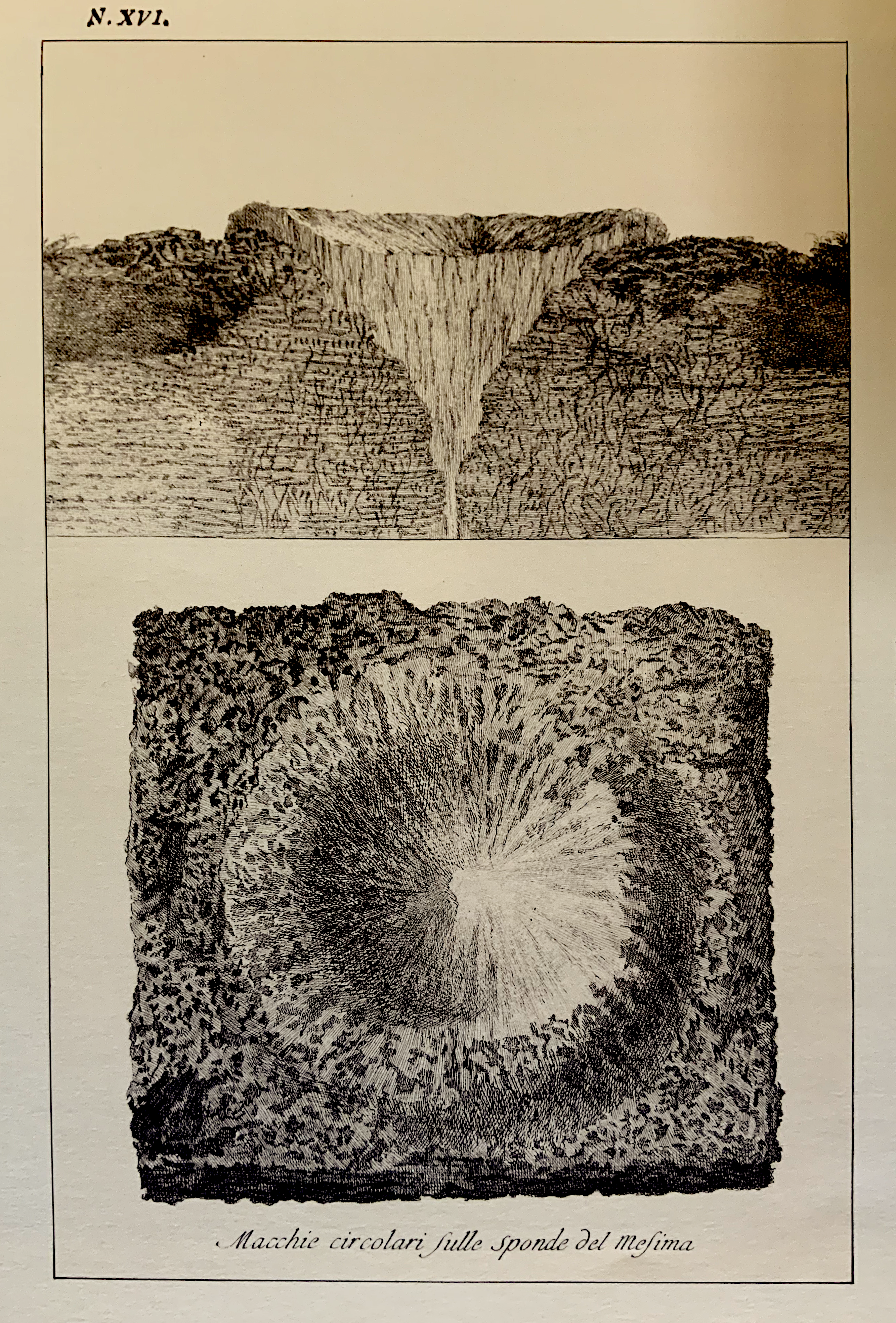
Michele Sarconi, some plains were described as covered with circular hollows, mainly
with the
typical size of
carriage-wheels, with a concave or convex surface and filled with dry sand. Upon digging
down,
they were found to be
funnel-shaped, with the moist loose sand at the center marking the source of outgoing
water
(fig. 1). The same
phenomenon was vividly accounted for by the volcanologist, archeologist and diplomat
William D.
Hamilton, who traveled
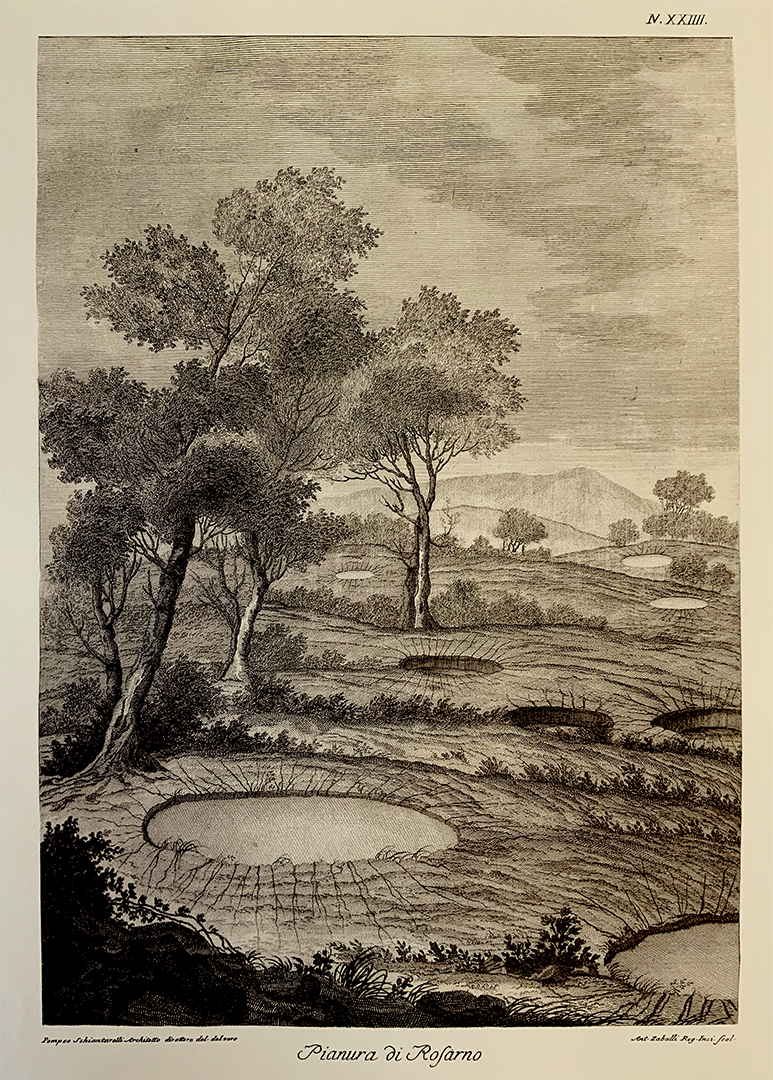
to explore the devasted areas: “Just before we arrived at Rosarno, near a ford of the
river
Mamella we passed over a
swampy plain, in many parts of which I was shewn small hollows in the earth, of the
shape of an
inverted cone: they were
covered with sand, as was the soil near them. I was told that, during the earthquake of
the 5th
of February, from each
of these spots a fountain of water mixed with sand had been driven up to a considerable
height.
I spoke to a peasant
here, who was present, and was covered with the water and sand; but assured me, that it
was not
hot, as had been
represented. Before his appearance, he said, the river was dry; but soon after returned
and
overflowed its banks. I
afterwards found, that the same phenomenon had been constant with respect to all the
other
rivers in the plain during
the formidable shock of the 5th of February” (W.D. Hamilton, 1783, p.180).
___Salvatore Esposito & Adele
Naddeo
References
Sarconi, M. (1784). Istoria de’ fenomeni del tremuoto avvenuto
nelle
Calabrie, e nel Valdemone
nell’anno 1783, posta in
luce dalla Reale Accademia delle Scienze, e delle Belle Lettere di Napoli.
Napoli:
presso Giuseppe Campo.
Lyell, C. (1830). Principles of geology, being an attempt to
explain
the former changes of the
Earth’s surface, by
reference to causes now in operation, vol. 1. London: John Murray, pp.
412-435.
Hamilton, W. (1783). “An Account of the Earthquakes which happened
in
Italy from February to May
1783”, Philosophical
Transactions of the Royal Society of London, 73, pp. 169-208.
___
___