Nicola Zupo’s vertical pendulum seismoscope
The 1783 disruptive seismic sequence hitting Calabria and north-east Sicily stimulated
the
physician and naturalist
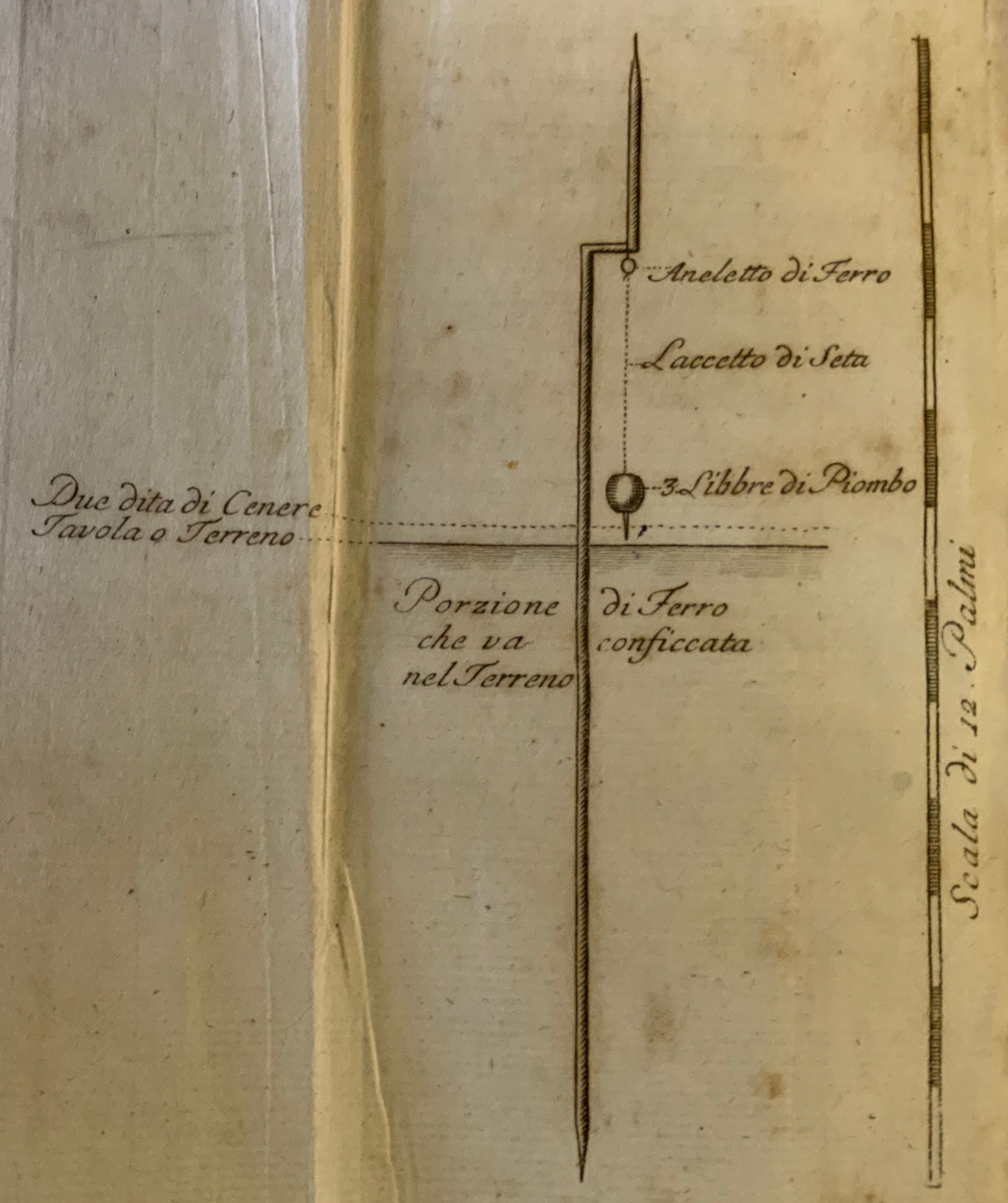
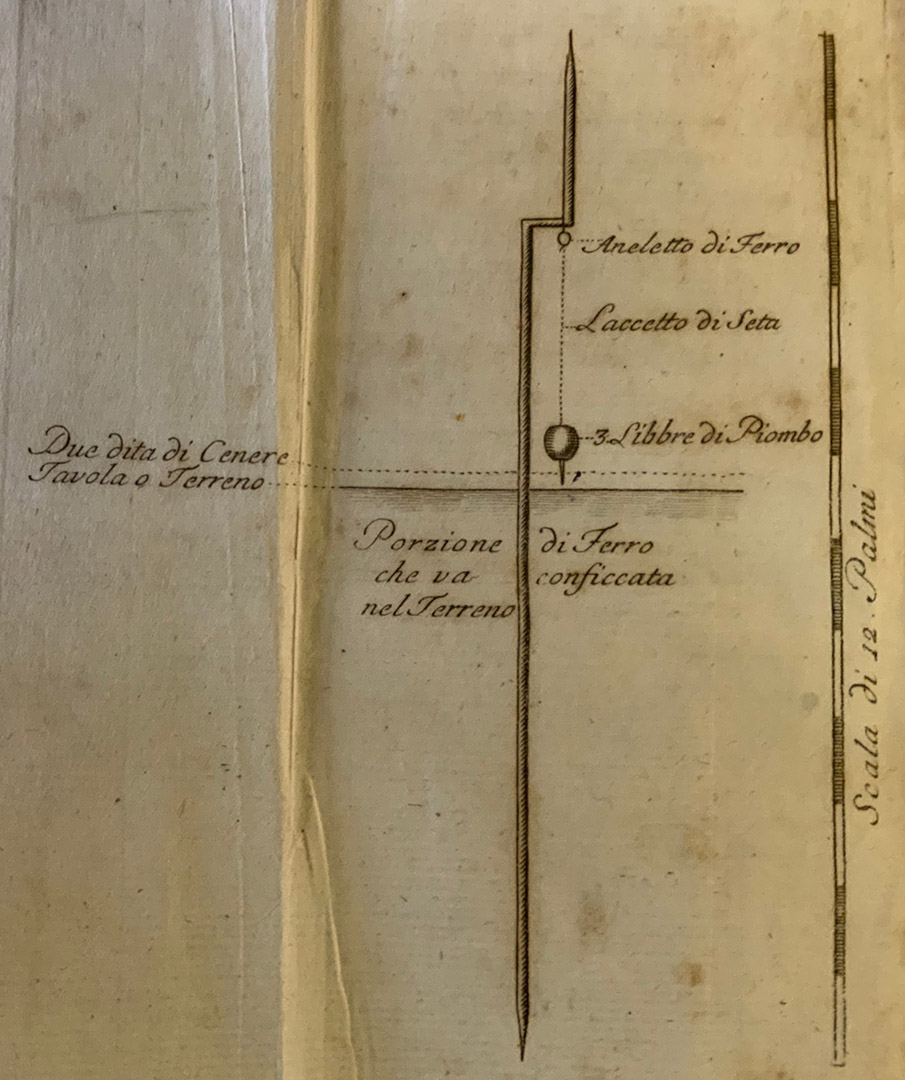
Nicola Zupo to devise a novel pendulum-based seismoscope, able to detect also electrical
effects. In fact, as many
scientists of his time, Zupo recognized electricism as the primary cause of earthquakes,
but in
his opinion the source
of this electricism had to be found in Calabrian atmosphere rather than underground (fig
1). His
device was essentially
a three meters long iron rod sharpened at both ends. Two thirds of this rod were
inserted into
the ground, while the
external part bending twice at right angles in such a way to keep a short piece of it
parallel
to the ground. A small
lead ball weighing three pounds was suspended by means of a silk thread to the
horizontal piece
of the bar, and its
lower part was equipped with an iron nail able to eventually draw lines on a layer
covered by
ashes. In this way the
oscillations of the pendulum induced by external perturbations, such as seismic shocks,
could be
recorded, together with
the corresponding direction. A further check of the direction could be provided by a
system of
four bells arranged
according to the four cardinal points and connected to the ball via a horsehair. Finally
the
whole rod was expected to
behave as a lightning rod in such a way to produce a flash of electrical fire during the
earthquake, a circumstance
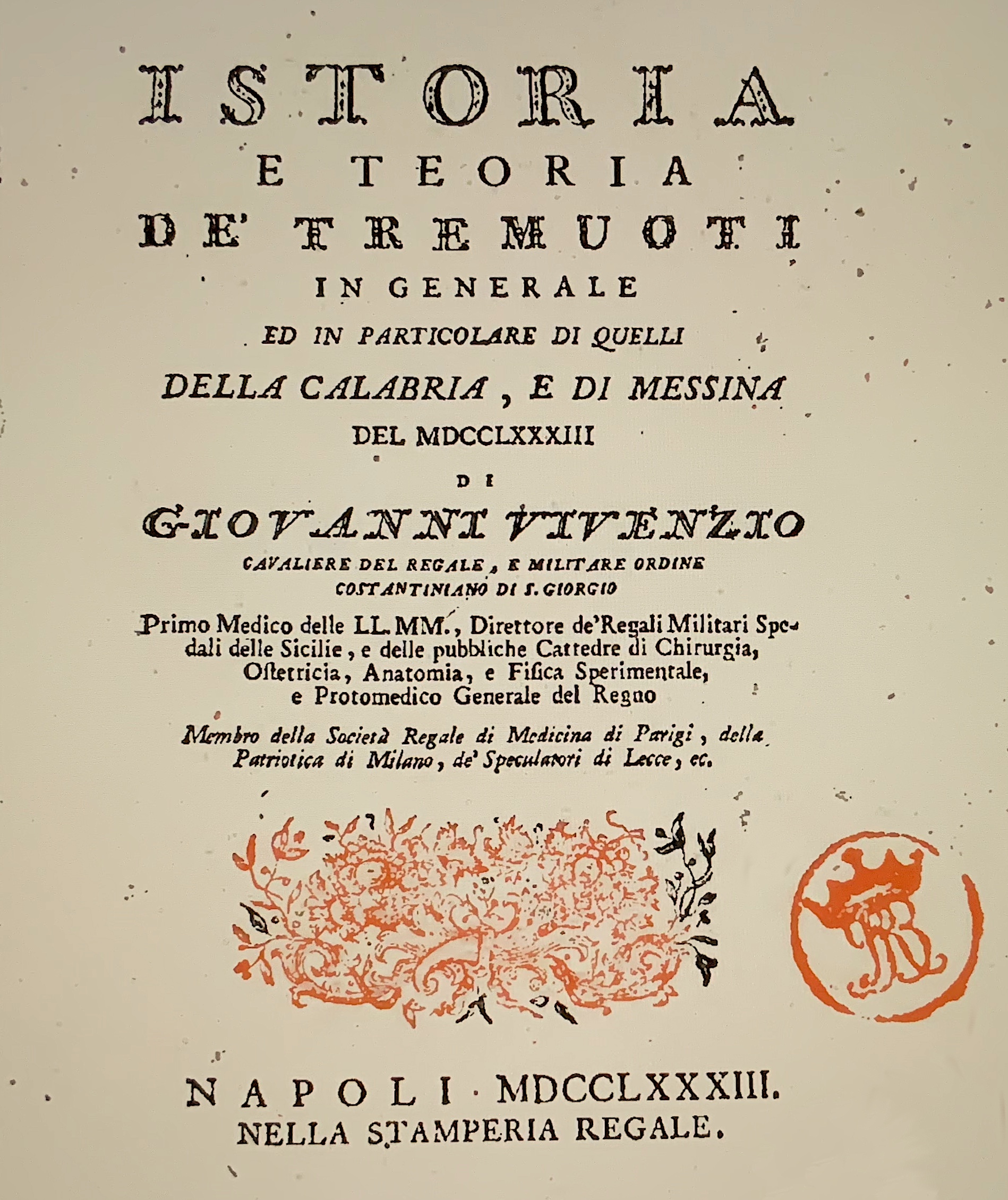
claimed by Zupo and acknowledged by Giovanni Vivenzio (fig. 2) in his Istoria e teoria
de’
tremuoti: “D. Nicola Zupo di
Cosenza, di professione Medico, ed uomo molto versato nella buona Fisica, persuaso, che
la causa
de’ Tremuoti esser
doveva l’Elettricità, profondò nella Terra una Spranga di ferro di dodici palmi lunga,
ed
osservò nel tempo di molte
scosse, dall’estremità puntuta fuori della Terra un pennello di fuoco Elettrico”.
___Salvatore Esposito & Adele
Naddeo
References
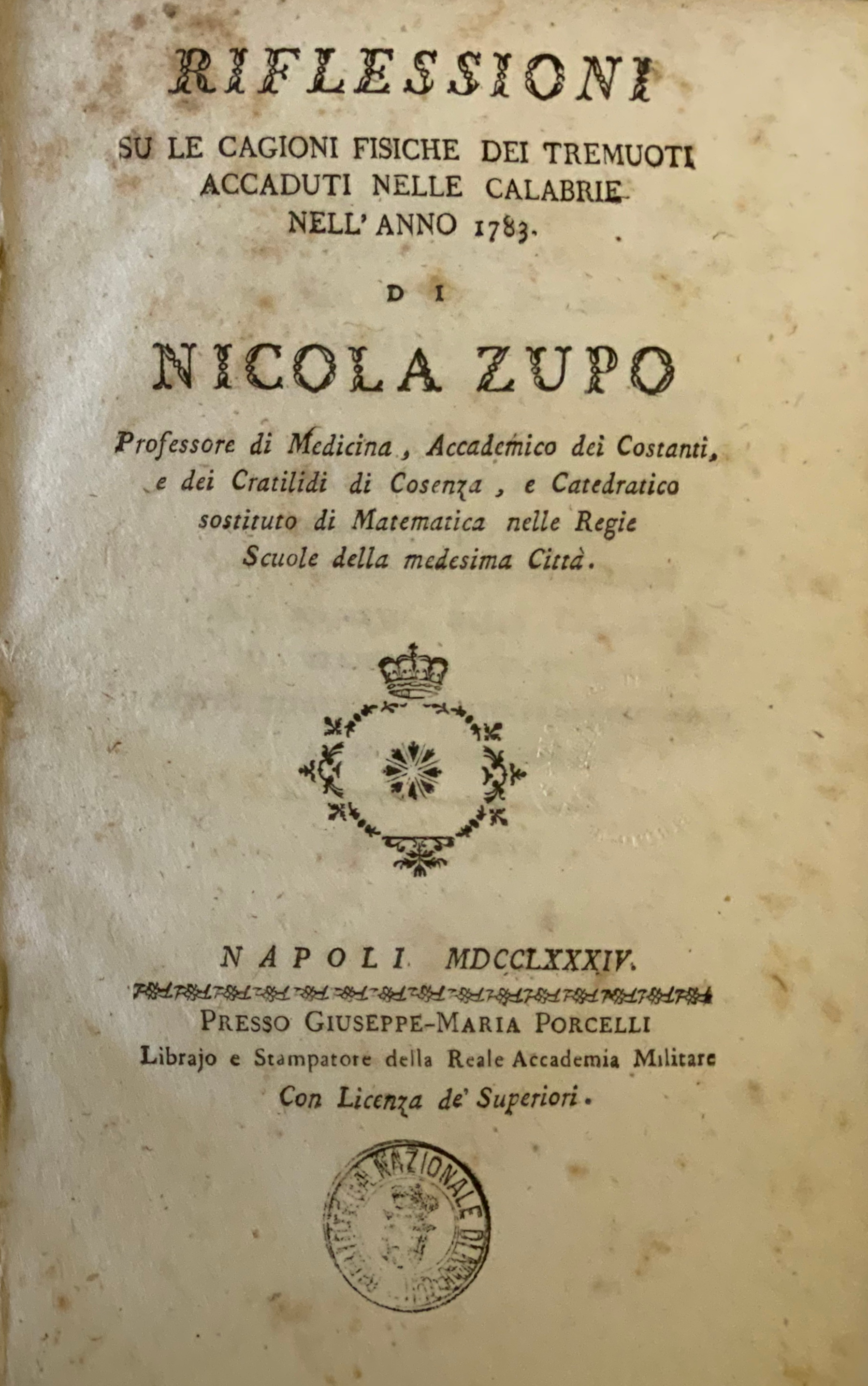
Zupo, N. (1784). Riflessioni su le cagioni fisiche dei
tremuoti, accaduti
nelle Calabrie nell’anno
1783. Napoli: presso
Giuseppe Maria Porcelli.
Vivenzio, G. (1783). Istoria e teoria de’ tremuoti in generale
ed in
particolare di quelli della
Calabria, e di Messina
del 1783. Napoli: nella Stamperia Regale.
Baratta, M. (1895). “Ricerche storiche sugli apparecchi sismici”,
Annali dell’Ufficio
Centrale Meteorologico e
Geodinamico Italiano, 2. ser., 27(I), pp. 3-37.
___
___