Observations and measurements in the Real Gabinetto Fisico in
Naples
Starting in 1840, an extensive observational work, primarily related to meteorology and
geodesy, was conducted within
the Real Gabinetto Fisico located on the second floor of the Royal Palace in Naples. Its
establishment dates back
several decades, but a large number of apparatus and instruments were commissioned
during this period to the most
renowned instrument makers of the time. The significant increase in the Royal Physics
Cabinet's equipment allowed for
the launch of a thorough observation campaign, not limited to meteorological
observations.
Many thermometers and barometers were available there for measuring temperature and
pressure, including a Fortin
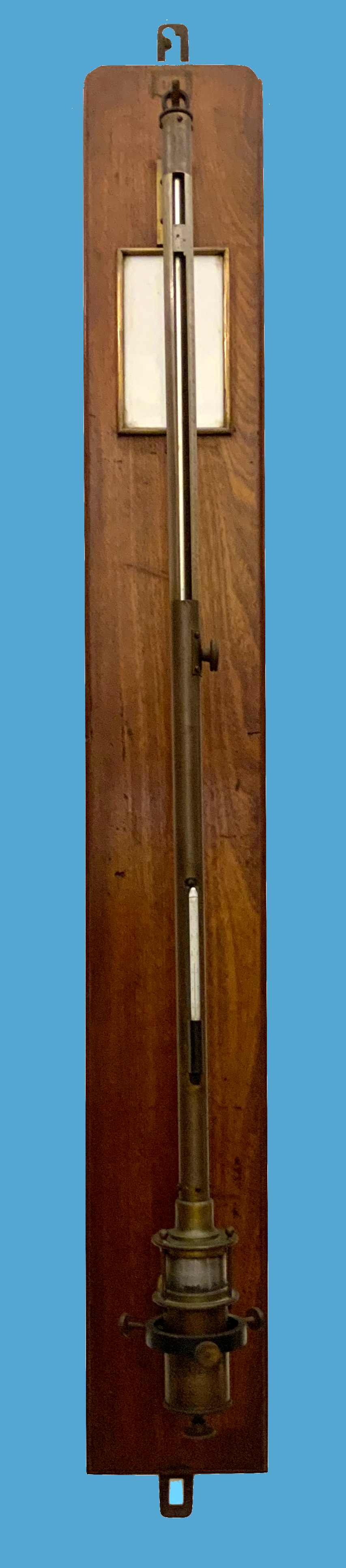
barometer and an aneroid barometer. Fortin's instrument was a technically improved
version of Torricelli's mercury
barometer, with the mercury container consisting of a deformable leather bag placed
inside a cylindrical tank. The lower
level of the mercury could be adjusted via a jackscrew until it coincided with a
reference mark. Humidity measurements
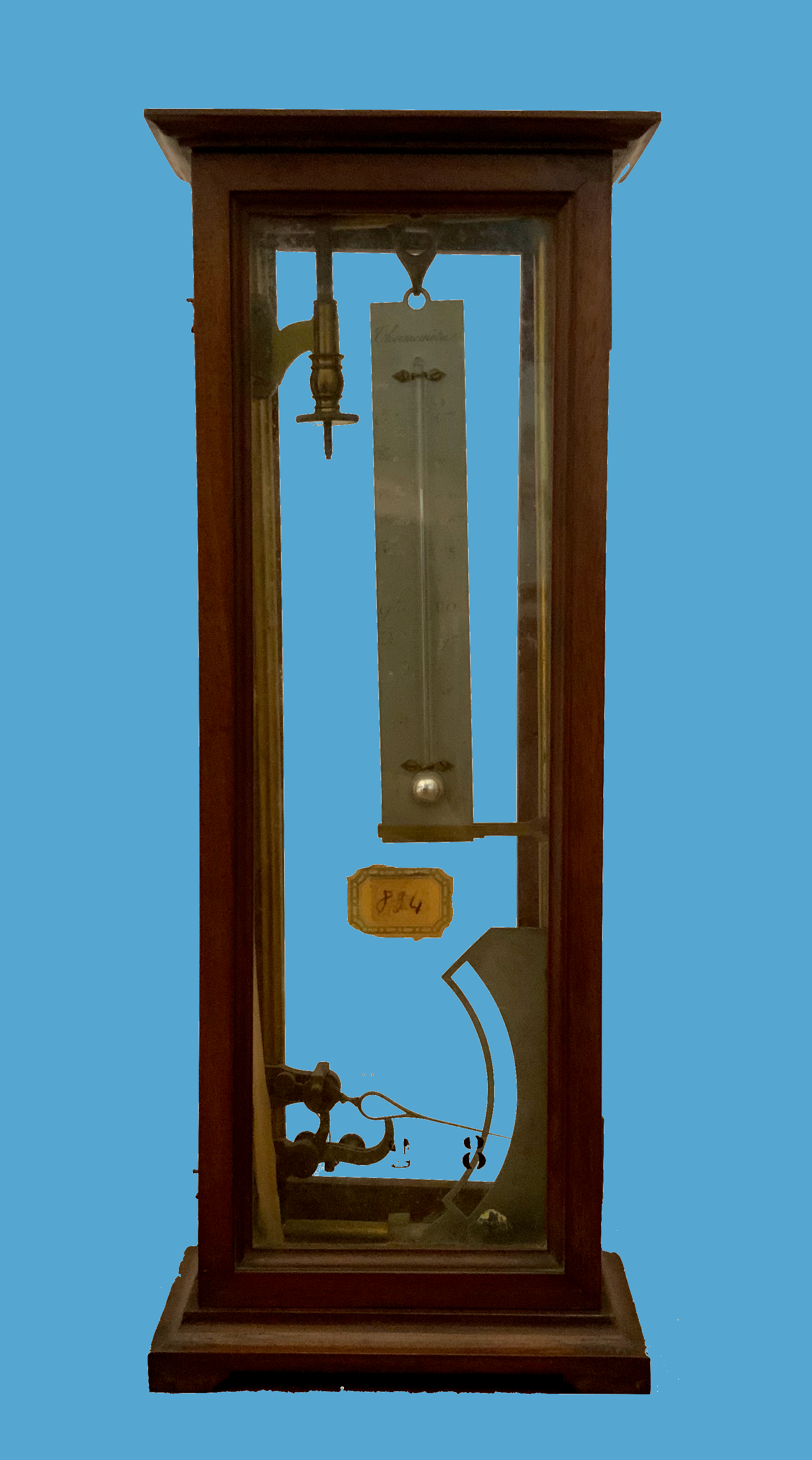
were then taken with hygrometers, particularly using de Saussure's hair hygrometer (Fig.
1). Its operation is based on
the property of hairs to absorb water vapor and change its length in response to changes
in air humidity.
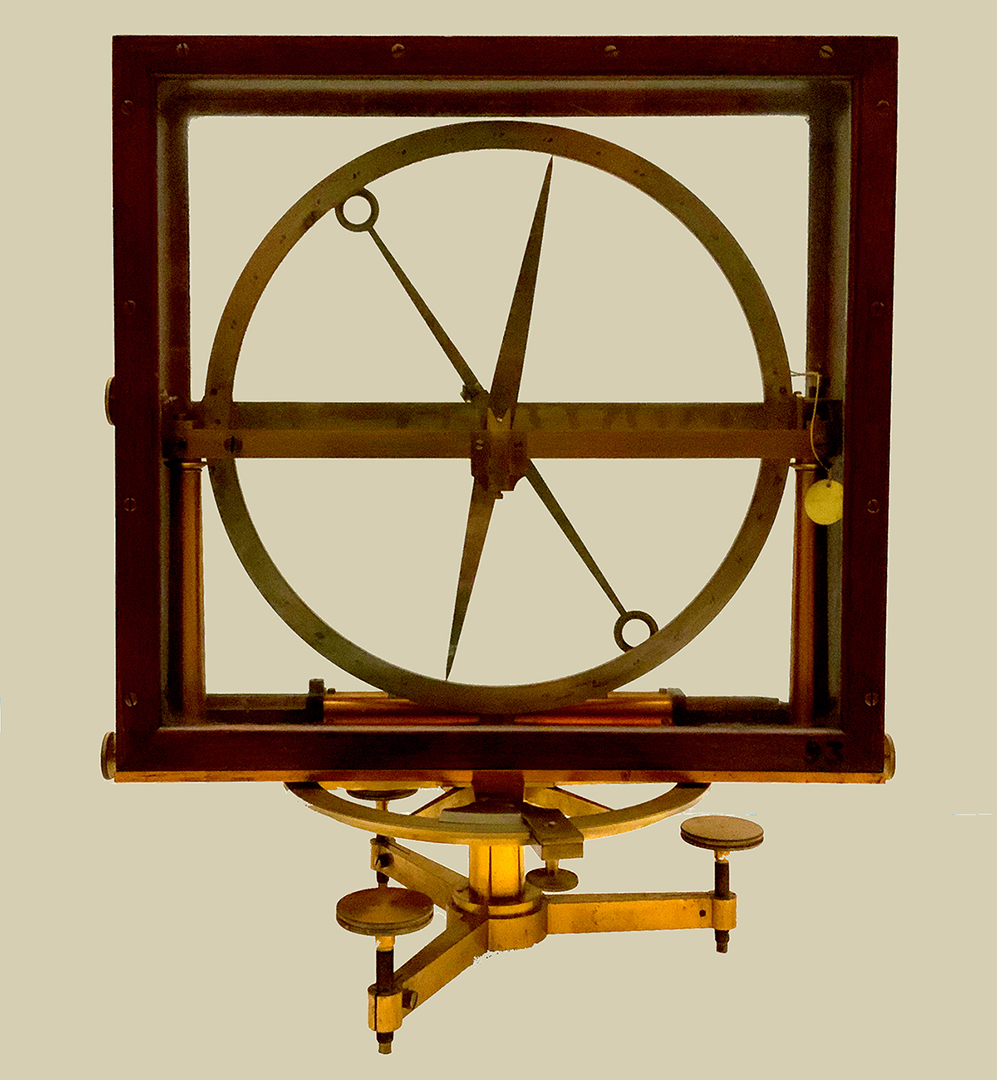
For geodetic operations, several instruments were available in the Royal Physics Cabinet
of Naples. Measurements of the
Earth's magnetic inclination (i.e., the angle between the direction of the Earth's
magnetic field and the plane of the
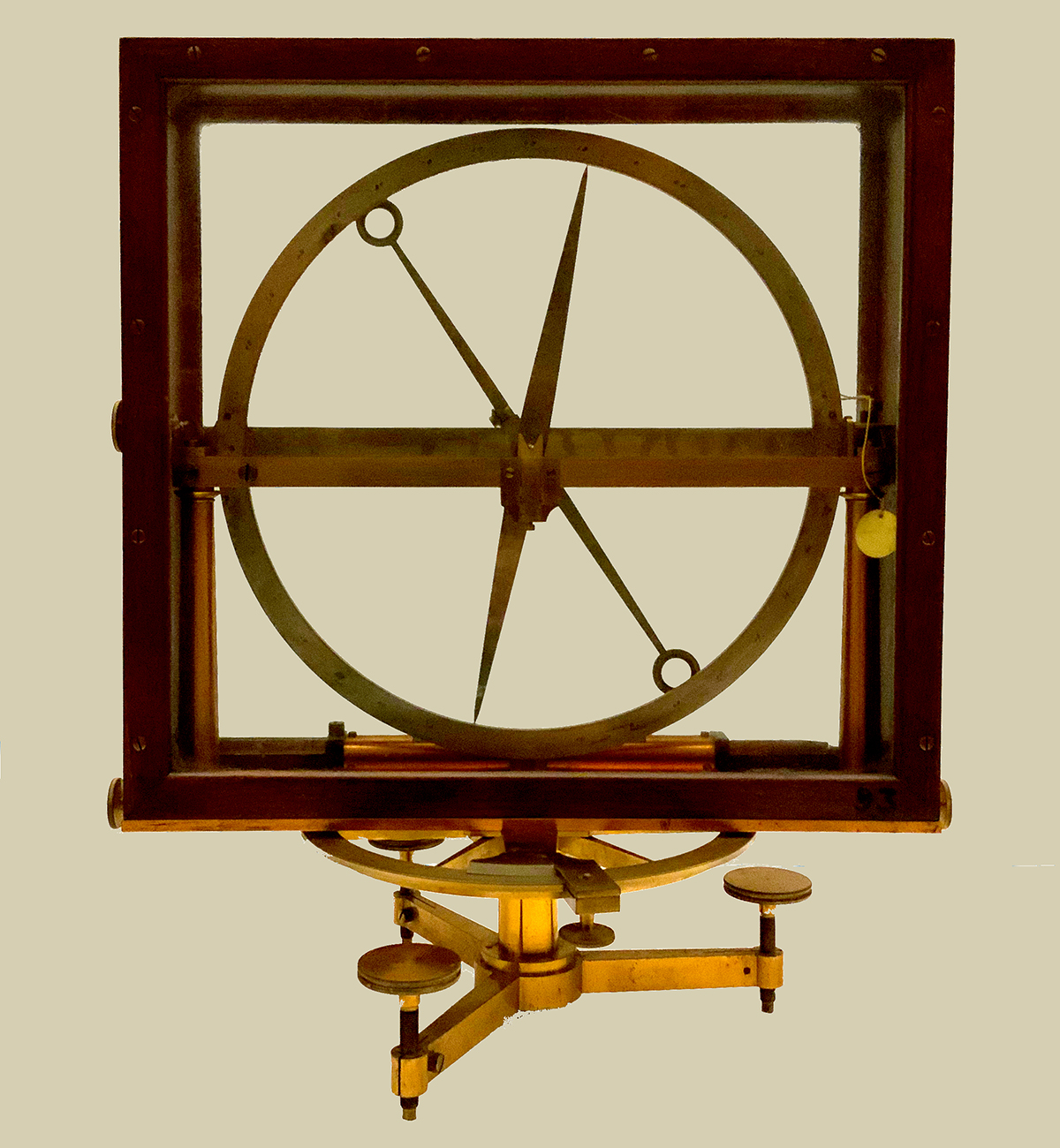
horizon) were taken with a Gambey inclinometer (Fig. 2), consisting of a
twenty-four-centimeter-long magnetic needle
free to rotate around a horizontal axis within a graduated vertical circle. This circle,
in turn, was fixed to a brass
support, equipped with a spirit level and capable of rotating around a vertical axis.
The steady growth of the Royal Cabinet's instrument collection, the ongoing maintenance
of its instruments and
apparatus, and the extensive scientific activity conducted there testify to the leading
role this institution played in
the Neapolitan scientific landscape from 1840 to 1860, when Garibaldi's entry into
Naples put an end to the Kingdom of
the Two Sicilies.
___Salvatore Esposito & Adele
Naddeo
References
Schettino, E. & Spadaccini, R. (eds.) (1995), Le Macchine del
Re. La
collezione Reale nel Museo del Dipartimento di
Scienze Fisiche. Napoli: Archivio di Stato.
___
___