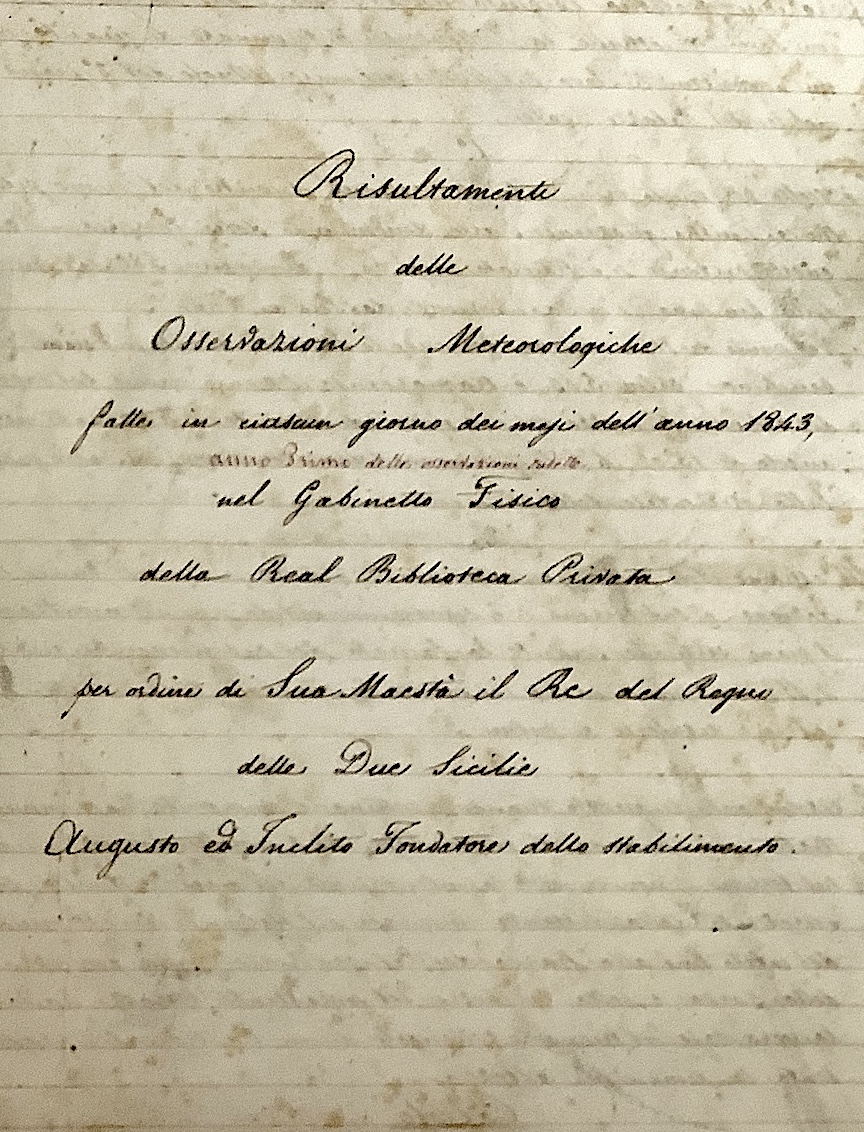
Meteorological observations in the Real Gabinetto Fisico
Few institutions carried out meterological observations in the Neapolitan area since the
first half of the 19th century:
the Royal Astronomical Observatory in Capodimonte established in 1819, the Vesuvian
Observatory inaugurated in 1845
during the 7th Meeting of the Italian Scientists in Naples, and the Physics Cabinet
located at the Royal Palace. The
little know, though interesting, scientific activity pursued at the Real Gabinetto
Fisico, focused mainly on geodetic
operations and meteorological observation, emerges from documents at the State Archives
in Naples.
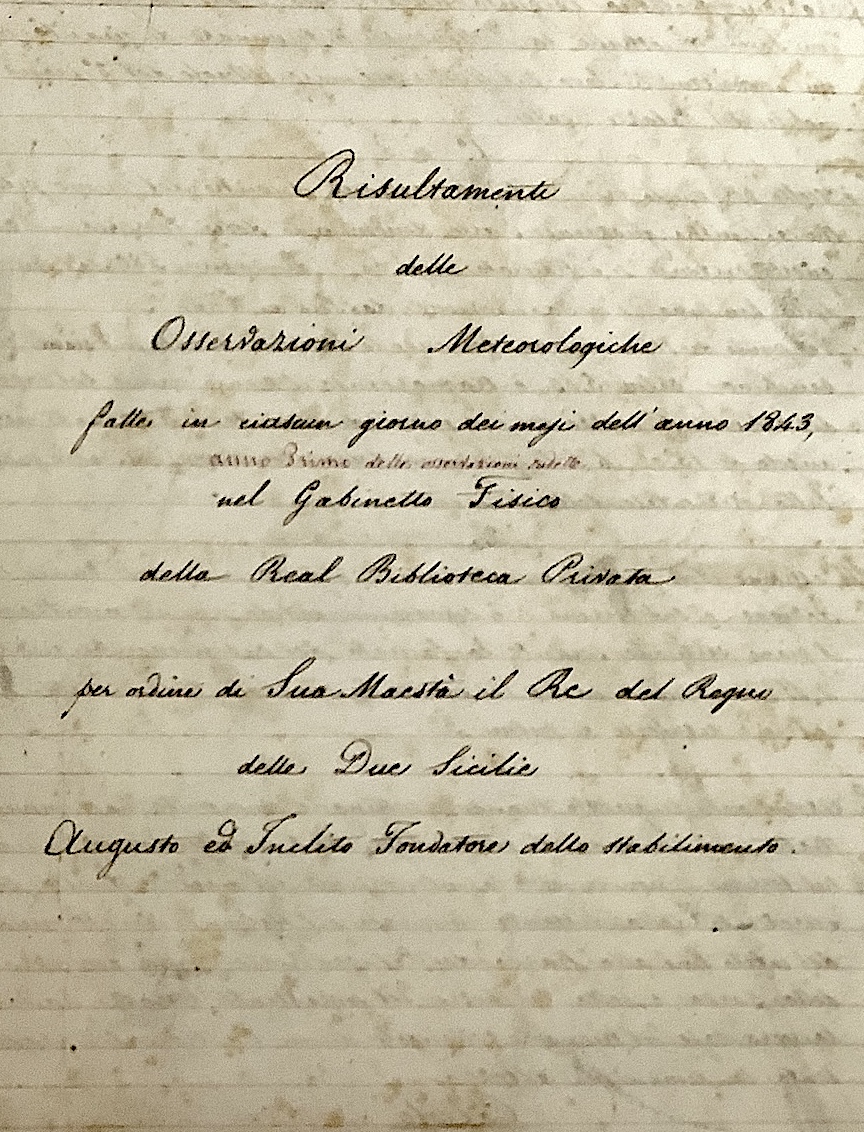
Many tables, technical reports, drawings and notebooks record the broad observational
activity in the field of
meterology, regularly pursued in Naples at the Royal Physics Cabinet from 1842 until
1857. Data collection generally
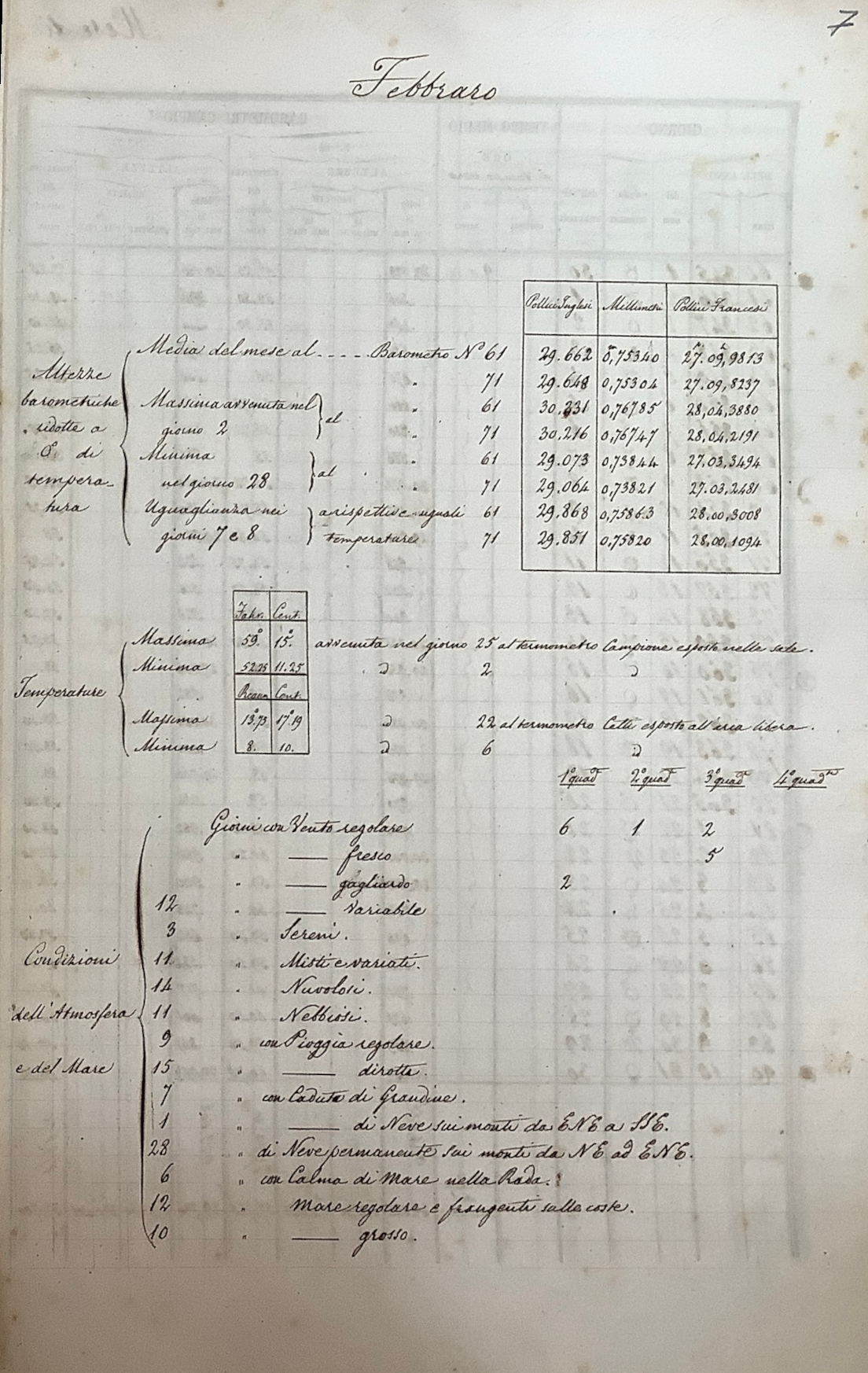
took place every day, once or twice a day, using two barometers and a standard
thermometer built by Newman in London, as
well as an English thermometer by Cetti, placed in the shade outside the Royal Palace,
close to the facade running from
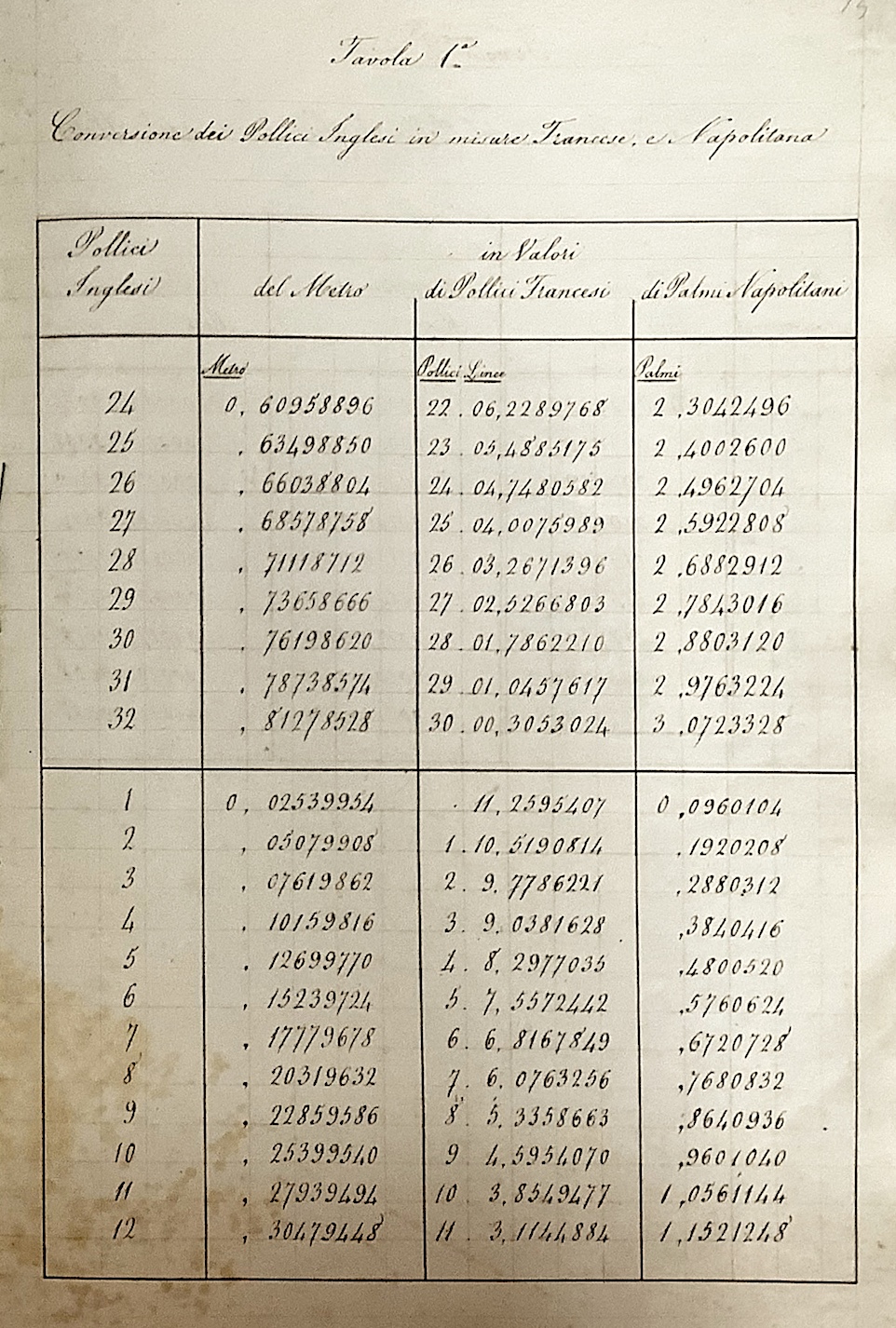
North-North-West to South-South-East. The barometer’s height was expressed in English
inches, while the temperatures
were given in degrees Fahrenheit and Reamur. The data were supplemented by conversion
tables from English inches to
French and Neapolitan units (fig. 1), and from degrees Reamur and Fahrenheit to each
other and to Celsius, respectively.
Summary tables were provided, showing the monthly average temperature, as well as the
maximun and minimun temperatures
recorded during the year.
Observations carried out concerned a variety of climate and environmental issues:
pressure, temperature, humidity, wind
direction and strength, rain, the status of the sky and tides in the Gulf of Naples.
Interstingly, also data from an
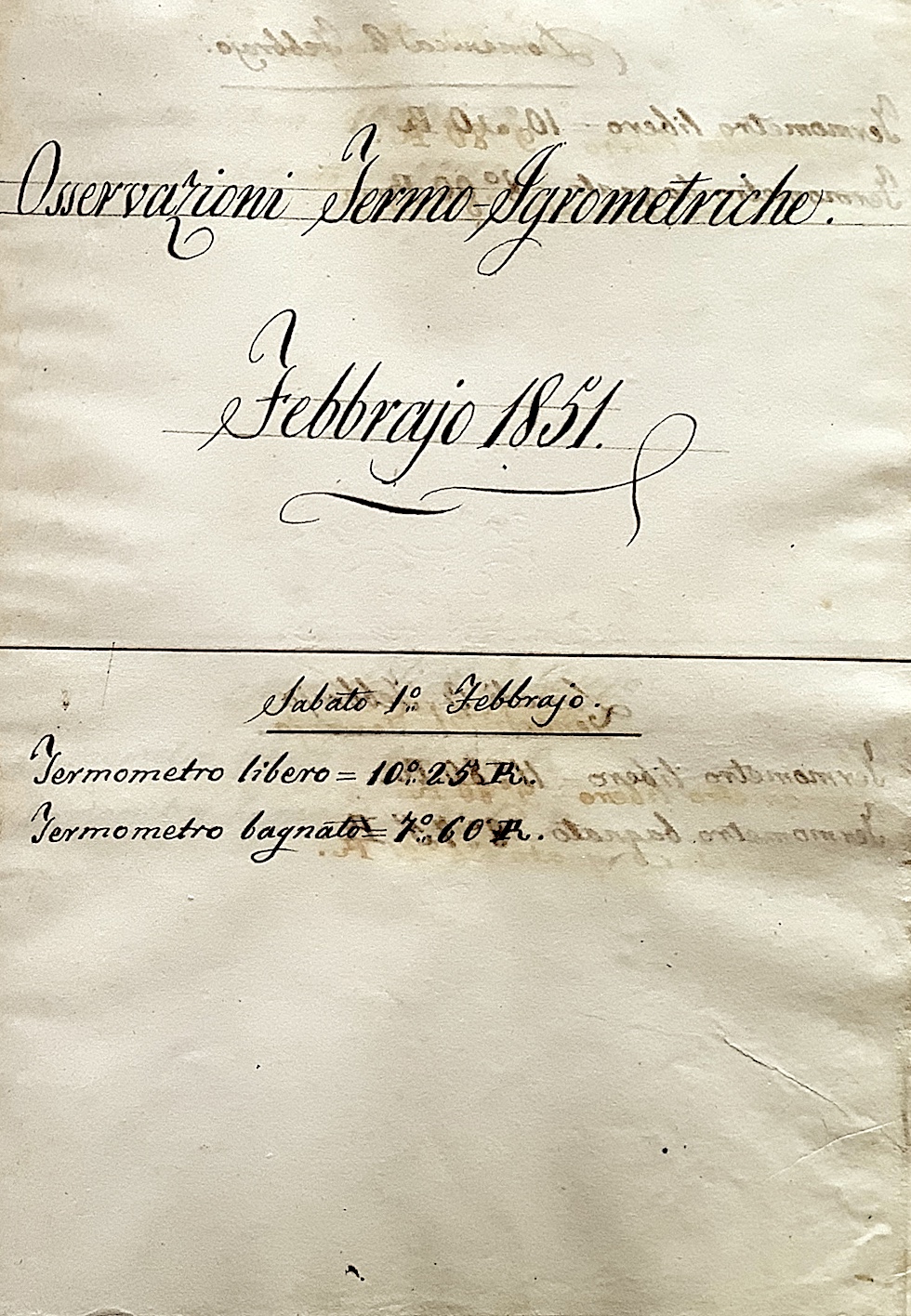
aneroid barometer were collected, while thermo-hygrometric measurements were performed
by comparing the readings from
two thermometers, one of which was wet (fig. 2).
In-depth notes concerning atmospheric electricity during thunderstorms, earthquakes, and
the state of Mount Vesuvius
were often recorded, aimed at investigating the possible interaction between
atmospheric, seismic and volcanic
phenomena.
Finally, a report has been found in the archival documents, concerning
catastrophic atmospheric events occurred during
the year 1857, such as heavy rains, floods, hurricanes and related phenomenology
(including severe damage to houses,
trees and people) observed in various places of the Kingdom of the Two Sicilies, ranging
from the Neapolitan area to
Calabria, Apulia and Sicily.
___Salvatore Esposito & Adele
Naddeo
References
Documenti relativi all’attività inerente le osservazioni
meteorologiche, condotte nel Reale
Gabinetto Fisico, Archivio
di Stato di Napoli , Archivio Amministrativo di Casa Reale, Categorie
Diverse, BB. 244, 246, 247, 248.